
Pest help · Georgetown, TX
Spider Exterminator in Georgetown, TX
Most spiders in a Georgetown house are harmless, and some of them earn their keep by eating the insects you would rather not have. Two are different. The brown recluse and the black widow both live here, both like the quiet storage spaces every home has, and both bite people who reach into the wrong box or shoe. This page shows how to tell the dangerous ones from the rest and what a spider exterminator Georgetown TX homeowners call can do about them.
In short
Brown recluse spiders hide in closets, boxes, attics and garages; black widows build messy webs in dark corners outdoors, in garages, meter boxes and woodpiles. Both are common on Georgetown’s rocky west side. Control means removing clutter, sealing entry points, treating harborage and dealing with the insects they feed on.
Brown recluse spiders
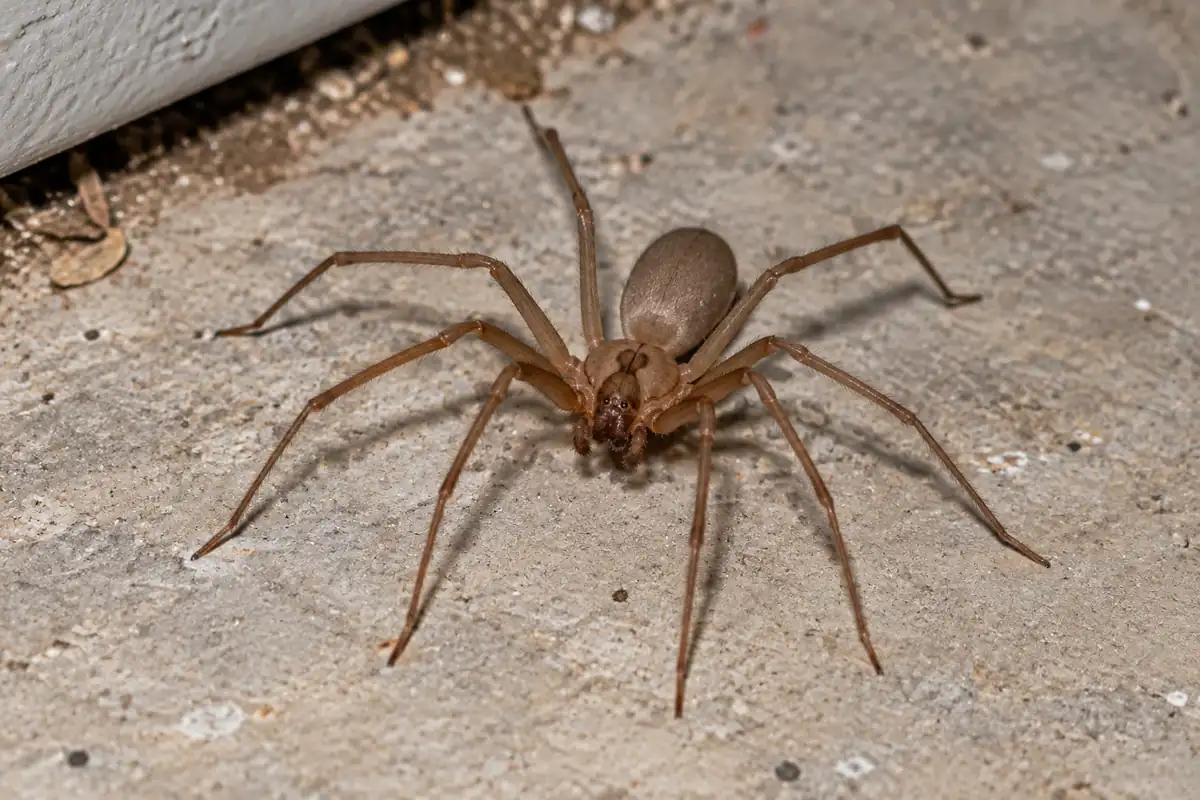
The brown recluse is the spider that worries Georgetown families most, and for good reason: it lives indoors, it hides in places people reach without looking, and its bite can, in a small share of cases, cause a slow-healing wound.
How to recognize one:
- Light to medium brown, about the size of a quarter with legs spread
- A darker violin-shaped mark on the front of the body, with the neck of the violin pointing toward the rear
- Six eyes arranged in three pairs, instead of the eight most spiders have
- Long, thin legs with no bands, stripes or spines
- Builds no web for catching prey; it wanders at night and hides by day
Where they hide in Georgetown homes: cardboard boxes in the garage and attic, closets with clothes on the floor, behind baseboards and furniture, inside shoes and gloves, under beds and in stacked lumber. Homes with years of stored boxes can hold large populations without anyone noticing.
Black widow spiders
Black widows live outdoors and in sheltered spaces close to the ground. The female is glossy black with a red hourglass under the abdomen. Their webs look tangled and messy, unlike neat round orb webs, and are usually built low in dark spots.
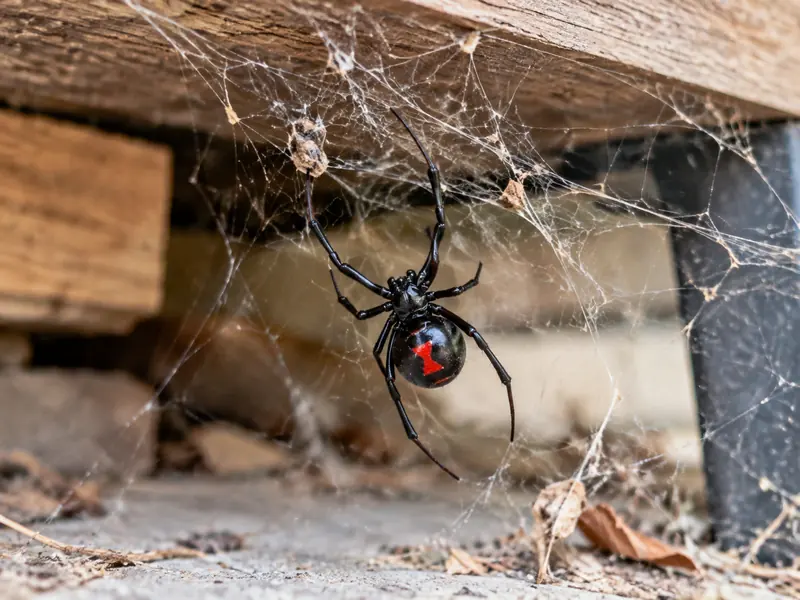
Look for them under patio furniture, in irrigation and water meter boxes, in woodpiles, around pool equipment, under the lip of outdoor flower pots, in the garage corners and in the gap under a deck or porch. Stone and rock walls on west-side lots are a favorite.
Wolf spiders and other harmless spiders
Plenty of the spiders Georgetown residents photograph are not dangerous:
- Wolf spiders: large, hairy, brown-and-gray, running fast across the floor. They hunt insects and rarely bite. They are common after rain and in fall.
- Orb weavers: the spiders behind large, round webs across walkways and porches in late summer.
- Jumping spiders: small, fuzzy, with big front eyes and a habit of hopping toward you.
- Cellar spiders: very long legs, tiny body, loose webs in corners. Often called daddy longlegs.
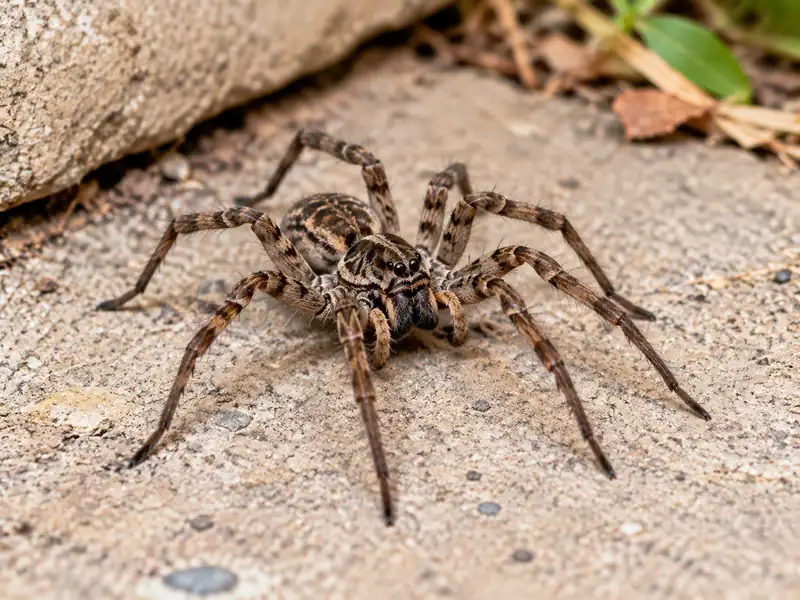
A lot of these indoors still means something: they are following insects. Fix the insect problem and spider numbers drop.
Signs you have a spider problem
- You see brown recluses more than once, especially in the same room
- Shed skins or egg sacs in boxes, closets or corners
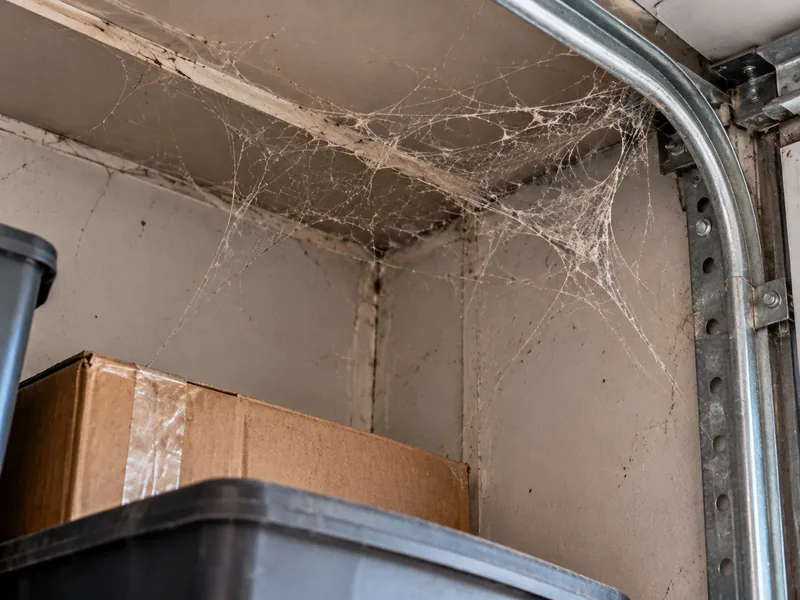
- Webs building up quickly in the garage, eaves and porch corners
- Black widow webs in meter boxes, under furniture or around the pool equipment
- Lots of insects at night around porch lights, which is the food supply
Why Georgetown homes get spiders
Rocky lots and stone walls
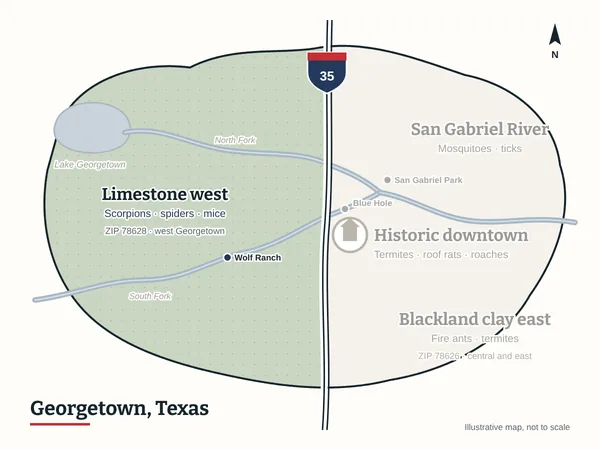
The limestone ground west of I-35, in neighborhoods like Cimarron Hills and the hilltop sections of Wolf Ranch, gives spiders and the scorpions that eat them the same loose rock and dry crevices to hide in. Rock borders against the foundation bring that habitat right up to the house.
Garages in new builds
New homes often have big garages full of moving boxes for months. Undisturbed cardboard is ideal brown recluse habitat, and the gap under a garage door that has not yet been sealed lets them in.
Woodpiles and stone fireplaces
Older homes in Berry Creek with wood-burning fireplaces often keep firewood stacked near the house. Woodpiles are prime black widow and brown recluse habitat, and carrying logs inside brings spiders with them.
How a spider exterminator Georgetown TX homeowners call works
Inspection
Checking garages, attics, closets, storage areas, eaves, meter boxes, rock beds and woodpiles to find where spiders live and what they are eating.
Treatment and de-webbing
Removing webs and egg sacs, treating cracks, voids and harborage where recluses hide, and treating exterior areas for widows. Sticky monitors help track recluse activity.
Exclusion and insect control
Sealing gaps under doors and around pipes, and treating the insects that draw spiders in. Ongoing service suits homes with steady recluse pressure.
Brown recluses are harder to control than most spiders. They live deep in clutter, do not walk through treated areas as much as insects do and can survive long periods without food. Expect a plan that combines treatment, monitors and decluttering over several visits.
A one-weekend garage clean-out that cuts spider numbers
Garages are where most Georgetown spider problems start. A single weekend makes a lasting difference:
- Saturday morning: pull everything off the floor and away from the walls, wearing gloves
- Sort: discard cardboard you do not need, and move the rest into lidded plastic bins
- Vacuum: webs, egg sacs, corners, the ceiling edges and the floor along every wall; empty the vacuum outside in a sealed bag
- Seal: replace the garage door bottom seal and the side weatherstripping, and caulk gaps where walls meet the slab
- Sunday: put bins on shelves off the floor with space behind them, and keep the center of the floor clear
- Light: switch the outdoor light by the garage door to a yellow bulb
Brown recluse or look-alike?
Many brown spiders get mistaken for recluses. Check before you worry:
| Feature | Brown recluse | Common look-alikes (wolf, cellar, funnel weaver spiders) |
|---|---|---|
| Eyes | Six, in three pairs | Usually eight |
| Body marking | Darker violin shape on the front of the body | Stripes, spots or no clear violin |
| Legs | Uniform color, no bands or obvious spines | Often banded, hairy or spiny |
| Web | No catching web | Wolf: none; funnel weaver: funnel web; cellar: loose web |
| Behavior | Hides by day in clutter | Wolf spiders hunt on floors and patios at night |
If you are unsure, take a clear photo and ask your exterminator or the Texas A&M AgriLife Extension office in Williamson County.
Calls connect you with an independent local exterminator.
Spider prevention checklist
- Replace cardboard storage with sealed plastic bins, especially in the garage and attic
- Keep clothes, shoes and towels off the floor; shake them out before use
- Pull beds away from walls and keep bed skirts off the floor
- Seal the garage door bottom and gaps around doors, windows and pipes
- Wear gloves when moving firewood, boxes or patio furniture and when reaching into meter boxes
- Store firewood off the ground and away from the house
- Switch porch lights to yellow bulbs to attract fewer insects
- Vacuum webs, egg sacs and corners regularly
Spider FAQs for Georgetown residents
Are brown recluse spiders common in Georgetown?
Yes. Brown recluses are found throughout Central Texas and are common in homes with lots of undisturbed storage, especially garages, attics and closets. Many homes have them without anyone being bitten.
What should I do after a spider bite?
Wash the area, apply a cold pack and watch it. Get medical care if pain spreads, a blister or open sore develops, or you feel sick, and get help right away for a suspected black widow bite with muscle cramps, sweating or trouble breathing. If you can safely catch or photograph the spider, it helps your doctor.
Do spiders and scorpions hide in the same places?
They do. Rock beds, garages, woodpiles and storage boxes suit both, and scorpions eat spiders. If you are seeing both, read our scorpion exterminator page too.
Why do spiders come back after treatment?
Spiders come back when their food supply and hiding places stay the same. New ones also walk in from outside. Cutting clutter, sealing gaps and reducing insects around the house keeps numbers down between treatments.
Should I kill every spider I see?
No need. Wolf spiders, jumping spiders and orb weavers are harmless and eat insects. Focus on brown recluses and black widows, and on whatever insect problem is feeding the rest.
Related pests and reading
Scorpion exterminator
Same rocky lots, same hiding spots.
Ant exterminator
Seeing ants too? Insects are what keep spiders around.
Pests in Berry Creek
Woodpiles, stone and wooded lots in an older neighborhood.
Sources: Texas A&M AgriLife Extension · Texas Department of State Health Services · Back to the Georgetown exterminator homepage