
Pest help · Georgetown, TX
Scorpion Exterminator in Georgetown, TX
If you have found a scorpion in the tub, on a bath towel or crawling up the hallway wall, you are not unlucky. You live in one of the richest scorpion habitats in Central Texas. The rocky ground west of I-35, the stone and brick on most homes and the steady clearing of ranch land for new streets all push the striped bark scorpion toward houses. This page explains what you are dealing with and what a scorpion exterminator Georgetown TX homeowners hire should actually do about it.
In short
Nearly every scorpion found inside a Georgetown home is the striped bark scorpion. Its sting hurts but is rarely dangerous to healthy adults. They enter through weep holes, door gaps and attic vents, and they hide in walls and attics during the day. Lasting control combines sealing those gaps with targeted treatment, usually repeated through the warm months.
Scorpion pest control in Georgetown, TX starts with the right species
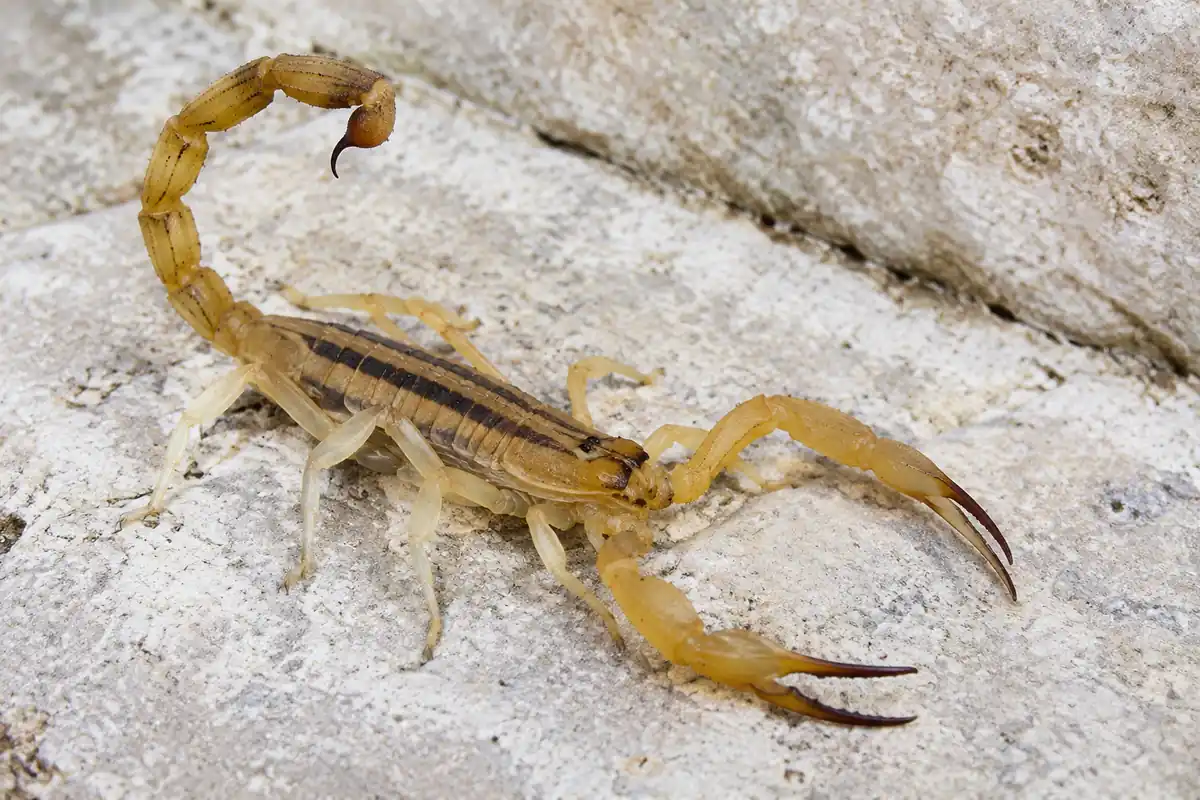
Texas has close to 20 scorpion species, but Georgetown homeowners deal with one almost every time: the striped bark scorpion, Centruroides vittatus. It is the most widespread scorpion in the state, according to Texas A&M’s insect identification service.
How to recognize it:
- Pale yellow to tan body, about 2 to 2½ inches long when grown
- Two dark stripes running down its back
- Long, slender pincers and a thin tail, thinner than the thick tails people picture from desert scorpions
- Moves quickly and climbs well. Bark scorpions can walk up brick, rough stucco, textured drywall and tree trunks, which is how they end up on ceilings and in bathtubs they cannot climb back out of
Females carry their young on their backs for a short time after birth. If you see a scorpion with a white, lumpy back, those are babies, and the nest area is close by.
Why Georgetown homes get scorpions
Scorpions are not attracted to dirty houses. They come in for three things: shelter, moisture and food. Georgetown supplies all three in a few specific ways.
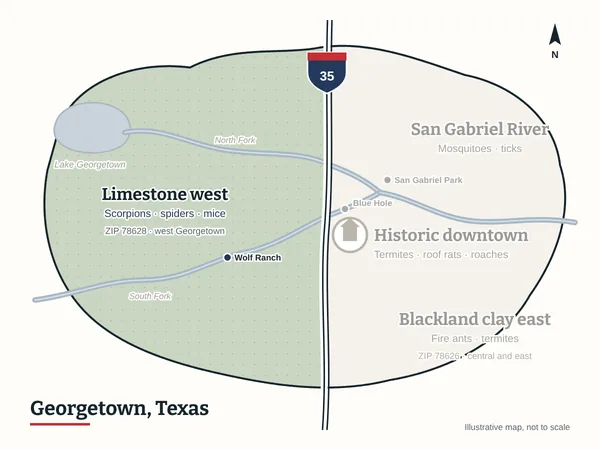
Limestone ground on the west side
West Georgetown sits on the edge of the Edwards Plateau, where the soil is thin and the bedrock is fractured limestone. Every crack, ledge and loose rock is a daytime hiding spot. Neighborhoods built into that ground, such as Cimarron Hills, the Hilltop section of Wolf Ranch and much of the 78628 ZIP, see far more scorpions than the clay-soil east side.
Construction on former ranch land
When a bulldozer clears a field, the scorpions living under rocks and brush do not vanish. They move to the closest shelter, which is often the newest row of houses. Georgetown added roughly a third more housing units between 2019 and 2024, much of it on cleared land, so many owners of brand-new homes find scorpions in their first summer. Our blog post on pests in new construction homes covers that first year in detail.
Stone, brick and rock landscaping
Brick and stone veneer have weep holes along the bottom row, small open joints meant to drain water. They are also perfect scorpion doorways. Rock borders, decorative boulders and stacked stone retaining walls next to the foundation give scorpions a place to wait for nightfall within a few feet of those openings.
Summer heat
Georgetown’s summer highs run in the mid-90s, peaking in August. When the ground is baking, scorpions look for cooler, damper spots: attics at night, wall voids, bathrooms, laundry rooms and the area under the kitchen sink. Texas A&M AgriLife has noted that hot, dry summers drive scorpions indoors across the state (AgriLife Today).
Signs you have scorpions, not just a scorpion
One scorpion every year or two is normal for many Georgetown lots. A pattern is different. These are the signs that point to an established population:
- You find more than one or two a month indoors during warm weather
- They appear on upper floors or ceilings, which suggests they are living in the attic or walls
- You see small, pale juveniles, which means breeding nearby
- Scorpions show up in the same room repeatedly, often a bathroom or laundry room with plumbing in the wall
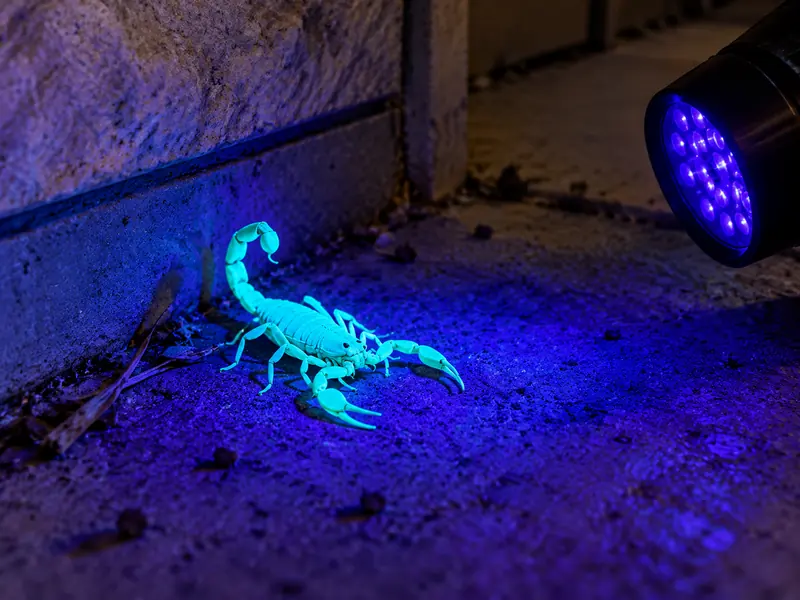
- A blacklight walk around the outside at night shows several on the brick, fence or rock beds
That blacklight check is worth doing. Scorpions fluoresce blue-green under ultraviolet light, so an inexpensive UV flashlight turns a vague worry into a count. Walk the foundation, the fence line and any rock beds an hour after dark in June or July.
What a scorpion exterminator Georgetown TX homeowners hire actually does
Spraying the baseboards and leaving is not scorpion control. Bark scorpions can go long stretches without eating and are less affected by many sprays than insects are, so an independent exterminator who knows this pest works in three layers.
1. Inspection
Walks the exterior at the slab line, checks weep holes, door sweeps, garage door seals, attic vents and plumbing entries, and looks at rock beds, woodpiles and debris. Inside, the attic and any room with repeated sightings get a close look.
2. Treatment
Applies products to the harborage areas found in the inspection: the foundation edge, rock and mulch beds, eaves and, where needed, the attic and wall voids. Dust in voids and residual products on exterior surfaces are common. Brands and exact products vary by company.
3. Exclusion and follow-up
Seals or screens the entry points, or tells you exactly which ones to fix. Because scorpions keep arriving from surrounding land, most west-side homes need repeat service through the warm season rather than a single visit.
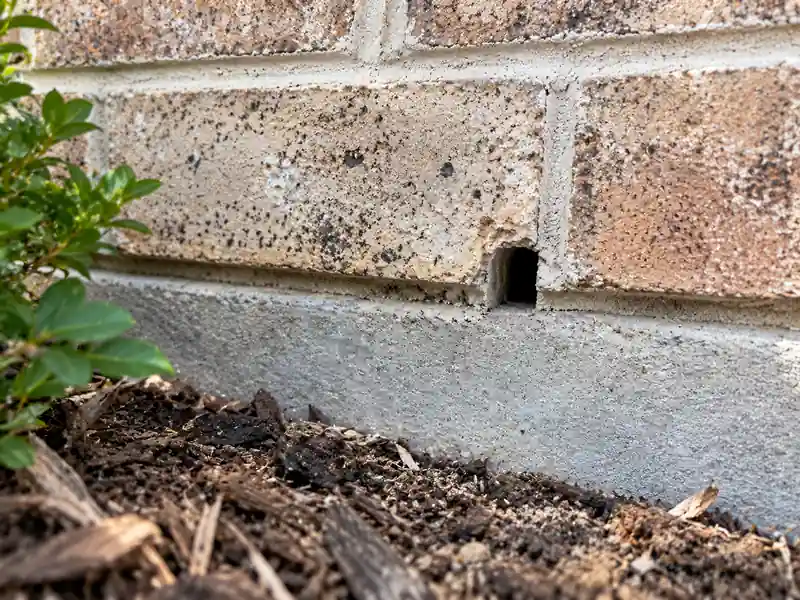
A note on weep holes: never fill them with caulk or mortar. They let moisture drain out of the wall. The right fix is a breathable insert or mesh cover that stops scorpions and still drains.
Scorpion season in Georgetown
Scorpions are active roughly from March through October here, with a clear peak in July and August when heat drives them indoors. They slow down in the coldest weeks but do not disappear, and a warm spell in winter can bring one out from the attic. A good schedule looks like this:
| Time of year | What scorpions are doing | What to do |
|---|---|---|
| March – April | Becoming active after winter | Seal gaps and check weep holes before the season builds |
| May – June | Hunting and breeding | First exterior treatment; clear rock beds next to the slab |
| July – August | Peak indoor sightings | Attic check; shake out shoes, towels and bedding |
| September – October | Still active, tapering off | Follow-up treatment; fix anything found in summer |
| November – February | Mostly hidden | Good time for repairs, sealing and attic work |
Calls connect you with an independent local exterminator.
Scorpion prevention checklist for Georgetown homes
These steps cut indoor sightings noticeably, and they make professional treatment last longer.
- Fit breathable weep-hole covers along the bottom row of brick or stone
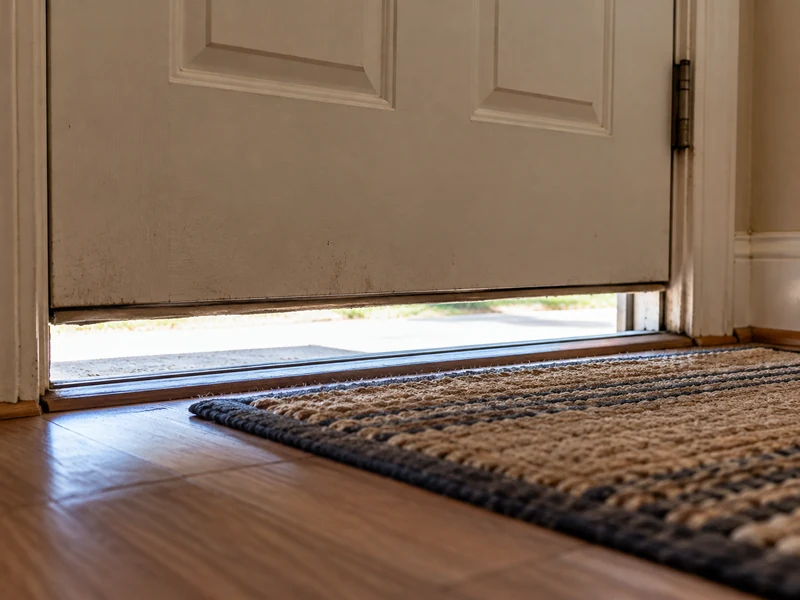
- Replace worn door sweeps and the rubber seal on the garage door; if you can see daylight under a door, a scorpion can get through
- Seal gaps around pipes, AC lines and cable entries with sealant or copper mesh
- Screen attic and soffit vents with fine mesh
- Pull rock borders, landscape boulders and firewood at least a couple of feet away from the foundation
- Keep mulch thin next to the slab, and trim shrubs and branches so they do not touch the house
- Move pet food and water bowls off the patio at night; they draw the insects scorpions eat
- Pull beds a few inches from the wall and keep bed skirts and comforters off the floor
- Shake out shoes, gloves and towels left on the floor, especially in summer
Scorpion FAQs for Georgetown residents
Are Georgetown scorpions dangerous?
For most healthy adults, a striped bark scorpion sting is painful, with burning, swelling and sometimes numbness that fades over hours. Young children, older adults, people with allergies or anyone with trouble breathing, swallowing or widespread symptoms after a sting should get medical care right away. When in doubt, call your doctor or Poison Control.
Why do I see more scorpions after rain or in heat waves?
Both push them out of their usual hiding spots. Heavy rain floods cracks and burrows, and extreme heat dries out the soil. In both cases the house, with its stable temperature and moisture around plumbing, becomes the most comfortable spot nearby.
Do scorpions really glow under a blacklight?
Yes. A substance in their outer layer fluoresces blue-green under UV light. A UV flashlight is the easiest way to check your walls, fence and rock beds after dark, and it shows whether treatment is working.
Do spiders and scorpions hide in the same places?
Often. Garages, storage boxes, woodpiles and rock beds suit both, and scorpions eat spiders. If you have a lot of one, you usually have the other. Our spider exterminator page covers the brown recluse and black widow side.
Will one treatment get rid of scorpions for good?
Rarely, especially west of I-35. The land around your house keeps producing them. Sealing entry points makes the biggest long-term difference, and most homes with steady pressure use repeat treatments during the warm months.
I just moved into a new house. Why are there already scorpions?
The land under and around your home was their habitat until recently, and construction scattered them. Sightings often drop after the first year or two as landscaping matures and gaps get sealed. See the scorpions in Georgetown post for more on why they come inside.
Related pests and reading
Spider exterminator
Brown recluse and black widow spiders share the same garages and rock beds.
Pests in Wolf Ranch
Why Hilltop and South Fork homes see scorpions in their first summers.
Scorpions in Georgetown, TX
A deeper look at why they come inside and a full sealing checklist.
Sources: Texas A&M Field Guide to Common Texas Insects, striped bark scorpion · Texas A&M AgriLife urban IPM, striped bark scorpions · AgriLife Today, hot dry summer sends scorpions indoors · Back to the exterminator Georgetown TX homepage