
Pest help · Georgetown, TX
Mosquito Control in Georgetown, TX
Georgetown is built around water. The North and South Forks of the San Gabriel River meet in the middle of town, creeks run through Berry Creek and the newer subdivisions, and nearly every neighborhood has drainage channels and ponds. Add a long warm season and the result is mosquitoes from spring well into fall, plus repeated West Nile virus detections in city traps. Here is what mosquito control Georgetown TX yards actually need, and what you can do yourself.
In short
Most mosquitoes biting you at home bred within a few hundred feet, often in your own yard. Dumping standing water every week does the most good. Professional yard treatments target the shady places adult mosquitoes rest and the water where larvae grow, and are typically repeated every few weeks through the season.
Why Georgetown yards get mosquitoes
Two river forks and the trail system
The San Gabriel River forms in Georgetown where the North and South Forks meet at San Gabriel Park, and nearly nine miles of city trails follow the water. Backwater pools, shaded banks and thick brush along the river corridor are ideal mosquito habitat. Homes near the river, Blue Hole and the trail, including river-edge sections of Wolf Ranch, feel it first.

Creeks, ponds and drainage
Creek lots, golf course water features in Berry Creek and stormwater ponds in newer subdivisions hold water for days after a storm.
Your own yard
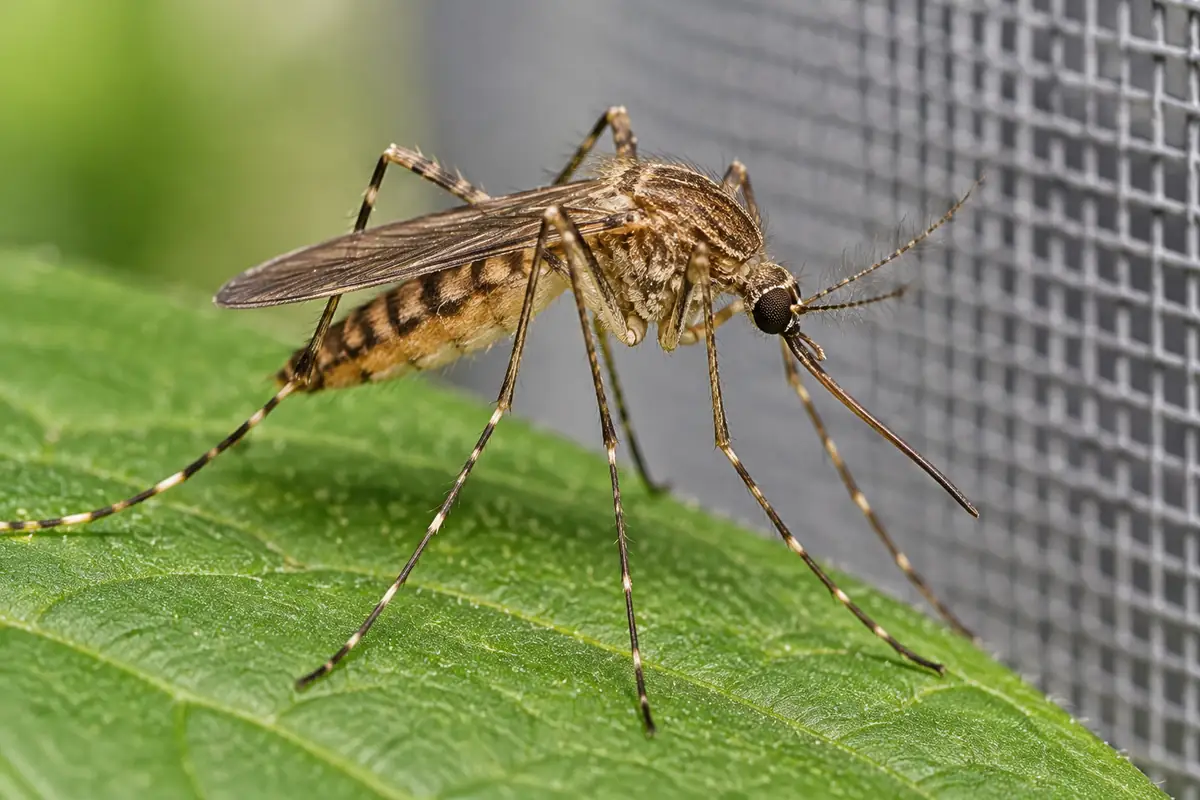
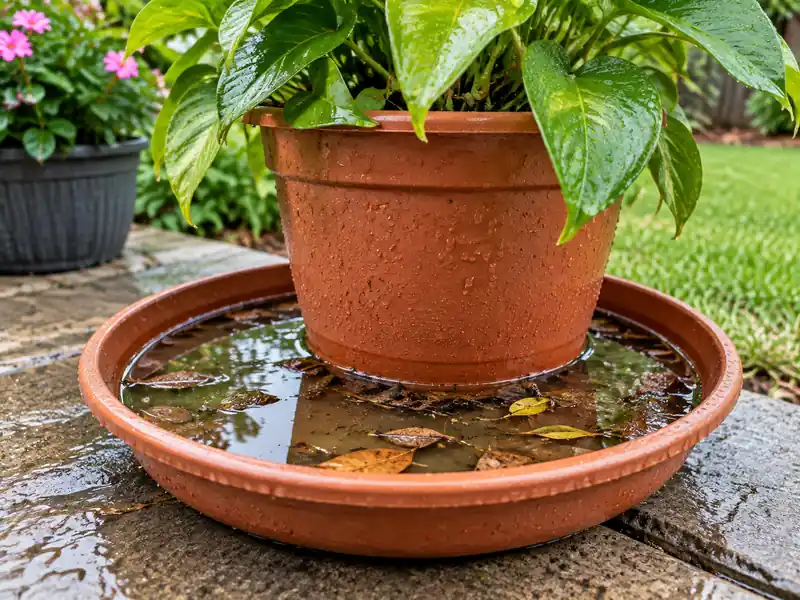
Some of Georgetown’s most common biting mosquitoes, like the Asian tiger mosquito, breed in containers as small as a bottle cap. Plant saucers, clogged gutters, tarps, tires, toys, birdbaths and the drain trays under AC units all count.
May and October rain
Georgetown’s wettest months are May and October. Each soaking is followed, about a week later, by a new wave of mosquitoes.

West Nile virus in Georgetown
West Nile virus has been found in mosquito traps in several parts of Georgetown, including downtown near Main and Third streets, in Berry Creek at Diamond Dove Trail and Airport Road, on South Maple Street and around city parks such as Pinnacle Park, according to City of Georgetown notices and local coverage of health district testing (downtown notice, Williamson County Sun on Berry Creek, S. Maple Street notice, Fox 7 on Pinnacle Park).
West Nile is spread mainly by Culex mosquitoes, which bite from dusk through the night and breed in still, nutrient-rich water. Most people infected have no symptoms, but some develop fever, and a small number develop serious illness. People over 50 and those with certain medical conditions face higher risk, according to the CDC. The Williamson County and Cities Health District runs mosquito surveillance and promotes three steps:
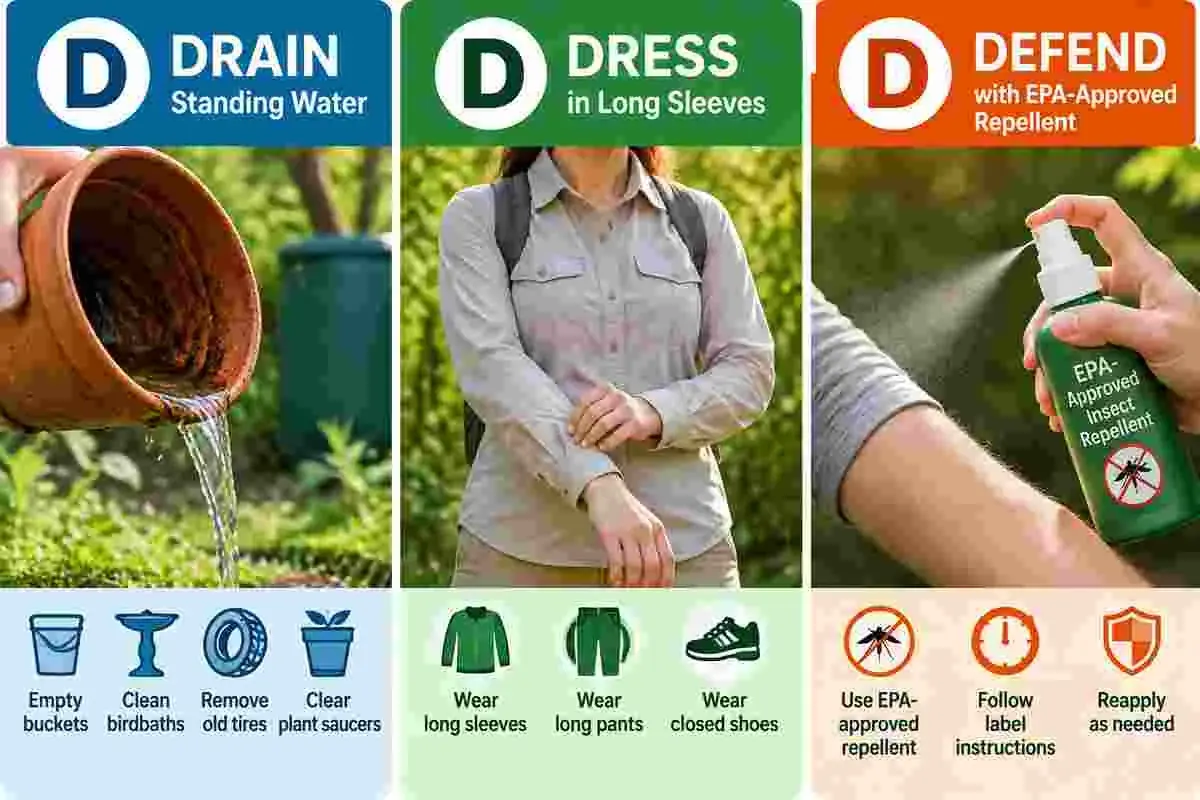
- Drain standing water around your home every week
- Dress in long sleeves and long pants outdoors, especially at dawn and dusk
- Defend yourself with an EPA-registered insect repellent, used as the label directs
Our West Nile mosquito season post covers the detections and what they mean for your family.
How mosquito control Georgetown TX yards get works
Inspection
Walking the property to find breeding water and resting areas: dense shrubs, the shady side of fences, under decks, ivy and ground cover, and drainage spots.
Barrier treatment
Applying a product to the foliage and shaded surfaces where adult mosquitoes rest during the day. Typically repeated every few weeks from spring through fall.
Larvicide
Treating water that cannot be drained, such as ornamental ponds or low spots, with larvicides like Bti that target mosquito larvae.
Spraying, fogging and misting
- Barrier sprays are the most common residential service and last longer than fogging.
- Fogging knocks down adult mosquitoes in the air at the time of treatment but leaves little lasting effect. Useful before an outdoor event.
- Misting systems are permanent nozzles around a yard that spray on a timer. They are an investment, need maintenance and keep applying product whether it is needed or not, so many households prefer scheduled barrier service.
Ask what product will be used, how it is applied near flowering plants and pollinators, how long to keep children and pets off treated areas and how often service is scheduled.
Which mosquito is biting you: daytime or dusk?
The time of day you get bitten tells you a lot about where the mosquitoes are coming from.
| Daytime biters | Dusk and night biters | |
|---|---|---|
| Common type | Asian tiger mosquito and yellow fever mosquito (Aedes) | Southern house mosquito and related Culex species |
| Look | Small, black with bright white stripes on the legs | Plain brown |
| Where they breed | Small containers: saucers, buckets, toys, tarps, gutters | Still, dirty water: storm drains, ponds, ditches, neglected pools |
| How far they travel | Usually stay close to where they hatched | Can travel farther |
| What it means | The source is almost certainly in your yard or a neighbor’s | Look at drainage, ponds and storm drains nearby |
| Disease note | Aggressive biters | Culex species are the main West Nile carriers |
A ten-minute weekly yard walk
Most Georgetown yards can be checked in ten minutes. Pick one day a week from April through October and walk the same route:
- Front porch and entry: potted plant saucers, decorative bowls, a forgotten watering can
- Gutters and downspouts: clogs that hold water after rain, and splash blocks with puddles
- Side yards: trash and recycling bins with lids that collect water, tarps over equipment, stacked buckets
- AC unit: the condensate line outlet and any low spot where it drips
- Back yard: birdbaths, pet bowls, kids’ toys, wheelbarrows, pool covers and kiddie pools
- Fence line and low spots: areas where water stands for days after a storm
- Water features: add larvicide to ornamental ponds, fountains and rain barrels you cannot drain
Retention ponds, HOAs and neighbors
Many Georgetown subdivisions have detention or retention ponds and drainage channels. If mosquito problems persist even though your own yard is clean, the source may be a common area. HOAs and property managers can ask their pest control provider to treat common-area water with larvicide and check drainage that holds water longer than intended. A friendly note to a neighbor about a neglected pool or a pile of tires often helps the whole street.
Calls connect you with an independent local exterminator.
Mosquito prevention for your yard
- Tip and drain anything holding water once a week: plant saucers, buckets, toys, tarps, wheelbarrows
- Change birdbath and pet water every few days
- Clean gutters so they drain completely, and check the drain lines from AC units
- Fill low spots where water stands after rain
- Use larvicide dunks in ponds, rain barrels and water features that you cannot drain
- Trim dense shrubs and ground cover where mosquitoes rest
- Repair torn window and door screens
- Use a fan on the patio; mosquitoes are weak fliers
Mosquito FAQs for Georgetown residents
Does the city spray for mosquitoes in Georgetown?
Mosquito surveillance and response in the area involves the Williamson County and Cities Health District, and targeted ground spraying has been carried out near positive trap sites in the past. That kind of spraying is not a substitute for draining standing water and treating your own yard.
How often does mosquito treatment need repeating?
Barrier treatments typically last a few weeks, depending on rain, heat and the product. Most yard programs run on a schedule from spring through fall.
Is mosquito spraying safe around kids, pets and bees?
Products are labeled with directions on application, re-entry and drying time. Ask the technician to avoid spraying flowering plants while pollinators are active, keep kids and pets off treated areas until dry, and follow the instructions given.
Why do I see mosquitoes inside the house?
They follow people in through doors, torn screens and garages, and some breed in indoor plant saucers and drains. Check screens and indoor water sources.
Are those giant “mosquitoes” dangerous?
The large, leggy insects bumping into walls in spring are usually crane flies. They do not bite and are harmless to people.
I collect rainwater. How do I keep the barrel from breeding mosquitoes?
Seal the lid, cover the inlet and overflow with fine window screen, and check the screen after every big storm, since debris tears it. For water you cannot cover, such as a decorative pond or a trough, a larvicide labeled for that use, such as Bti dunks, kills larvae without harming fish or pets when used as directed.
Does cutting back shrubs and tall grass actually help?
Yes. Adult mosquitoes spend the hot part of the day resting in dense, shady, humid vegetation, and the CDC lists grass, shrubs and thick vegetation as their usual resting spots. Thinning ligustrum and photinia hedges, keeping ground cover off the foundation and mowing the strip along the back fence leaves them fewer places to wait for you.
Related pests and reading
West Nile in Georgetown
Where it has been found and how to protect your family.
Flea and tick control
The other pests that come with river-trail living.
Areas we serve
How pests change along the San Gabriel and across town.
Sources: CDC, West Nile virus · Williamson County and Cities Health District · U.S. EPA, insect repellents · American Trails, San Gabriel River trails · Back to the Georgetown exterminator homepage