
Locations · Historic Downtown and Old Town · ZIP 78626
Historic Downtown Exterminator in Georgetown, TX: Old Town and the Square
Downtown Georgetown is the reason a lot of people fell for the city: the 1911 courthouse, the storefronts around the Square, the Victorian houses under century-old trees, and the Red Poppy Festival that fills the streets each April. The same history brings particular pests. Old wood, pier-and-beam floors, big shade trees and shared commercial walls mean pest control downtown Georgetown TX property owners need looks different from what a new subdivision needs.

In short
Historic Downtown and Old Town are in ZIP 78626, which this site covers. The main pests are termites in original wood framing, roof rats and mice in older rooflines and crawl spaces, German cockroaches in the shared buildings around the Square, and mosquitoes from the nearby river. Before changing a historic exterior to keep pests out, check the city’s design guidelines.
What a Historic Downtown exterminator deals with in Old Town (ZIP 78626)
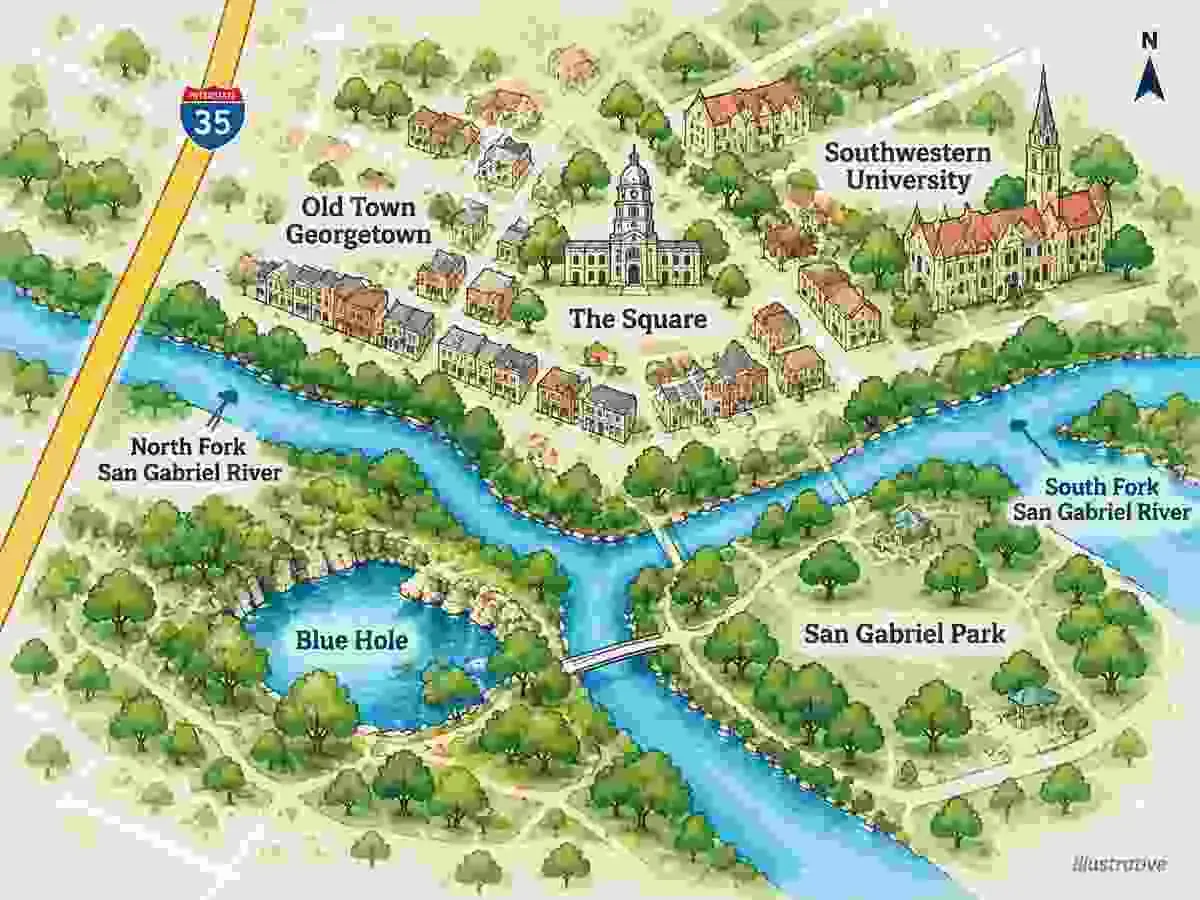
The Williamson County Courthouse Historic District, roughly 46 contributing buildings of Victorian commercial and residential architecture, was listed on the National Register of Historic Places in 1977, and the surrounding blocks form one of the most intact Victorian-era downtowns in Central Texas. Around it are residential historic districts with their own character: the University Avenue and Elm Street district with large 1890s frame homes, and the Olive Street district, listed in 2013, with houses dating to the 1880s along a tree-lined drive. Southwestern University, Texas’s oldest university, sits on the east edge of downtown, and Blue Hole and San Gabriel Park are a short walk north.
Victorian homes and termites: why original wood needs regular inspections
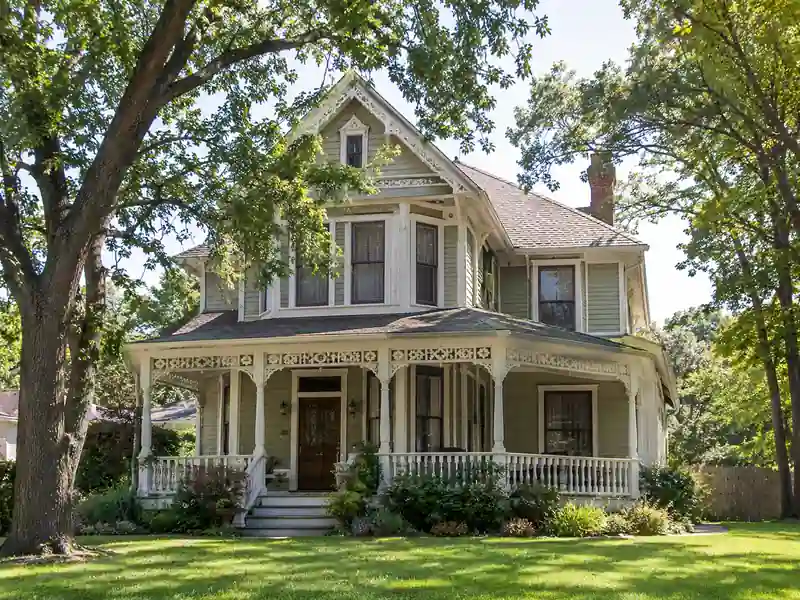
A house that has stood for a century has outlasted plenty of termite seasons, but it has also had a century of repairs, additions and settling. Original sills, wood siding, porch posts and steps sit closer to the soil than modern building practice allows, and earlier treatments wore off long ago. Subterranean termites swarm downtown in spring just as they do everywhere else in Georgetown.
What older-home owners should do:
- Schedule a termite inspection every year, not just at sale time
- Keep soil, mulch and flower beds away from wood siding and sills
- Watch porch posts, steps and lattice where wood meets ground
- Learn the difference between termite swarmers and flying ants using our flying ants vs. termites post
See termite control for treatment options that suit older construction.
Pier-and-beam crawl spaces: rodents, moisture and access points
Many older downtown homes sit on pier-and-beam foundations, with a crawl space under the floor. Crawl spaces are dark, sheltered and often damp, which suits rodents, cockroaches and termites. Torn vent screens, gaps in the skirting and openings around plumbing let them in, and from there rodents climb into wall cavities.
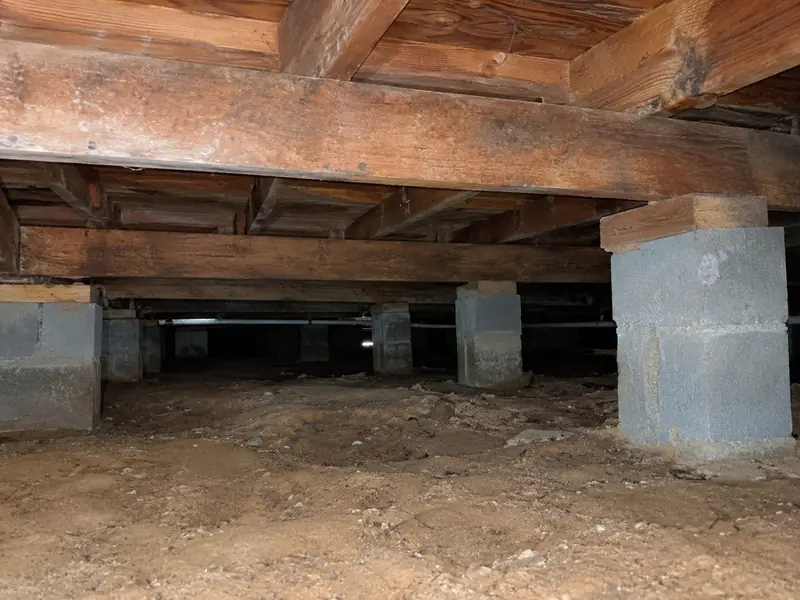
A good inspection includes going under the house to check sills, joists, piers, vent screens, moisture and any sign of rodent activity or mud tubes.
Before anyone crawls under, a few things make the visit faster and cheaper to diagnose. Clear the path to the crawl space hatch or skirting door, note any room where the floor feels soft or bouncy, and mention whether the house has had foundation leveling, because shims and new piers can hide old termite galleries. If a plumber recently worked under the house, say so too; cut insulation and fresh openings around drain lines are the first places mice and roaches use. In homes near Blue Hole or the river, ask the inspector to check the moisture reading on the sill plate, since wood that stays above roughly 20 percent moisture invites both subterranean termites and wood decay.
Old trees and older rooflines: roof rats in Old Town attics
Mature pecans and live oaks shade most of Old Town. Branches over the roof give roof rats a path, and older rooflines, chimneys and attic vents often have gaps. Noises in the ceiling at night, droppings in the attic and chewed vent screens are the usual signs, especially from October through winter. Sealing those gaps comes before any trapping, which is why rodent exclusion matters so much in Old Town.
Restaurants and shops on the Square: cockroaches and rodents in shared buildings
Commercial buildings around the Square share walls, basements and utility chases, and many have housed a series of businesses over the decades. German cockroaches and mice travel between spaces, so one tenant’s problem quickly becomes the neighbor’s. Restaurants face health inspections on top of that. Scheduled, documented service is the norm for food businesses; see the commercial exterminator page and the cockroach exterminator page.
Near the river: mosquitoes and West Nile detections downtown
City notices have reported West Nile virus in mosquito traps near Main and Third streets and, in 2023, at Blue Hole Park. Blue Hole and San Gabriel Park keep water close by year-round, so drain planters, gutters and courtyard fountains every week from May through October. The mosquito control page goes further into yard treatments.
Carpenter ants in damp older wood
Carpenter ants nest in wood that has stayed damp, such as rotting window sills, porch ceilings and areas around old plumbing leaks. Coarse sawdust-like debris below the wood is the giveaway. Fixing the moisture is half the job. Carpenter ants also show up in our notes on Georgetown ant species.
Pest control downtown Georgetown TX: check the design guidelines first
Georgetown’s Downtown and Old Town Historic Overlay Districts apply design guidelines to exterior changes. Most pest-proofing work, such as sealing gaps, replacing torn vent screens or adding door sweeps, is minor. Changes that alter how a historic exterior looks, such as new vents, replacement siding or skirting, may need review. Check with the City of Georgetown’s historic preservation office before starting larger exterior work.
Buying a historic home downtown: a pest checklist
Older homes reward careful buyers. Before closing on a historic property in Old Town or near the Square:
- Order a termite (WDI) inspection and ask the inspector to go under the house if it is pier-and-beam
- Ask the seller for every past pest treatment record and any active termite agreement
- Look for patched drill holes along foundations and porches, and bait stations in the yard
- Check the attic for droppings, chewed vent screens and gaps where the roof meets walls
- Note any trees overhanging the roof and the cost of trimming them
- Look for soft or damp wood on sills, porch posts and window frames
- Ask the city about historic overlay rules before planning exterior changes such as new vents or skirting
Calls connect you with an independent local exterminator.
What to tell an exterminator when you reach out
- That the property is downtown or in Old Town, ZIP 78626, and its approximate age
- Whether it is on pier-and-beam or a slab, and whether there is a crawl space
- For businesses: the type of business and whether walls are shared
- The pest, where it shows up and for how long
Historic Downtown pest control FAQs
Are Victorian and other older Georgetown homes more prone to termites?
Generally yes. Older homes have more wood close to the soil, more years of settling and repairs, and treatments that wore off long ago. Yearly inspections are the surest defense.
Do historic-district rules affect pest-proofing work such as new vents or screens?
They can. Small repairs like sealing gaps and replacing screens are usually simple, but visible changes to a historic exterior may need review under the overlay district guidelines. Check with the city before larger work.
Has West Nile virus been found downtown?
Yes. The city has announced positive samples from a trap near Main and Third streets and from Blue Hole Park, a few blocks away. Draining standing water and using repellent at dusk are the two habits that matter most.
Do restaurants on the Square need regular pest control?
Food businesses are expected to keep their premises clear of pests, and shared walls around the Square make that harder. Regular, documented professional service is the practical way to meet that expectation.
Can rodents get in through a pier-and-beam crawl space?
Yes. Torn vent screens, gaps in skirting and openings around pipes are common entry points. From the crawl space, rodents move into walls and attics.
Should I get a termite inspection before buying a historic home?
Absolutely. Ask for past treatment records, have the inspector check the crawl space and exterior wood carefully, and consider a contractor’s opinion on any damage found.
More pest help near downtown
Termite control
Treatment options for older and pier-and-beam homes.
Commercial exterminator
Scheduled service for businesses around the Square.
All Georgetown areas
How pests change across 78626 and 78628.
Sources: Georgetown, Texas · National Register nomination, Williamson County Courthouse Historic District · City of Georgetown historic districts · American Planning Association, Great Places: Georgetown · Back to the Georgetown exterminator homepage