
Pest help · Georgetown, TX
Termite Control in Georgetown, TX
Termites are the one Georgetown pest that rarely announces itself until the damage is done. They live in the soil, travel inside mud tubes and eat wood from the inside out, so most homeowners only find them in spring, when a cloud of winged swarmers pours out of a wall or window frame. The good news is that termite control Georgetown TX homes need is well understood. The key is knowing which termite you have and what kind of house it is attacking.
In short
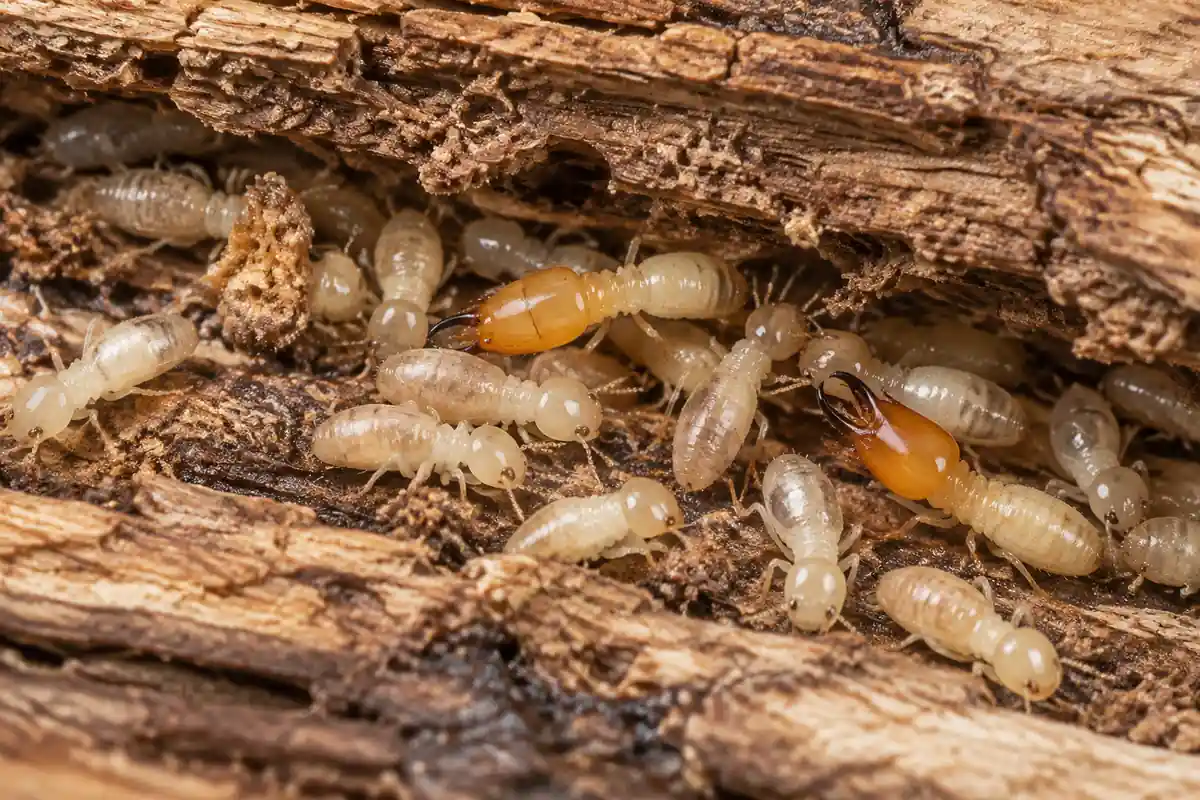
Georgetown’s termite problem is subterranean termites that come up from the soil. Signs include mud tubes on the slab, swarmers or shed wings near windows in spring, and hollow or blistered wood. Treatment is usually a liquid soil barrier, a bait station system, or both, followed by yearly inspections.
Signs of termites in your house
Most termite colonies are found by accident. Knowing what to look for turns a lucky find into a routine check.
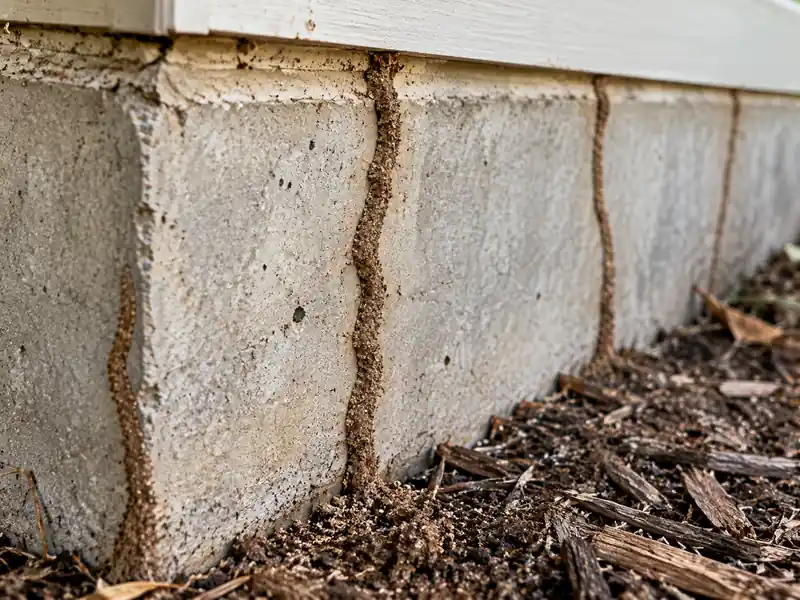
- Mud tubes. Pencil-width tunnels of soil running up the foundation, a pier or the inside of the garage wall. Termites build them to stay moist while they travel from soil to wood. Break one open; if you see small cream-colored insects, it is active.
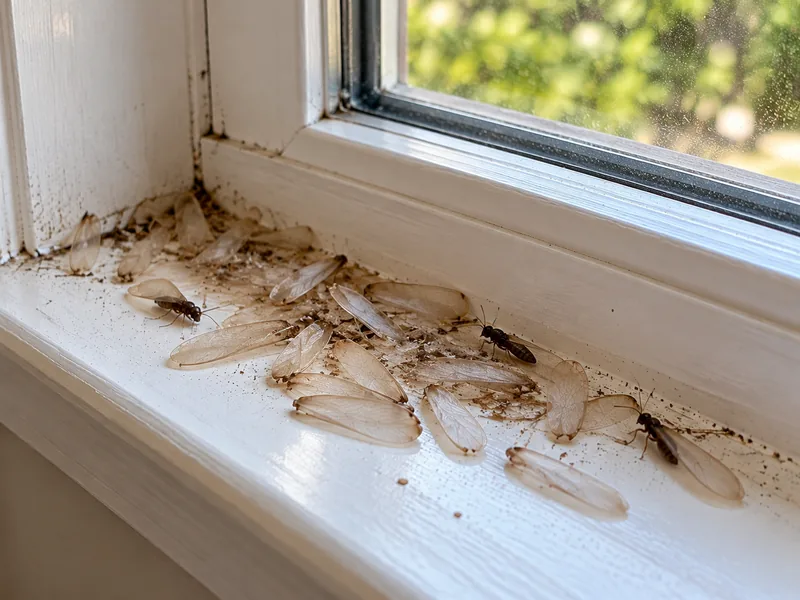
- Swarmers indoors. Winged termites around windows, light fixtures or sliding doors, usually on a warm, still day after rain. A swarm inside the house means a mature colony in or under the structure.
- Discarded wings. Piles of small, equal-length wings on windowsills or in spider webs. Swarmers drop their wings within hours.
- Damaged wood. Baseboards, door frames or trim that sound hollow when tapped, blister under paint, or crumble along the grain.
- Sticking doors and windows. Moisture from termite activity can warp frames, though Georgetown’s shifting clay causes this too.
Why Georgetown homes get termites
Termites live in the soil across all of Williamson County. What changes from one neighborhood to the next is how easily they reach the wood.
East-side clay that cracks slabs
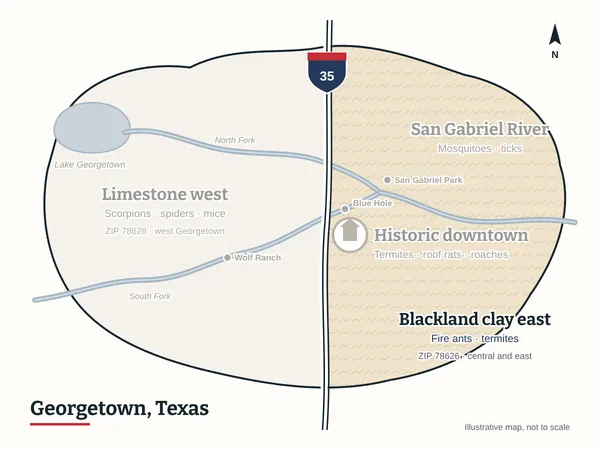
East of I-35, much of Georgetown sits on Blackland Prairie clay. This soil swells when wet and shrinks hard in dry spells, and that movement creates hairline cracks in slabs and gaps where plumbing comes through the foundation. Subterranean termites only need a gap about the thickness of a credit card. Neighborhoods on this clay, including the east-side subdivisions in 78626, see steady termite pressure.
Old wood downtown and in Old Town
The historic district around the 1911 courthouse and the Victorian homes on streets like University Avenue and Olive Street were built with wood framing, wood siding and, in many cases, pier-and-beam foundations. Old wood near soil, original sills and decades of small repairs give termites many ways in. Our Historic Downtown page goes into those homes in detail.
Older homes near water and trees
Homes from the 1980s and 1990s in Berry Creek often have wood decks, big porches, mature trees and lots that back onto a creek or green space. Moist soil and wood touching the ground are exactly what termites look for. Firewood stacked against the house for a stone fireplace is another common starting point.
New homes are not immune
Builders in Texas typically treat the soil before pouring a slab, but that protection weakens with time and can be disturbed by later landscaping, patios or plumbing work. Keep your builder’s treatment paperwork and know when it expires.
Subterranean vs. drywood termites
| Subterranean termites | Drywood termites | |
|---|---|---|
| Where they live | In the soil, reaching wood through mud tubes | Inside dry wood, no soil contact needed |
| How common in Georgetown | The termite behind almost all local damage | Uncommon this far inland; sometimes arrive in old furniture |
| Main clue | Mud tubes, swarmers in spring | Tiny six-sided pellets piling up below wood |
| Usual treatment | Soil barrier, bait stations | Spot treatment or whole-structure fumigation |
Two kinds of subterranean termites matter here. Native subterranean termites swarm during the day, mostly from February into May. Formosan termites, an invasive species found in a growing number of Texas counties, swarm at dusk or at night in late spring and are drawn to lights. A swarm at night around a porch light is worth reporting to your exterminator.
How termite treatment works: what termite control Georgetown TX homes get
A good termite inspection comes first, because the right treatment depends on the construction, where the activity is and how the house was protected before. An independent termite exterminator will usually recommend one of these:
Liquid soil barrier
A termiticide applied to the soil around and sometimes under the foundation, through trenching and drilling. Termites passing through treated soil are killed or carry the product back. It works quickly and protects for years.
Bait stations
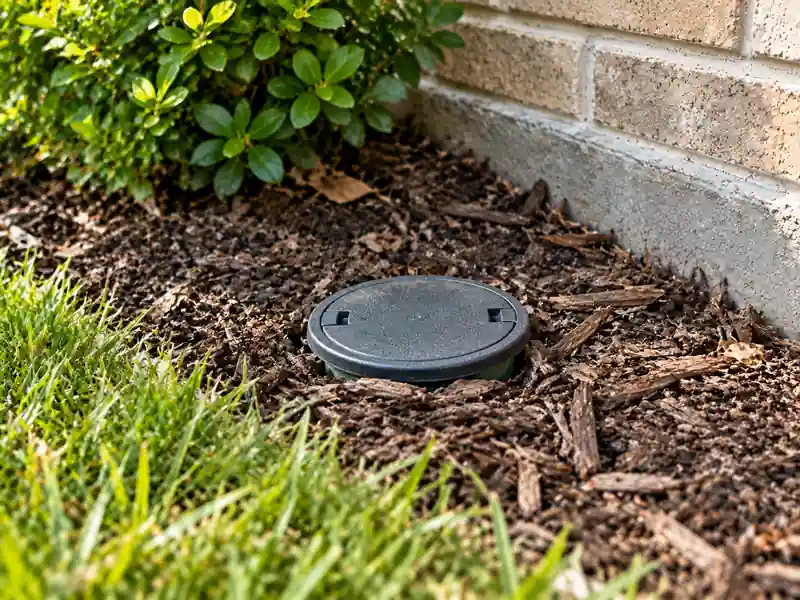
In-ground stations placed around the house hold a bait that termites carry back to the colony, slowly eliminating it. Stations are checked on a schedule. Useful where drilling is difficult or when you prefer fewer liquid applications.
Pre-construction treatment
Applied to the soil before a slab is poured. Most Georgetown builders do this. It is the reason new homes start out protected, and the reason you should know when that protection ends.
Tenting, or fumigation, is used for drywood termites and is almost never needed for the subterranean termites common in Georgetown. If someone recommends tenting a slab home here, ask why.
Product brands vary from one company to the next, and that is fine. What matters is that the exterminator explains what will be applied, where, how long it should last and what their re-treatment terms are, all in writing.
Swarm season in Georgetown
Termite swarms are the clearest window into what is happening under your house. Here is the typical local pattern:
- February through May: native subterranean termites swarm on warm days after rain, often mid-morning to early afternoon
- Late spring: Formosan termites, where present, swarm in the evening or at night near lights
- Rest of the year: colonies feed quietly; mud tubes are the main clue
If you are not sure what you saw, our blog post on flying ants vs. termites explains the three-point test with pictures.
Calls connect you with an independent local exterminator.
Prevention and yearly protection
You cannot change the soil, but you can make your house a much harder target.
- Keep soil, mulch and landscape beds a few inches below the top of the slab so you can see the foundation edge
- Fix leaking faucets, AC condensate lines and gutters that dump water at the foundation
- Store firewood off the ground and well away from the house
- Keep wood decks, fences and trellises from touching siding
- Do not stack lumber or cardboard against exterior walls or in a crawl space
- Repair cracked slab edges and seal plumbing penetrations
- Get an inspection every year, and before buying any home. Our termite inspection page explains what a Texas WDI report covers
Termite FAQs for Georgetown homeowners
Do Georgetown homes need to be tented for termites?
Almost never. Tenting is for drywood termites, which are uncommon inland. The subterranean termites behind most Georgetown damage are handled with soil treatments or bait stations.
Are flying termites always a sign of an infestation?
Swarmers outdoors, on a fence or woodpile, mean there is a colony nearby, which is normal in Central Texas. Swarmers coming out inside the house, or shed wings piled on an indoor windowsill, mean the colony is feeding in or under your structure and needs attention.
Can termites come in on firewood?
They can travel with wood that has been sitting on the ground, and a woodpile against the house gives them a bridge. Keep firewood raised and away from walls, and bring in only what you will burn soon.
How often should a Georgetown home be inspected for termites?
Once a year is the usual recommendation, and whenever you buy a home. Older homes, homes on clay soil and homes near creeks benefit most from keeping that schedule.
Is termite treatment safe around kids and pets?
Termite products are applied to soil or placed inside stations, not sprayed in living areas. Ask for the label and the safety data for the product used, keep children and pets away from treated soil until it dries, and follow the technician’s directions.
Related pests and reading
Termite inspection
What a WDI report covers when buying or selling, and what drill holes along a slab mean.
Ant exterminator
Carpenter ants can look like termite damage. Here is how to tell.
Flying ants vs. termites
The three-point test for swarm season.
Sources: AgriLife Today, Texans need to keep an eye out for termites · Texas Department of Agriculture, structural pest control · Bureau of Economic Geology, Balcones and Blackland Prairie geology · Back to the Georgetown exterminator homepage