
Georgetown, Texas · ZIP codes 78626 and 78628
Exterminator in Georgetown, TX
Georgetown sits right on the line where Hill Country limestone meets Blackland Prairie clay, with two forks of the San Gabriel River running through the middle and new subdivisions going up on old ranch land every year. That mix is why a scorpion problem in Wolf Ranch, a termite problem near the Square and a fire ant problem on the east side need three different answers. Type exterminator Georgetown TX into a search bar and you get a wall of company ads. This site explains each pest in plain terms first, so you know what you are dealing with before anyone sets foot in your home.
Calls connect you with an independent local exterminator.
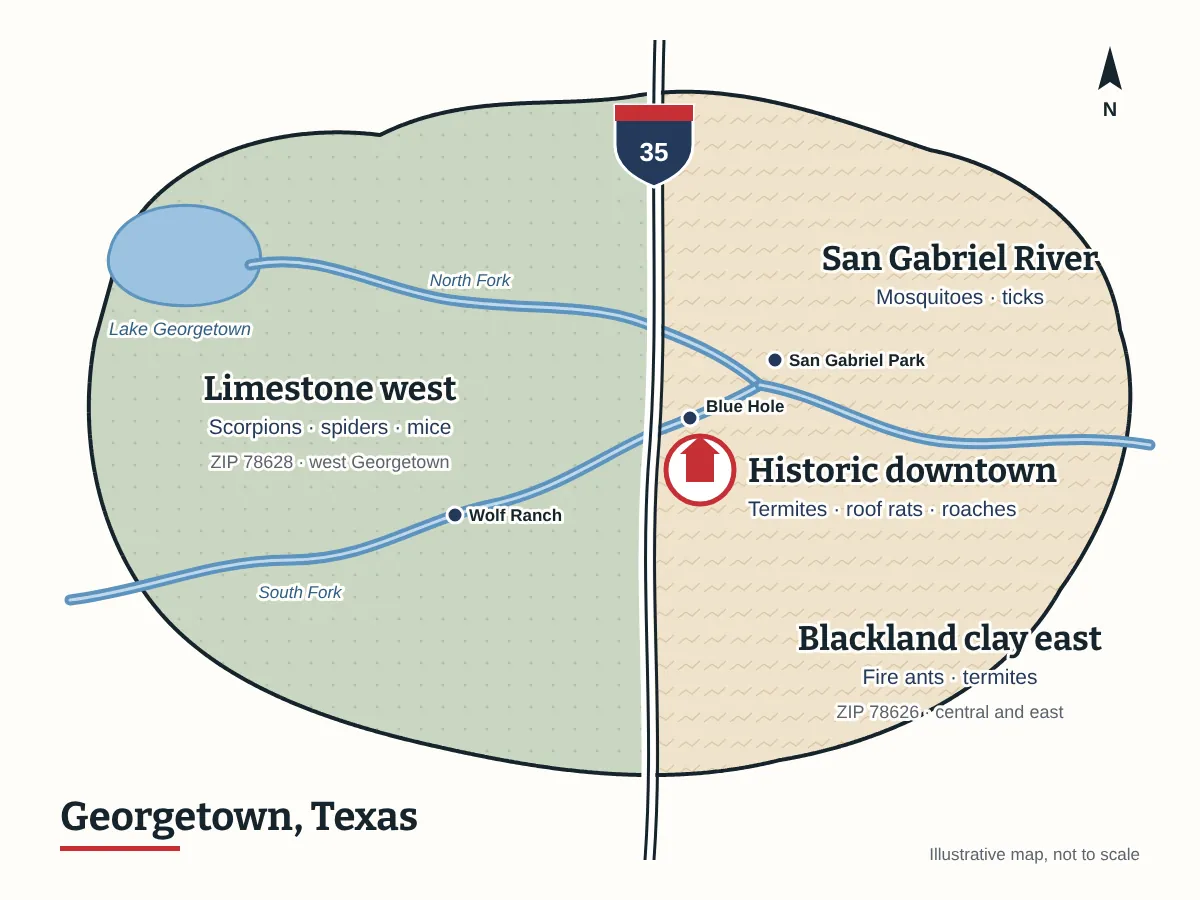
This site covers Georgetown addresses in ZIP codes 78626 and 78628. Check the neighborhoods we cover
What are you seeing? Start with the symptom
Most people do not search for “arachnid control.” They search for what just happened in the kitchen at 11 p.m. Pick the card that matches, and it will take you to the page written for that pest in Georgetown.
A scorpion in the bathtub
Almost always the striped bark scorpion, and almost always a sign there are more in the walls or attic. Scorpion help
Scratching in the ceiling at night
Roof rats travel along oak and pecan limbs onto the roof. Mice come up through gaps in the garage. Rodent help
Winged bugs at a window in spring
Could be termite swarmers or flying ants. The wings and waist tell you which. Termite help
Mounds popping up after rain
Fire ants push fresh mounds up within days of a soaking, especially in new sod and east-side clay. Ant help
Roaches when the lights come on
Small tan ones in the kitchen are German cockroaches. Big reddish ones usually came in from outside. Cockroach help
Webs and spiders in the garage
Garages, closets and storage boxes are where brown recluse and black widow spiders hide here. Spider help
Why pest problems change from one side of Georgetown to the other
Interstate 35 splits Georgetown in a way that matters for pests. West of the highway, the ground is thin soil over fractured limestone, part of the Balcones Escarpment country that rises into the Hill Country. East of it, the land flattens into the dark, heavy clay of the Blackland Prairie. Each kind of ground favors different animals, and the river, the old trees downtown and the pace of new construction add their own layer on top. A pest control plan that works in a Wolf Ranch backyard can miss the problem entirely in an older east-side bungalow.

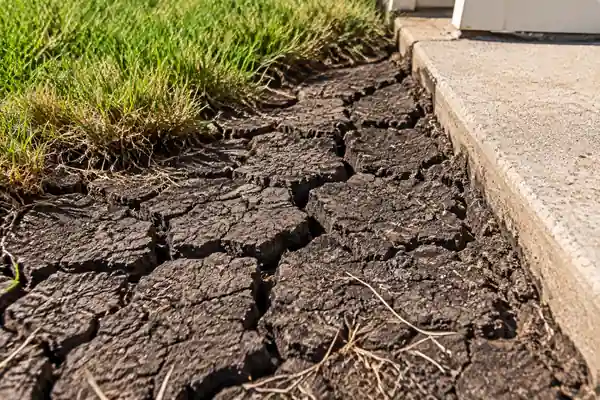
Blackland clay east (78626)
This clay swells when it is wet and shrinks into deep cracks in a dry August. That movement stresses slabs and opens hairline gaps that subterranean termites use. Fire ant colonies love the open, sunny lawns. Termites · Fire ants For pest control on the east side, that means checking slab edges and plumbing penetrations first.

The river corridor
The North and South Forks of the San Gabriel meet at San Gabriel Park, and trails follow both. Standing water in side pools and shaded, brushy banks keep mosquitoes and ticks busy from spring into fall. Mosquitoes · Fleas and ticks Homes near the water need pest control that accounts for moisture, not just the calendar.

Historic downtown and Old Town
Century-old wood framing, pier-and-beam crawl spaces and big shade trees bring termites and roof rats. Restaurants sharing walls around the Square deal with German cockroaches. Historic Downtown
The Georgetown pest calendar
Georgetown rarely gets a hard winter. January lows average in the mid-30s, and summer highs sit in the mid-90s, peaking in August. That means something is active in every month, and the timing is predictable enough to plan around. Bars below show the typical pattern; a wet May or a late, hot fall shifts it by a few weeks. That steady warmth is why pest control in Georgetown is a year-round job rather than a summer one.
| Pest | Jan | Feb | Mar | Apr | May | Jun | Jul | Aug | Sep | Oct | Nov | Dec |
|---|---|---|---|---|---|---|---|---|---|---|---|---|
| Termite swarms | ||||||||||||
| Scorpions | ||||||||||||
| Fire ant mounds | ||||||||||||
| Mosquitoes | ||||||||||||
| Wasps | ||||||||||||
| Cockroaches | ||||||||||||
| Rodents indoors |
Peak Active Quiet
A few patterns worth knowing. Native subterranean termites swarm on warm, calm days after rain between February and May, and a swarm inside the house is a much bigger deal than one on a fence post. Scorpion calls climb through July and August, when heat drives them into cooler attics and bathrooms. Mice and roof rats move indoors when nights cool in October, which is also when the fall rains trigger a second round of fire ant mounds.
How getting help through this site works
The pest pages here are researched and written for Georgetown. Hands-on help, meaning the inspection and any treatment, comes from a local exterminator who already works your part of town, and that visit goes much better when you can describe what you found.
Describe what you found
Say what the pest looks like, where you saw it, how long it has been going on and your ZIP code. The more specific you are, the better the match.
Get matched with a local pro
Your request goes to an exterminator who works in Georgetown and handles that type of pest.
Inspection, then a plan
A good exterminator inspects before treating, explains what they found and puts the plan, the products and the terms in writing before you agree to anything. That is the standard any exterminator Georgetown TX homeowners hire should meet, whether the job is one wasp nest or a full termite treatment.
What a thorough exterminator Georgetown TX inspection should cover
A quick spray around the foundation is not an inspection. On a typical Georgetown house, a careful technician spends most of the first visit looking, and the places worth checking differ from what you would see in a national checklist.
- The slab edge and weep holes. Brick and stone veneer homes here have small drainage gaps at the base of the wall. Scorpions, roaches and ants walk straight in. Termite mud tubes also show up along the exposed slab, often hidden behind mulch or a flower bed.
- The attic. Look for rodent droppings and runways on the insulation, chewed wiring, and scorpions near the attic hatch or lights. In older homes, check where the roof decking meets the soffit for gaps a roof rat can squeeze through.
- The garage. The bottom seal on the garage door, the gap where the door meets the jamb and the stacks of boxes along the wall are where mice and brown recluse spiders settle in first.
- Where utilities enter. AC refrigerant lines, cable and gas pipes leave openings around the wall. Tawny crazy ants and fire ants also pack into outdoor electrical boxes and AC disconnects.
- Trees and the roofline. Any oak or pecan limb touching the roof is a bridge for roof rats.
- Crawl spaces in older homes. Pier-and-beam houses downtown and in Old Town need someone to go under the floor and check sills, beams and vent screens.
- The yard. Irrigation boxes, rock borders, woodpiles against the house and low spots where water stands after rain.
At the end, you should get a short written summary: what was found, where, what was treated and what you can fix yourself. If all you get is a receipt, ask for more. Any exterminator Georgetown TX residents call should be able to explain what they found and why they chose a product.
Pest control Georgetown TX homes and businesses ask about most
Every page below is written around Georgetown’s own ground, weather and neighborhoods, not copied from a national template. Start with the pest you have. If you are not sure what it is, a clear photo and the symptom cards above usually narrow it down. The aim is pest control Georgetown TX families can live with: targeted, explained, and checked afterward.
Scorpion exterminator
Striped bark scorpions, where they hide in west-side homes and how sealing and treatment work together.
Termite control
Swarmers, mud tubes, clay-soil slab cracks and the treatment options for older and newer homes.
Rodent exterminator
Roof rats in oak-shaded attics, house mice in new builds and why exclusion matters more than traps.
Ant exterminator
Fire ants, tawny crazy ants and carpenter ants, and why store-bought bait so often fails here.
Cockroach exterminator
German cockroaches in kitchens and apartments versus the big outdoor roaches that wander in.
Spider exterminator
Brown recluse and black widow spiders in garages and rocky lots, and the harmless spiders you can leave alone.
Bed bug exterminator
Signs on the mattress, what to do after travel and how heat and targeted treatments work.
Wasp removal
Paper wasps under eaves, yellow jackets in the ground and why honey bees go to a beekeeper instead.
Mosquito control
Yard treatments, standing water and what the West Nile detections in Georgetown mean for you. Mosquito pest control works best when standing water is dealt with before any spray goes down.
Flea and tick control
Fleas in carpet, ticks on trail edges and why the home, yard and pet all need attention. Pest control for fleas fails when only the house is treated and the yard is left alone.
Commercial exterminator
Restaurants on the Square, offices, rentals and HOAs that need scheduled, documented service. Commercial pest control here also has to work around health inspections and tenants who cannot simply leave for a day.
Termite inspection
What a Texas WDI report covers when you buy or sell, and what those drill holes along the slab mean.
Wildlife removal
Raccoons tearing at roof vents, squirrels in a chewed soffit corner and bats behind the fascia. Getting them out legally, then sealing the way back in.
Home or business, the problems are different
A homeowner in Berry Creek and a restaurant manager on Austin Avenue might both say “we have roaches,” but they need very different things. Plenty of bug exterminator Georgetown TX searches come from people who simply want the problem gone this week; businesses usually need a schedule and a paper trail as well. Good pest control starts by admitting those are different jobs.
For homeowners and renters
- New construction surprises. A brand-new house in Wolf Ranch or Riverstone can still get scorpions, fire ants and mice, because the land around it was just disturbed. See pests in new construction homes.
- Older homes, older entry points. Homes from the 1980s and 1990s in Berry Creek and the original wood houses in Old Town have more gaps, more wood near soil and more mature trees touching the roof.
- Kids and pets. Most families want to know what product is being used and how long to keep the dog off the lawn. A good technician answers that before treating, not after.
- Pressure at the door. Door-to-door crews work Georgetown subdivisions every summer. You never have to sign a multi-year agreement on the porch. Here are the questions to ask before you sign.
For businesses and property managers
- Health inspections. Food businesses need pest activity under control and documented. A single sighting during an inspection is a bad day.
- Shared walls. Around the Square, one building’s roach or rodent problem quickly becomes the neighbor’s.
- Scheduling around customers. Service before opening or after closing keeps products and technicians away from diners and shoppers.
- Several properties, one record. Rental owners and HOAs want one provider, consistent reports and a clear record for each address. See commercial pest control in Georgetown.
Two quick ID checks that save Georgetown homeowners a lot of worry
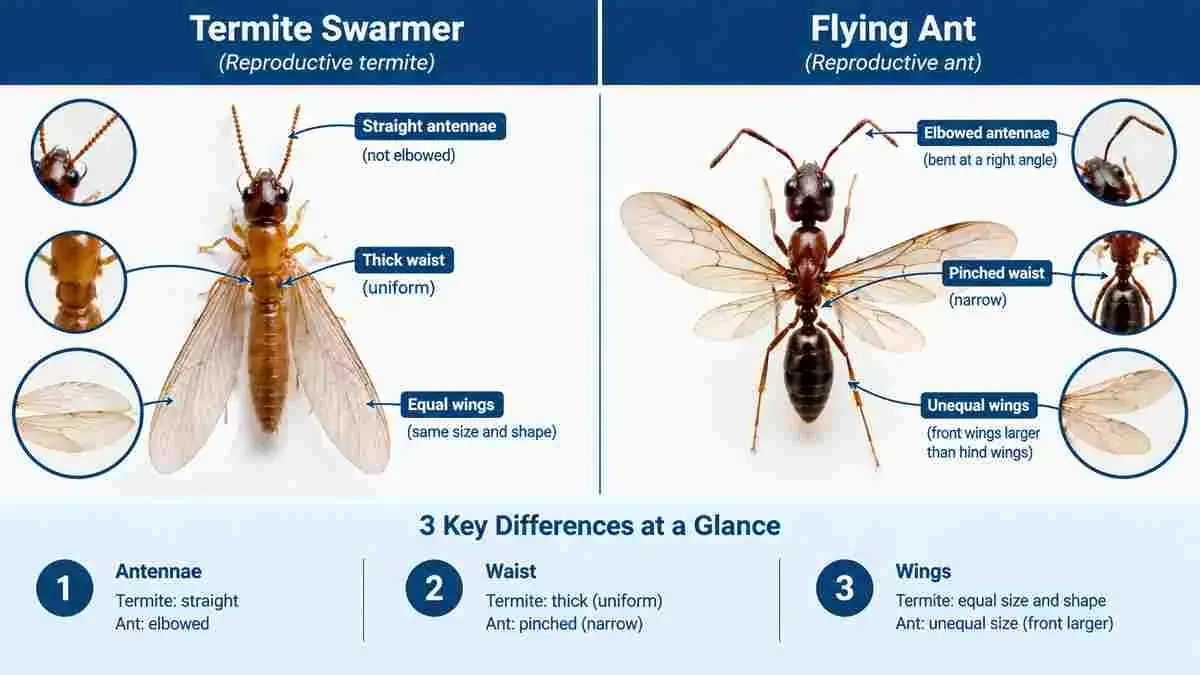
Termite or flying ant?
Look at three things. Termites have a straight, thick waist, straight antennae and four wings of equal length. Flying ants have a pinched waist, elbowed antennae and front wings that are longer than the back pair. The full breakdown is in flying ants vs. termites. Still unsure? Bag a few wings and show them to the exterminator who comes out; the wings settle it in seconds.
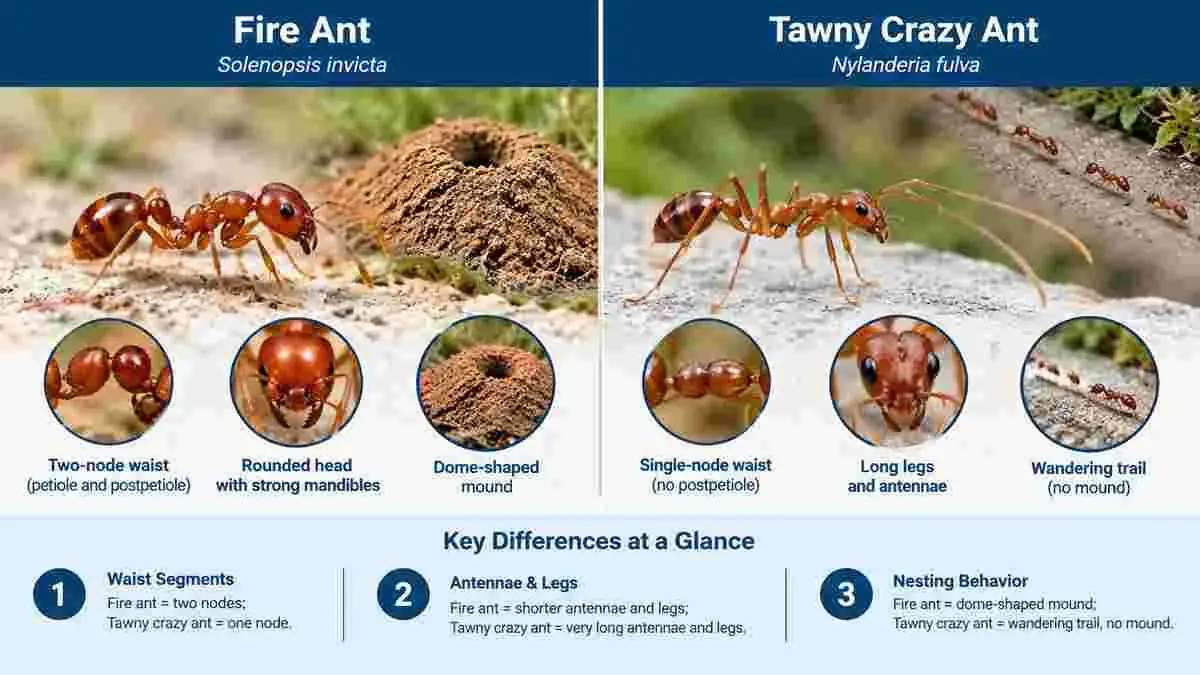
Fire ant or tawny crazy ant?
Fire ants build domed mounds and sting. Tawny crazy ants build no mound, run in jerky, random paths and pile up by the thousands in walls and electrical boxes. They have been confirmed in Williamson County. More in fire ants vs. crazy ants. Getting this right matters, because fire ant pest control baits do very little against crazy ants.
Neighborhoods and areas we cover
Georgetown has grown fast. The Census Bureau ranked it the fastest-growing U.S. city of 50,000 or more people in 2021 to 2022, and much of that growth sits on land that was pasture or brush a few years ago. Pests do not read subdivision maps, but they do follow soil, water and trees, so each part of town has a pattern. New streets mean new pest control questions, because fresh construction disturbs soil, ant colonies and scorpion harborage all at once.
| Area | ZIP | Typical housing | Pests that show up most | Read more |
|---|---|---|---|---|
| Wolf Ranch | 78628 | New construction along the South Fork | Scorpions, fire ants, displaced mice | Wolf Ranch |
| Berry Creek | 78628 | 1980s to 2000s homes around a golf course, big oaks | Roof rats, termites, mosquitoes | Berry Creek |
| Historic Downtown and Old Town | 78626 | Victorian frame homes, pier-and-beam, shops on the Square | Termites, roof rats, German cockroaches | Historic Downtown |
| Cimarron Hills | 78628 | Larger homes on rocky lots | Scorpions, spiders, mice | Scorpions |
| East-side subdivisions | 78626 | Slab homes on Blackland clay | Fire ants, termites | Termites |
The full list, with what to expect near the river trail and on each side of I-35, is on the areas we serve page. Each area page explains the pest control issues that are most common on those particular streets.
What to have ready when you contact an exterminator
The first conversation goes faster, and the visit goes better, when you can answer these. Jot them down before you reach out.
- Your ZIP code and neighborhood, so you are matched with someone who actually works your side of town
- What the pest looks like: size, color, wings or no wings. A clear phone photo beats any description
- Where you see it: kitchen, attic, garage, yard, along the slab
- When it started and whether it is getting worse
- Anything already tried, including store-bought sprays or baits and where you put them
- Kids, pets, allergies or anyone pregnant in the home, so the technician can plan around them
- For termites: whether the home was treated before and any paperwork from the builder or a past company
If a visit is already booked, the exterminator prep checklist covers what to move, store and avoid before and after the treatment.
Questions Georgetown residents ask about extermination
When should I call an exterminator instead of handling it myself?
Call when the pest can hurt someone, damage the house or keeps coming back. In Georgetown that means any termite sign, a scorpion indoors more than once, rodents in the attic, a wasp nest near a door, bed bugs, or ants that return within weeks of store-bought bait. A single wolf spider or a few sugar ants on the counter can usually wait.
How do I choose a good exterminator in Georgetown, TX?
Ask what pest they identified and how, what product they plan to use, whether the service is one visit or an ongoing plan, and how to cancel. Get it in writing. You can look up any pest control business through the Texas Department of Agriculture, which regulates structural pest control in Texas. Our blog post on how to choose an exterminator has the full list.
What happens during an extermination visit?
Expect an inspection first: inside, outside, the garage and often the attic. The technician should confirm the pest, find where it is getting in or nesting, then treat those areas and point out repairs that would help, like a worn door sweep or a branch on the roof. Many problems take a follow-up visit.
Do exterminators spray inside the house, including closets?
Usually only where the pest lives or travels. Modern indoor work leans on targeted products such as gel baits for roaches, crack-and-crevice treatments along baseboards, and dusts in wall voids, rather than spraying whole rooms. Closets get treated when spiders, roaches or bed bugs are found there. Ask the technician to show you where product was applied.
How often should a Georgetown home be treated?
It depends on the pest and the property. Termite protection and inspections run on a yearly cycle. Many west-side homes with steady scorpion pressure choose quarterly exterior service, while a one-time cockroach clean-out may need two or three visits and then nothing. Be wary of anyone who sells a long contract before inspecting.
Is extermination safe for kids and pets?
Products used in homes are labeled with directions that cover re-entry times, drying and where they may be applied. Tell the technician about children, pets and any health concerns before treatment, keep everyone out of treated areas until surfaces dry, and follow the instructions you are given. If a pet eats bait or a child is exposed, call your veterinarian or Poison Control right away.
Do I have to leave the house during treatment?
For most routine treatments, no. You may be asked to stay out of treated rooms for a few hours or until surfaces dry. Whole-house bed bug heat treatments and fumigation are different, and you will be told ahead of time how long to stay away.
From the blog
Short, practical reads written for Georgetown conditions.
- Scorpions in Georgetown, TX: why they get inside and how to keep them out
- Rats in the attic? Roof rats and Georgetown’s oak trees
- Kissing bugs in Georgetown, TX: what they look like and what to do
- New home, new pests: a first-year plan for new construction
All articles live on the Thornick blog.
Sources: U.S. Census Bureau, fastest-growing cities 2021–2022 · Texas A&M AgriLife, striped bark scorpions · Texas Invasive Species Institute, tawny crazy ant · San Gabriel River (Texas))