
Pest help · Georgetown, TX
Ant Exterminator in Georgetown, TX
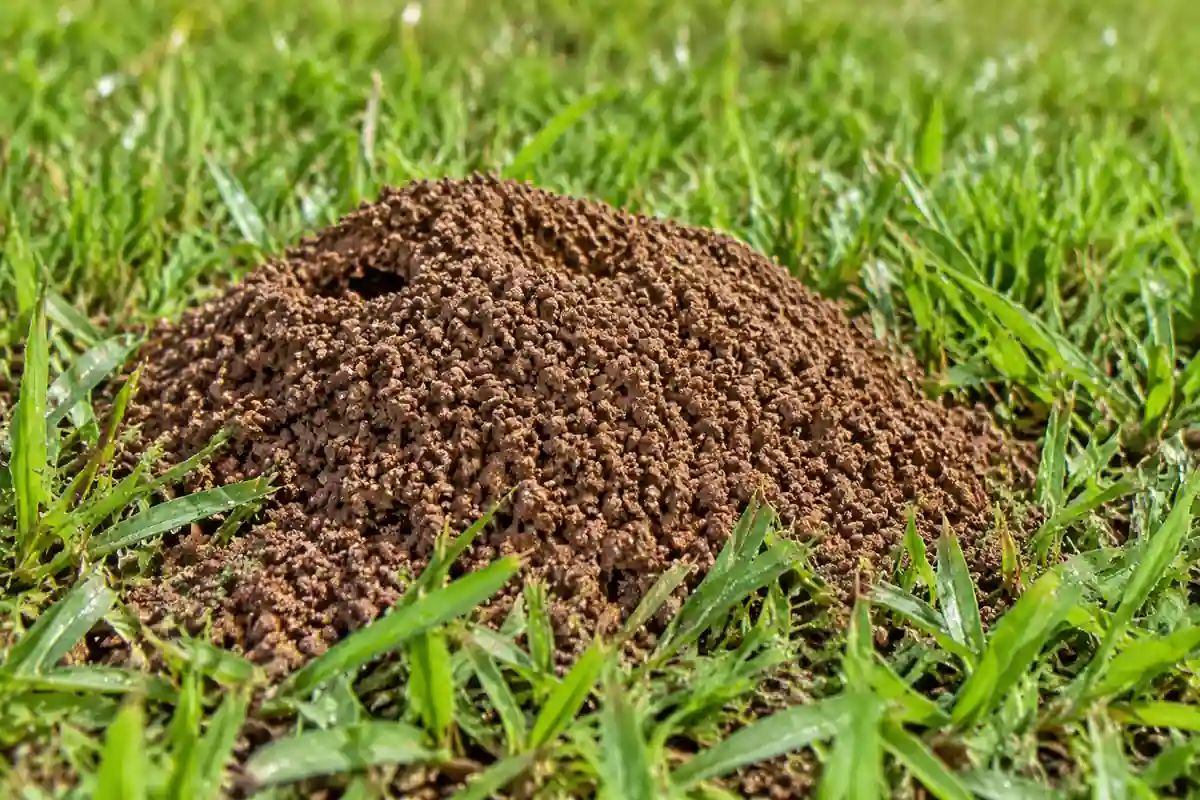
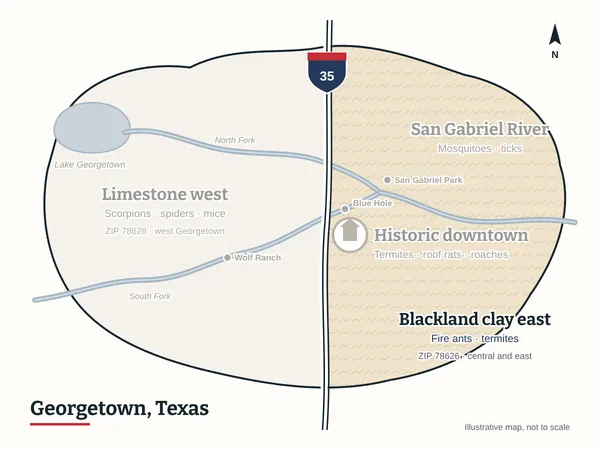
Two days after a good Georgetown soaking, the lawn sprouts a new crop of fluffy dirt mounds. Step near one and your ankle tells you everything. Fire ants are the ant most residents know, but they are not the only one here, and the newest arrival, the tawny crazy ant, ignores the bait most people buy at the store. Here is how to tell your ants apart and what an ant exterminator Georgetown TX homeowners call should do differently for each.
In short
Georgetown’s main ant problems are red imported fire ants in lawns, tawny crazy ants in walls and electrical boxes, carpenter ants in damp wood, and small sugar ants in kitchens. Fire ants respond well to a two-step bait-then-mound approach. Crazy ants need a different strategy, because they build no mounds and often refuse standard bait.
Which ants invade Georgetown homes
| Ant | What it looks like | Where you find it | Stings or bites? |
|---|---|---|---|
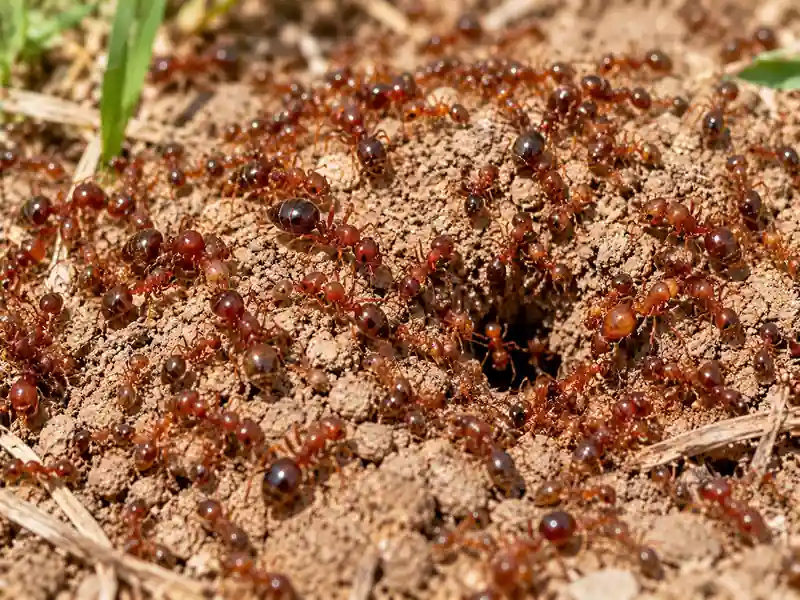
| Red imported fire ant | Reddish-brown, mixed sizes in one colony | Domed mounds in sunny lawns, along sidewalks, in AC units | Painful sting that forms a white pustule |
| Tawny crazy ant | Small, reddish-brown, very fast and erratic | Huge numbers under debris, in walls, in electrical boxes; no mound | Bites but does not sting |
| Carpenter ant | Large, black or red-and-black | Damp or damaged wood, sawdust-like piles | Can bite; no sting |
| Odorous house ant (“sugar ant”) | Tiny, dark brown; smells like rotten coconut when crushed | Kitchen counters, bathrooms, along baseboards | No |
| Pharaoh ant | Very small, pale yellow | Kitchens and bathrooms, inside walls | No |
Fire ant control in your yard
Red imported fire ants arrived in Texas decades ago and now cover most of the eastern two-thirds of the state, Georgetown included. They thrive in exactly the conditions this city creates: open, sunny lawns, disturbed soil and irrigation.
Why mounds appear after rain
Fire ant colonies live mostly underground. When soil is saturated, the colony moves its workers, queen and brood upward, building fresh mounds within a day or two. That is why yards look worst after the May and October rains, which are Georgetown’s wettest months, and why treating a dry, flat yard in August can seem pointless. The colony is still there, just deeper.
New sod and clay soil
New sod in places like Wolf Ranch and Riverstone often comes with fire ants, or attracts them quickly, and east-side clay holds moisture that colonies like. Expect mounds along sidewalks, the edge of the slab and around AC pads.
The two-step method
Texas A&M AgriLife’s fire ant program recommends a two-step approach. First, broadcast a fire ant bait across the whole yard when ants are foraging, so workers carry it back to many colonies at once. Then treat individual mounds that cause trouble near play areas, walkways or doors. Treating only the mounds you can see tends to make colonies relocate a few feet away.
Tawny crazy ants: the ant that ignores store-bought bait
Tawny crazy ants, Nylanderia fulva, have been confirmed in Williamson County by the Texas Invasive Species Institute. They behave nothing like fire ants:
- They do not build mounds. They nest under rocks, mulch, landscape timbers, potted plants and anything lying on the ground
- They move in fast, jerky, random paths rather than neat trails
- Populations can reach millions, pouring over patios, walls and the inside of the house in warm months
- They pack into electrical boxes, AC units and pool equipment, where they can short out switches and contacts
- Most fire ant baits do not interest them
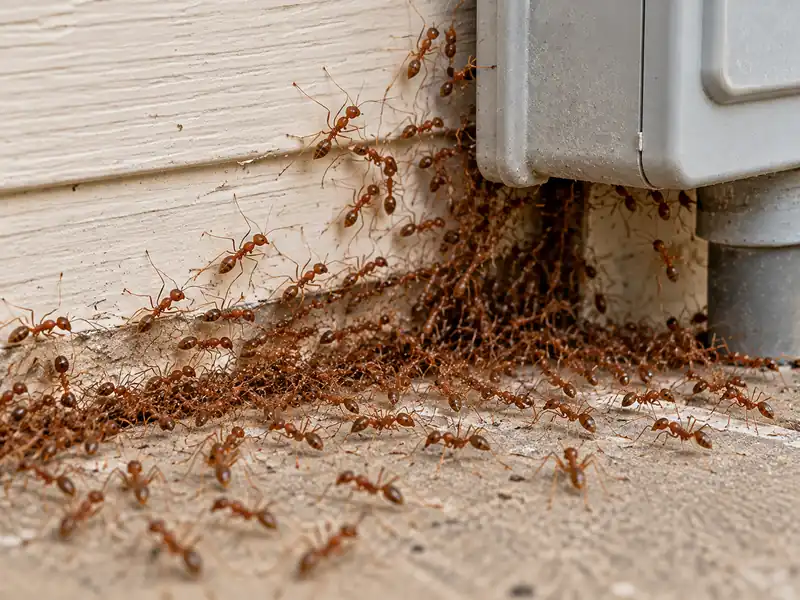
Control relies on removing harborage around the house, treating the perimeter and nesting areas with products labeled for crazy ants, and repeat service through the warm season. Our blog post on fire ants vs. tawny crazy ants explains how to tell them apart at a glance.
Ants inside the house and kitchen
Most indoor ants are following food or water. Sugar ants in the kitchen, pharaoh ants in a bathroom or fire ants coming up through a slab crack all have a source and a route.
Spraying a trail of ants with a household spray usually backfires. It kills the workers you can see and can cause some species, especially pharaoh ants, to split into several new colonies. Slow-acting baits placed along the trail, plus finding and sealing the entry point, work better.
Carpenter ants vs. termites
Carpenter ants do not eat wood. They hollow it out to nest, usually in wood that is already damp or soft, such as rotting window trim, deck boards or a leaky roof edge. You will often see coarse, sawdust-like debris, called frass, under the damaged spot, sometimes mixed with insect parts.
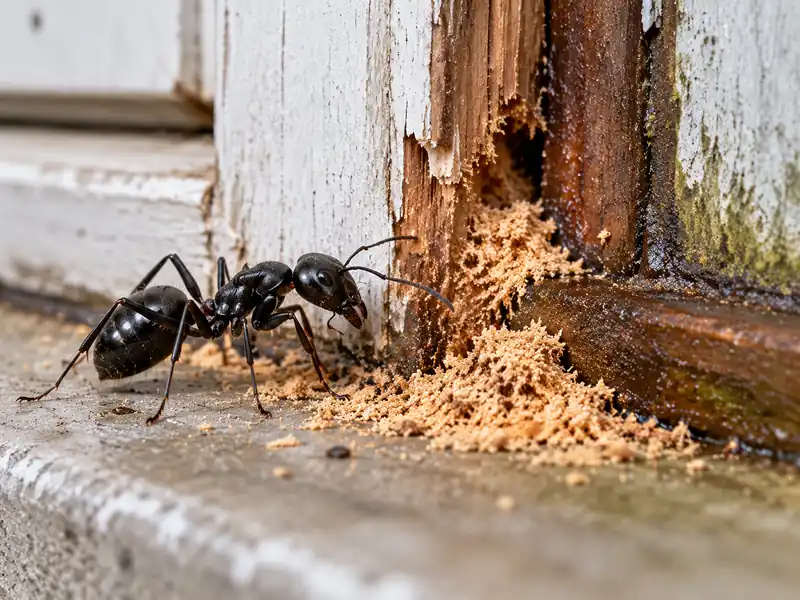
Termites, by contrast, leave no sawdust and pack their tunnels with mud. If you find damaged wood and are unsure which one it is, see the termite control page.
Why store-bought bait often fails
- The bait is not attractive to the ant species you have, which is common with crazy ants
- Baits are placed next to a spray, and the spray contaminates the bait so ants avoid it
- Only visible mounds are treated, so colonies move instead of dying
- Baits were broadcast on a hot afternoon when ants were not foraging, or on wet grass
- The real colony is in a wall or under the slab, out of reach
How an ant exterminator Georgetown TX homeowners call works
Identify the ant
The species decides the method. A good technician looks closely, sometimes collecting a sample, before choosing a product.
Treat the colony, not just the trail
Baits for fire ants and many indoor ants, targeted perimeter and harborage treatments for crazy ants, and treatment of nests inside damp wood for carpenter ants.
Fix the conditions
Moisture problems, entry gaps, mulch piled against the slab and debris near the house. Without these fixes, ants return quickly.
Ant seasons in Georgetown
| Months | Which ants are most active | What to expect |
|---|---|---|
| March – May | Fire ants, sugar ants, carpenter ant swarmers | Mounds return after spring rain; winged ants indoors |
| June – August | Tawny crazy ants, fire ants, ants seeking water indoors | Crazy ant numbers peak; ants in AC units and electrical boxes |
| September – October | Fire ants | A second flush of mounds after the October rains |
| November – February | Indoor sugar and pharaoh ants | Outdoor activity drops; indoor colonies keep going |
Calls connect you with an independent local exterminator.
Ant prevention checklist
- Broadcast fire ant bait across the lawn in spring and early fall, following the label
- Keep mulch and soil below the top of the slab and pull debris away from the house
- Remove boards, stones and clutter where crazy ants nest
- Fix leaks and rotting wood that invite carpenter ants
- Wipe counters, store sweets and pet food sealed, and empty kitchen trash nightly
- Seal gaps where ants enter around windows, pipes and baseboards
- Check the AC disconnect and outdoor electrical boxes each summer
Ant FAQs for Georgetown residents
Why do ants come back after treatment?
Usually because the colony survived. Sprays that kill only the visible ants, baits the species ignores, or colonies nesting in walls or under the slab all lead to a return. In Georgetown, new colonies also move in from neighboring yards and open land, so lawns need treatment more than once a year.
Are fire ants dangerous to kids and pets?
Stings are painful and leave itchy pustules. Some people are allergic, and many stings at once can be serious for small children and pets. Anyone with swelling of the face or throat, trouble breathing or dizziness after stings needs medical care right away.
Why are there ants in my AC unit?
Fire ants and crazy ants are drawn to electrical fields and the warmth inside AC units and outdoor boxes. Their bodies can bridge contacts and cause failures. Have an exterminator treat around the unit, and a technician clear the ants from inside it.
Do crazy ants sting?
No. Tawny crazy ants bite, but they do not sting the way fire ants do. Their problem is sheer numbers and damage to electrical equipment.
Do flying ants mean I have termites?
Not necessarily. Many ants, including fire ants and carpenter ants, produce winged swarmers. Check the waist, antennae and wings using our flying ants vs. termites post.
What is the hardest ant to get rid of in Georgetown?
The tawny crazy ant. It ignores most baits, nests in scattered spots instead of one mound and returns in huge numbers each summer. It needs a planned, repeated approach.
Related pests and reading
Fire ants vs. crazy ants
How to tell them apart and what works on each.
Termite control
If the “ants” you see in spring have straight antennae and a thick waist.
Spider exterminator
Seeing spiders too? They follow the insects they eat.
Sources: Texas A&M AgriLife, Texas Imported Fire Ant Research and Management Project · Texas Invasive Species Institute, tawny crazy ant · Back to the Georgetown exterminator homepage