
Pest help · Georgetown, TX
Wasp Removal in Georgetown, TX
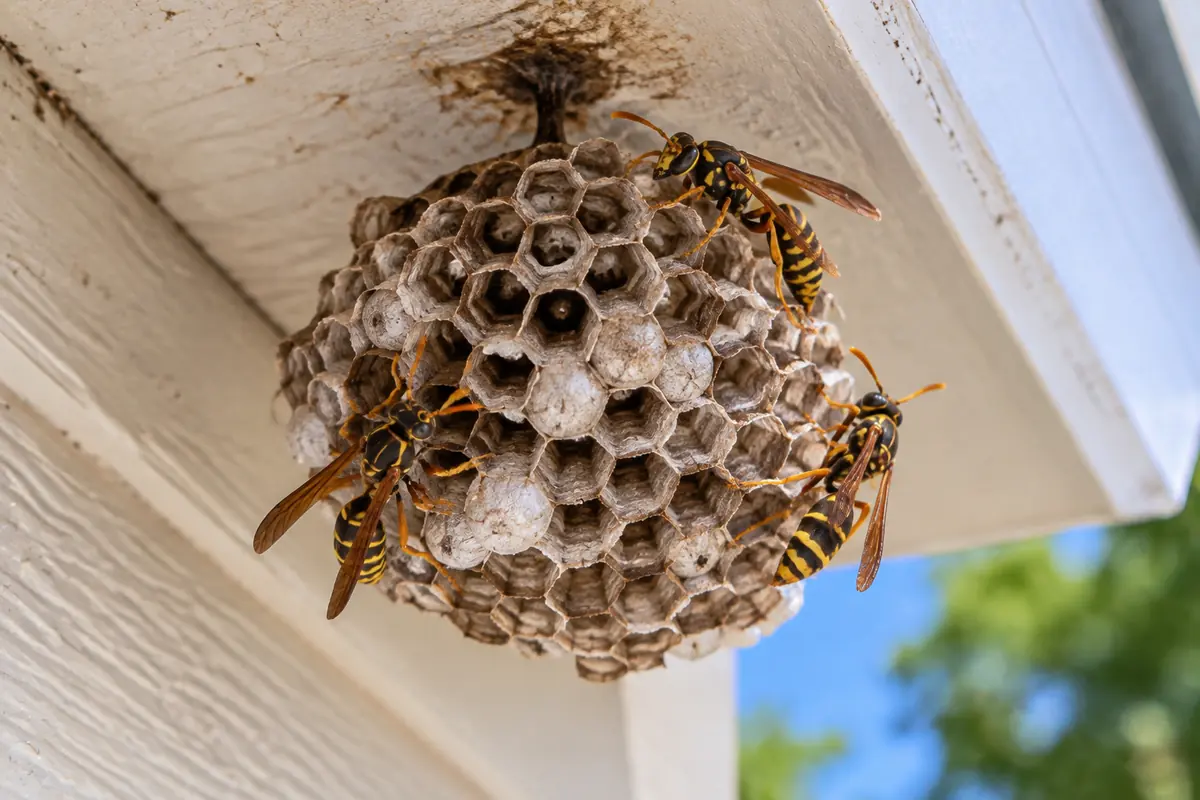
By late summer, a paper wasp nest the size of a quarter in April can cover a dinner plate under the eave above your front door. Yellow jacket colonies grow even faster, often out of sight in the lawn or inside a wall. Georgetown’s long warm season, two-story new homes and deep covered porches give wasps plenty of places to build. This page covers what you are looking at and how wasp removal Georgetown TX homeowners call for should be handled.
In short
Most stinging-insect nests on Georgetown homes are paper wasps under eaves and porch ceilings, or yellow jackets in the ground and in wall voids. Paper wasp nests near doors and play areas are worth removing; yellow jacket nests should be handled by a professional. Honey bees are different: they should be relocated by a beekeeper, and they are not handled through this site.
Paper wasps, yellow jackets and hornets
| Insect | What it looks like | Nest | Temperament |
|---|---|---|---|
| Paper wasp | Long, slender, reddish-brown or yellow-and-black; legs dangle in flight | Open, umbrella-shaped paper comb hanging by a stalk | Defensive near the nest, calm elsewhere |
| Yellow jacket | Short, stout, bright yellow and black; fast, darting flight | Hidden: in the ground, in wall voids, attics | Aggressive, stings repeatedly, large colonies |
| Hornet | Larger than yellow jackets | Enclosed gray paper ball in trees or on eaves | Defensive; less common here than paper wasps |
| Mud dauber | Very thin waist, black or metallic blue | Tubes of mud on walls and ceilings | Rarely stings |
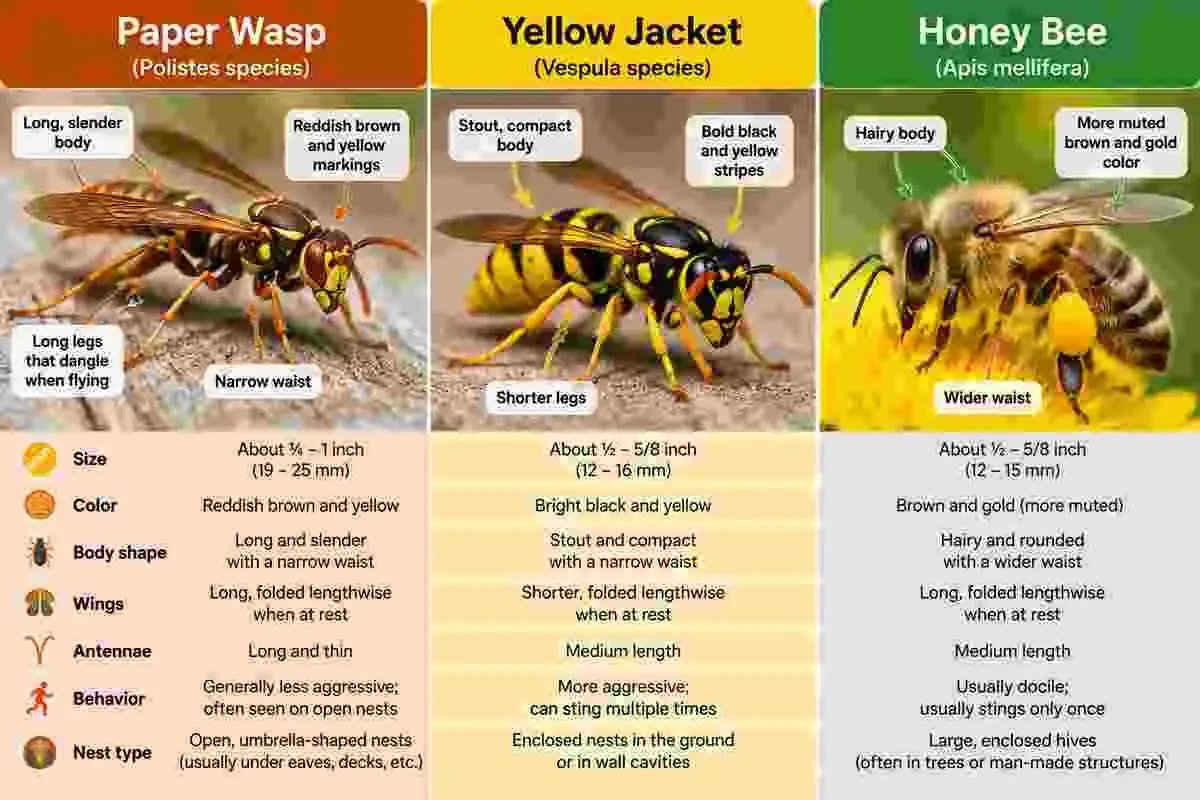
Paper wasps account for most nests Georgetown homeowners notice. Yellow jackets cause the most stings, because people step on or mow over a ground nest without knowing it is there.
Where wasps nest on Georgetown homes
- Eaves and soffits of two-story homes. Common in the newer subdivisions, and hard to reach safely without the right equipment.
- Covered porches and patio ceilings. Large porches on older homes in neighborhoods like Berry Creek get nests in the corners and light fixtures.
- Play sets, pergolas and fences. The underside of beams and rails is sheltered and sunny.
- Ground holes and lawns. Yellow jackets use old rodent burrows and gaps under landscape timbers.
- Wall voids and attics. Yellow jackets entering a gap in siding or a vent may be building a nest much larger than it looks from outside.
- Grills, mailboxes, irrigation boxes and outdoor furniture that sit unused for a few weeks.
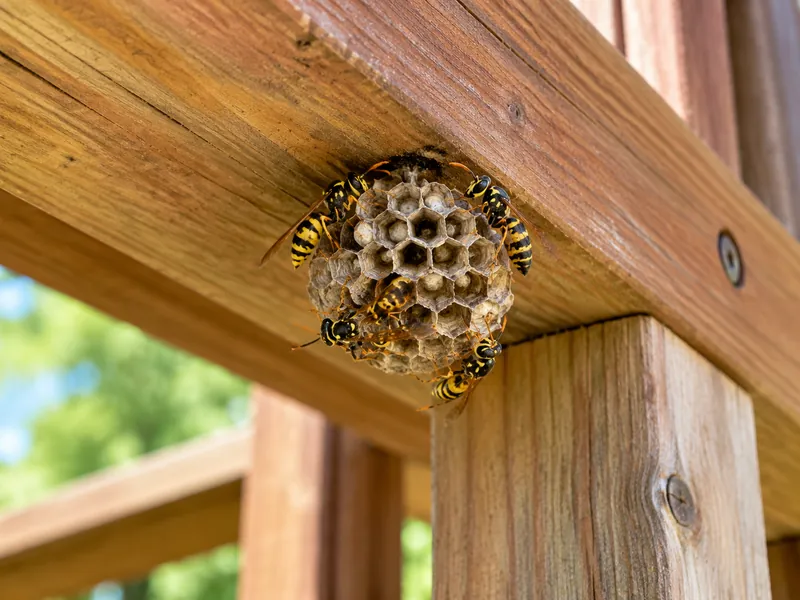
Wasp nest removal: why DIY spraying backfires
A can of wasp spray and a ladder is how a lot of Georgetown stings happen. The problems:
- Spraying from a ladder puts you off balance at the exact moment the colony defends itself
- Spraying the visible opening of a yellow jacket wall nest can drive the wasps into the living space
- Plugging the hole of an active wall nest traps wasps that then chew through drywall
- Knocking down a nest without killing the colony leads them to rebuild nearby within days
- Many people do not know they are allergic until they are stung several times at once
Small, new paper wasp nests far from doors can be left alone or treated at night when wasps are inside and slow. Anything larger, anything on a second story, any yellow jacket nest and any nest inside a wall is a job for a professional.
Honey bees are handled differently
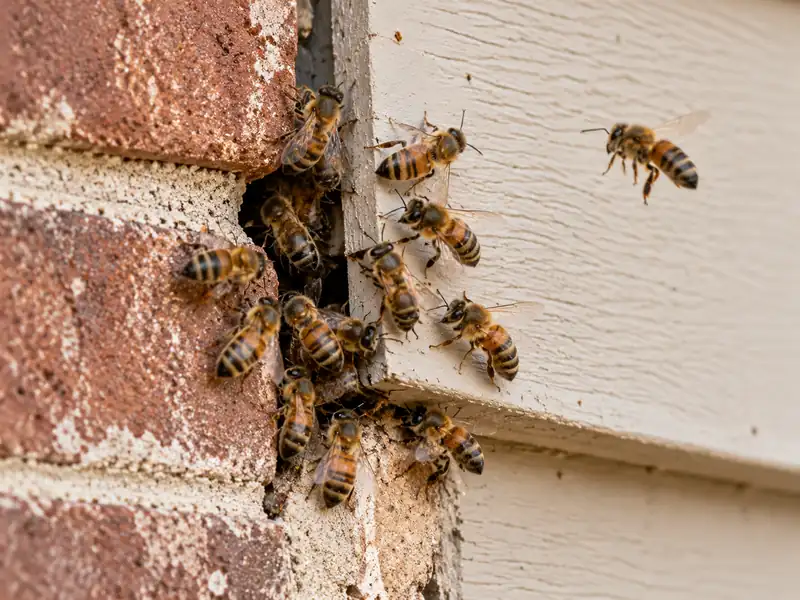
Honey bees are valuable pollinators, and most beekeepers prefer to remove and relocate them rather than see them killed. Honey bee calls are not handled through this site. If bees are swarming on a branch or living in a wall, contact a local beekeeper; the Texas Beekeepers Association is a good starting point. A colony in a wall also leaves wax and honey behind that must be removed to avoid attracting pests and damaging the wall.
How wasp removal Georgetown TX homeowners call for works
Identify and locate
Confirm the species and find every nest, including hidden yellow jacket entries in the ground, siding or soffit.
Treat the colony
Apply a product directly into or onto the nest, often at dusk or dawn when wasps are home and less active. Dusts work well inside wall voids.
Remove and prevent
Remove the nest once the colony is dead, then seal the gap or treat surfaces where wasps tend to rebuild.
Wasp season in Georgetown
Queens that survived winter start new nests in March and April. Colonies grow all summer, and wasp numbers and stings usually peak in August and September, when nests are largest and food gets scarce. After the first cold snaps in late fall, colonies die off and only new queens overwinter. The wasp nest post on our blog walks through what to do in each season.
A season-by-season wasp calendar for Georgetown
| Months | What wasps are doing | What to do |
|---|---|---|
| March – April | Queens start small nests alone | Walk the eaves and porch; knock down starter nests before workers hatch |
| May – June | First workers hatch; nests grow | Treat or remove nests near doors, windows and play areas |
| July – August | Nests reach full size; yellow jacket colonies expand | Watch for ground nests when mowing; leave large nests to a professional |
| September – October | Peak numbers; wasps hunt sweets near trash and patios | Keep food and drinks covered outdoors; lid trash cans |
| November – February | Colonies die; queens overwinter | Remove old nests; seal gaps in siding and soffits |
A plan for families with sting allergies
If anyone in your home has had a serious reaction to a sting, a plan matters more than any treatment:
- Keep prescribed emergency medication where everyone knows to find it, and check expiration dates each spring
- Schedule professional removal for nests near doors, play sets and patios early in the season, rather than waiting until they are large
- Have someone without the allergy check the yard and eaves each spring
- Teach children to walk calmly away from wasps and never swat at a nest
- Tell your exterminator about the allergy so they can schedule work when the person can be away from the home
Calls connect you with an independent local exterminator.
Wasp prevention checklist
- Walk the eaves, porch ceilings and play sets in early spring and knock down small starter nests before they grow
- Seal gaps in siding, soffits and around vents where yellow jackets can enter walls
- Keep trash cans and recycling lidded, especially sweet drinks and food scraps in late summer
- Clean up fallen fruit in the yard
- Fill old rodent holes and gaps under landscape timbers
- Check grills, mailboxes and outdoor furniture before using them after a few weeks
- Mow carefully in late summer and watch for insects flying in and out of one spot in the lawn
Wasp FAQs for Georgetown residents
Should I remove a wasp nest myself?
Only a small paper wasp nest you can reach from the ground, treated at night with a labeled product and protective clothing, and only if no one in the home is allergic. Yellow jacket nests, high nests and nests inside walls are much safer left to a professional.
What if there are bees in my wall?
If they are honey bees, contact a beekeeper about live removal; this site does not handle honey bee calls. If they are yellow jackets, do not seal the hole. Have an exterminator treat the void first.
Do wasps come back to the same spot?
Old nests are not reused, but the same sheltered spot attracts new queens every spring. Treating or painting the surface and checking it early in the season helps.
What should I do after a sting?
Move away from the nest, remove any stinger by scraping, wash the area and use a cold pack. Call 911 for anyone with swelling of the face or throat, hives spreading over the body, trouble breathing, dizziness, or many stings at once.
Are hornets common in Georgetown?
True hornets are less common here than paper wasps and yellow jackets, and many “hornets” people report are large yellow jackets or paper wasps. The removal approach is similar.
Related pests and reading
Wasp nest on your home?
What to do and what not to do, season by season.
Spider exterminator
Black widows hide in the same porch corners and play sets.
Pests in Wolf Ranch
Two-story homes, play structures and the pests that come with them.
Sources: Texas A&M AgriLife Extension · Texas Beekeepers Association · Back to the Georgetown exterminator homepage