
West Nile Virus in Georgetown: Mosquito Season and Your Yard
Key takeaways
- West Nile virus in Georgetown TX has turned up in city mosquito traps downtown, in Berry Creek, and at Geneva Park and Blue Hole Park.
- Most infections cause no symptoms, but people over 50 and those with certain health conditions face higher risk of serious illness.
- The health district’s three Ds (drain, dress, defend) and a weekly yard check are the most effective steps you can take.
Most summers, the City of Georgetown sends out the same kind of notice: a mosquito sample from one of its traps has tested positive for West Nile virus. Those notices have come from several parts of town. A positive trap does not mean anyone is sick, but it does mean infected mosquitoes are active nearby. Here is what the notices say and what to do with that information.
Where positives have been found in Georgetown
The City of Georgetown posts an announcement each time the health district confirms a positive sample from one of its traps. A few examples from recent seasons, with the original notices linked:
| Trap location | When | What followed | Source |
|---|---|---|---|
| Downtown, trap near Main and Third streets | December 2021 | City staff treated standing water with larvicide; the health district stepped up trapping and testing | City of Georgetown |
| Geneva Park (Quail Valley Drive) and Berry Creek (Diamond Dove Trail at Airport Road) | October 2022 | Larvicide in standing water and expanded testing; follow-up traps came back negative | City of Georgetown |
| Geneva Park area again | May 2023 | Residents urged to drain water, wear repellent and cover up | Fox 7 Austin |
| Blue Hole Park | June 2023 | First positive ever recorded at that trap site | City of Georgetown |
| S. Maple Street, southeast Georgetown | October (the notice’s dates point to 2018) | Ground spraying was planned nearby for that weekend | City of Georgetown |
| Near Pinnacle Park, southeast Georgetown | July 2024 | Overnight ground spraying was scheduled near the park after the positive sample | Fox 7 Austin |
These are a sample from different years, not a live map. The pattern is the useful part: West Nile shows up in Georgetown traps in most seasons, and some of the sites, like Blue Hole on the San Gabriel River and the Berry Creek neighborhood named for its creek, sit right beside slow water and heavy shade.
How West Nile spreads
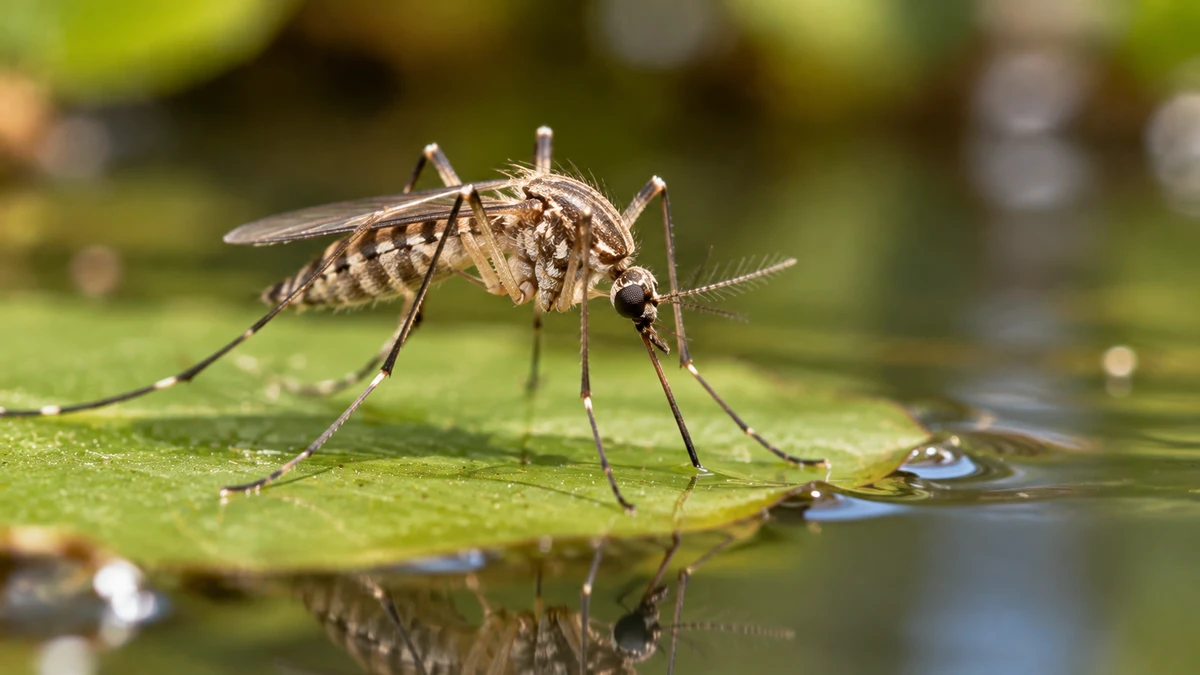
West Nile virus cycles between birds and mosquitoes. People get it from the bite of an infected mosquito, mostly Culex species, which bite from dusk through the night and breed in still, nutrient-rich water such as storm drains, ditches, neglected pools and containers with leaf litter. Detections in Texas usually peak in late summer and early fall.
Why once a week is the number to remember
A Culex female lays her eggs in a floating raft of 100 to 300, and the CDC says those eggs take about 7 to 10 days to become biting adults. Dump a bucket every Saturday and nothing in it ever finishes the trip. Let it sit for two weeks in August and you have raised a batch for the whole street. The same CDC page notes that resting adults hide in grass, shrubs and thick vegetation, which is why overgrown ligustrum hedges and the ivy along a back fence hum at dusk.

If your lot backs onto a greenbelt, a drainage channel, the river or a golf course pond, you will not be able to empty the water that matters most. Your job shrinks to the part you control: the yard, the gutters and the shady, damp spots where adults wait out the heat of the day.
Who is at higher risk
According to the CDC, most people infected with West Nile virus have no symptoms. About one in five develop a fever with headache, body aches, joint pain, vomiting, diarrhea or rash. A small number develop serious illness affecting the nervous system. People over 50, and those with certain medical conditions such as cancer, diabetes, high blood pressure or kidney disease, face higher risk of severe illness.
See a doctor if you develop a high fever, severe headache, stiff neck, confusion or weakness during mosquito season. This post is general information, not medical advice.
The health district’s drain, dress, defend steps
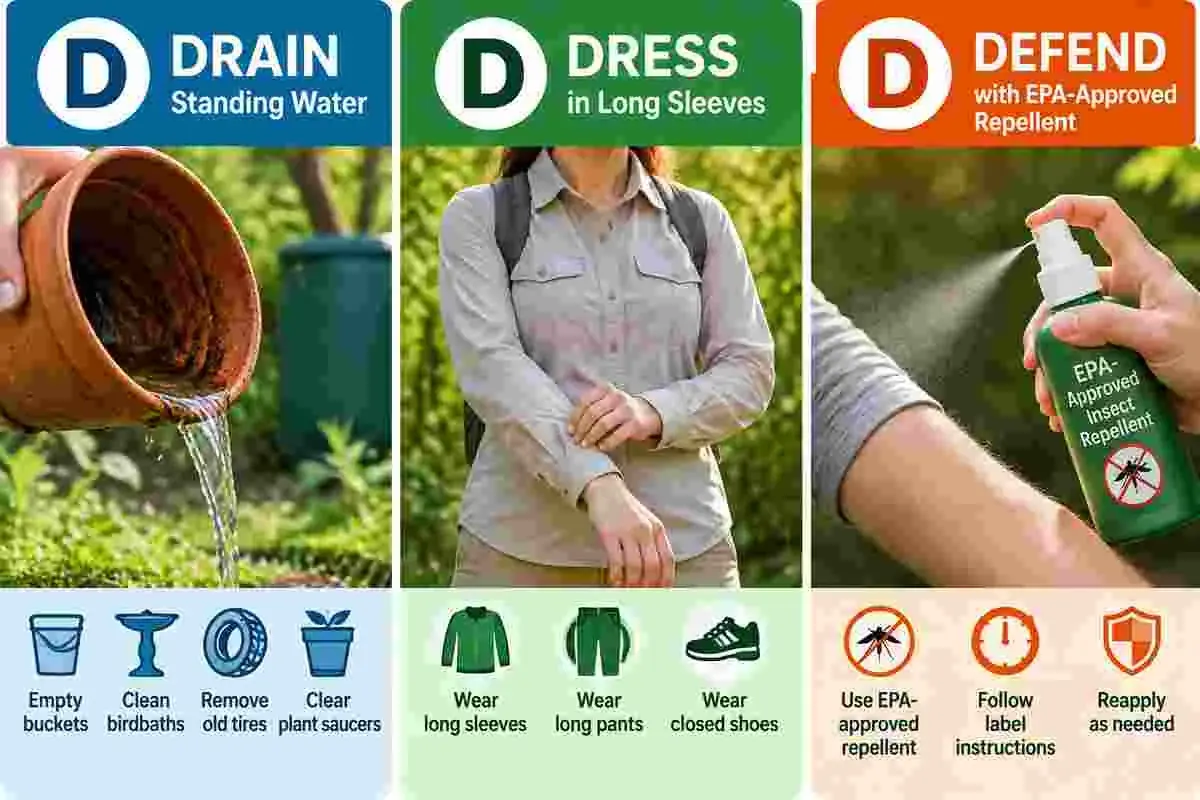
The Williamson County and Cities Health District promotes three simple steps, often shared under the “Fight the Bite” message:
- Drain: empty standing water around your home at least once a week
- Dress: wear long sleeves and long pants outdoors, especially at dawn and dusk
- Defend: use an EPA-registered insect repellent and follow the label; the EPA’s repellent finder lists products by active ingredient
Picking a repellent
The CDC lists six active ingredients found in EPA-registered repellents: DEET, picaridin, IR3535, oil of lemon eucalyptus, para-menthane-diol (PMD) and 2-undecanone. Any of them works when used as the label directs. One caution from the CDC prevention page: products with oil of lemon eucalyptus or PMD should not be used on children under 3. Apply sunscreen first and repellent second, and put it on right before the evening walk or the backyard dinner, since Culex bite most from dusk on.
Yard standing-water checklist
- Empty plant saucers, buckets, toys, tarps and wheelbarrows weekly
- Change birdbath and pet water every few days
- Clean gutters and check that downspouts drain
- Check the AC condensate line outlet for puddles
- Keep pools chlorinated and covers drained
- Add larvicide to ponds, fountains and rain barrels you cannot drain
- Fill low spots where water stands after rain
- Repair torn window and door screens

Spots Georgetown yards tend to hide
The obvious containers get emptied. These are the ones that keep breeding mosquitoes after a homeowner swears the yard is dry:
- Corrugated downspout extensions and buried drain pipes that hold a few inches of water in their ribs after every storm
- Irrigation valve boxes and sprinkler heads that sit low and fill with runoff
- The fold of a tarp over a boat, a grill or a pile of lumber
- Rot holes in live oak trunks and the crotches of old cedar elms, which hold water for weeks
- Pool covers on pools that are closed for the season, and the skimmer of a pool that is not running
- Children’s sandbox lids, upturned frisbees and the bottom of a play kitchen left in the yard
When mosquito service makes sense
Yard mosquito treatment is most useful when:
- Your property backs onto a creek, the river trail, a golf course or a retention pond
- You spend a lot of time outdoors in the evening
- Someone in the home is at higher risk of severe illness
- You are hosting an outdoor event
Treatment works alongside the three Ds, not instead of them.
West Nile questions
Does the city spray when West Nile is found?
In the notices linked above, the city usually started by treating standing water in parks with larvicide while the health district added traps and testing, and in July 2024 overnight ground spraying was scheduled near Pinnacle Park. That kills larvae before they become biting adults. It does not reach the water sitting in your own yard, which is why the weekly drain-and-dump routine still matters.
Can my dog or cat get West Nile?
Pets can be infected, but illness is rare in dogs and cats. Horses are more susceptible; talk to a vet about vaccination for horses.
Are the mosquitoes that bite during the day West Nile carriers?
The main West Nile carriers in Texas are Culex mosquitoes, which bite mostly at dusk and night. Daytime biters, such as Asian tiger mosquitoes, are still worth controlling.
When does mosquito season end in Georgetown?
Activity usually tapers after the first cold snaps in late fall, though warm spells can bring mosquitoes back briefly.
How long does West Nile season last around here?
Longer than most people expect. The city notices in the table above run from late May all the way to early December, when a mild fall kept Culex active downtown. Plan on repellent and weekly yard checks from spring green-up until the first real freeze, not just in July and August.
Is a positive trap near my house a reason to cancel outdoor plans?
No. It is a reason to take the basics seriously for a few weeks: repellent on everyone who will be outside after sunset, long sleeves if the crowd will tolerate it, and a sweep of the yard for standing water the day before. Most people bitten by an infected mosquito never get sick, but the people most at risk are often the grandparents at the backyard party.
Can mosquitoes breed inside the house?
Rarely, but they do get in. Culex often slip through torn window screens or a garage door left up at dusk and then bite at night. Patch screens, keep doors closed in the evening and empty the water tray under indoor plants that sit by a sunny window.
Keep reading
Sources: CDC, West Nile virus · Williamson County and Cities Health District · U.S. EPA, insect repellents · CDC: Culex life cycle · CDC: preventing mosquito bites · City of Georgetown trap notices