
Flying Ants or Termites? How to Tell During Georgetown’s Swarm Season
Key takeaways
- Flying ants vs termites comes down to three checks: the waist, the antennae and the wings.
- Native termites swarm in Georgetown on warm days after rain, mostly February through May.
- Swarmers inside the house, or piles of shed wings on a sill, mean a colony is feeding in or under the structure.
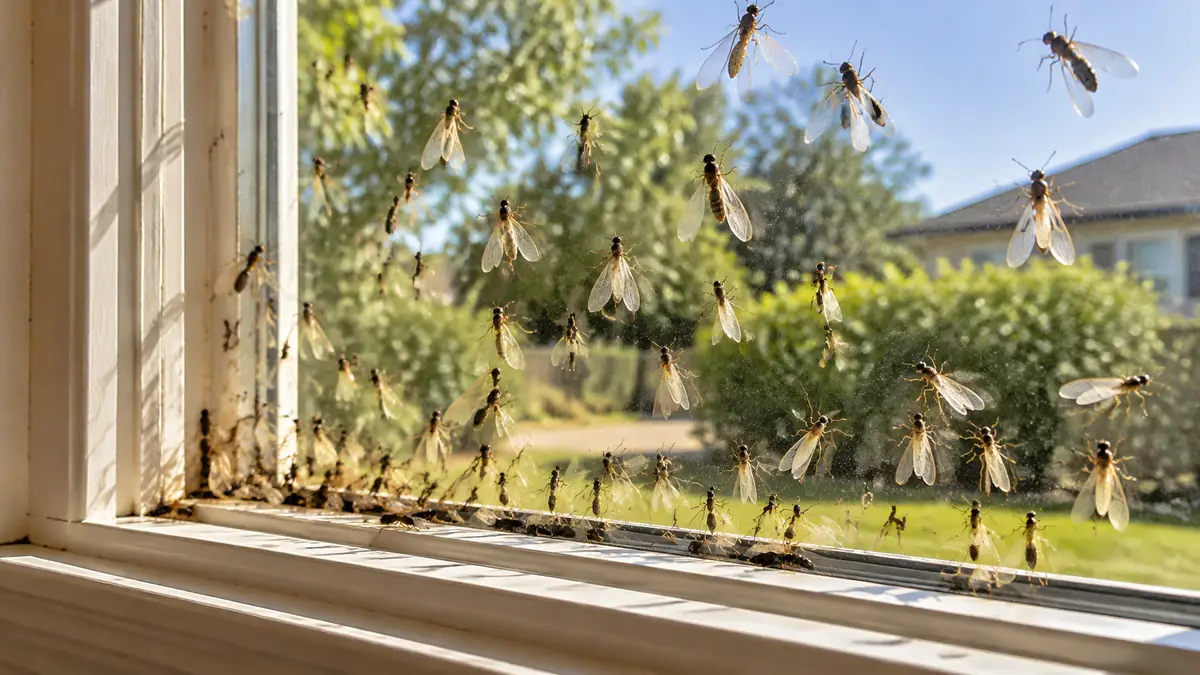
It happens every spring in Georgetown. A warm morning follows a night of rain, and suddenly there are dozens of winged insects crawling on a window, a sliding door or the bathroom light. Some people grab the vacuum and forget about it. Others assume the worst. The truth depends on what kind of swarmer it is, and you can tell in about ten seconds.
What swarmers are
Both ants and termites produce winged reproductives, called swarmers or alates. Once a year, a mature colony releases them to fly off, pair up and start new colonies. Most die within hours. Swarmers do not eat wood or damage anything themselves. What they tell you about is the colony they came from.
The three-point test: flying ants vs termites
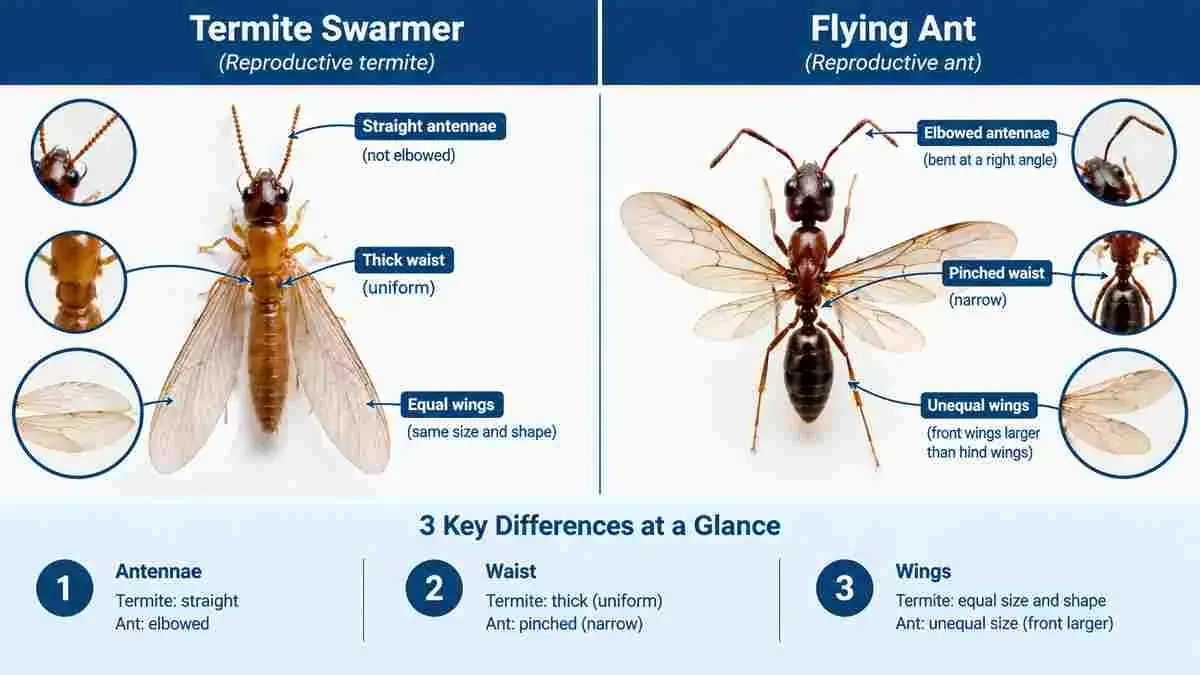
Texas A&M AgriLife entomologists use a simple test, described in a Texas Standard interview: look at the waist, the antennae and the wings.
| Feature | Termite swarmer | Flying ant |
|---|---|---|
| Waist | Thick, straight, no pinch | Narrow, pinched, like an hourglass |
| Antennae | Straight, like a string of beads | Bent at an elbow |
| Wings | Four wings, all the same length, extending well past the body | Front pair longer than the back pair |
| Color | Usually dark brown to black body, pale wings | Varies; often reddish or black |
| After landing | Drops wings quickly, leaving piles | Wings usually stay on longer |
If the insect has a pinched waist and elbowed antennae, it is an ant. If it looks like a plump little cigar with long, equal wings, it is a termite.
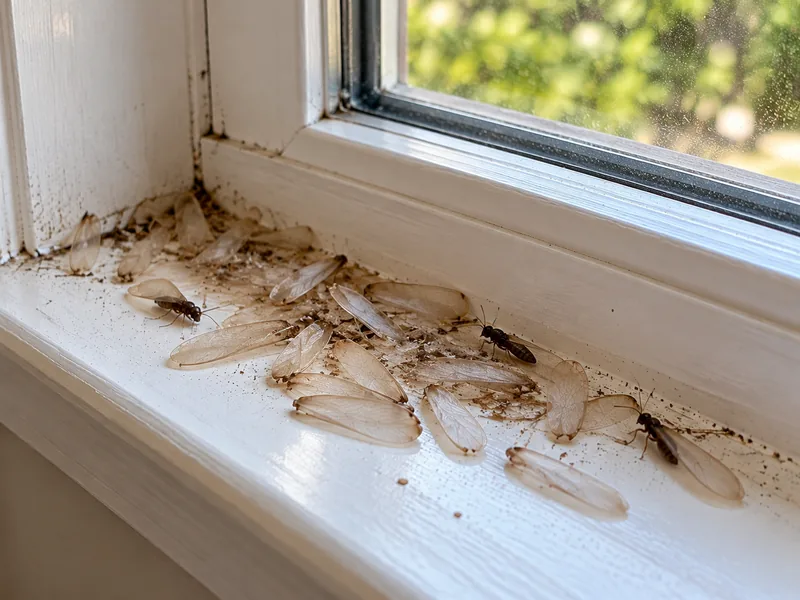
Found only wings? Termite wings are all the same size and shape, and you will often find them piled together in spider webs or along the sill. A pile of matching wings is one of the most common ways people discover termites.
The Georgetown swarm calendar
| When | What swarms | Typical time of day |
|---|---|---|
| February – May | Native subterranean termites | Daytime, often mid-morning to early afternoon, after warm rain |
| Late spring | Formosan termites, where present | Dusk and night, drawn to lights |
| Spring through summer | Fire ants and many other ants | Often after rain; fire ant swarms frequently follow storms |
| Summer | Carpenter ants | Usually spring and early summer |
Formosan termites are an invasive species found in a growing number of Texas counties. A swarm of termites around a porch light at night is worth reporting to your exterminator, because Formosan colonies can grow very large.
Clues that do not settle it
A few things people rely on are unreliable. Color is one: Georgetown’s native subterranean termite swarmers are dark brown to black, and so are many flying ants. Size is another, since both run about a quarter to three-eighths of an inch. Time of day helps a little, because eastern subterranean termites tend to swarm in daylight after a warm rain while many ants fly in the evening, but there is plenty of overlap in a Central Texas spring.
Location is a better hint than any of those. Swarmers that appear inside a closed room, around a bathtub trap, at a slab crack or along a baseboard, and nowhere outside, usually came from a colony already feeding in the structure. Winged insects that pour out of a lawn crack or a pavement joint are more often ants, or termites from a colony in the yard that has not reached the house yet.
How to save a sample for an inspector
Swarmers die and disappear within a day, so collect evidence while you can. Press a strip of clear packing tape over a few whole insects and stick it to an index card, or drop them into a zip bag or a small jar with a splash of rubbing alcohol. Scoop up a pinch of the loose wings as well; termite wings break off cleanly along a seam near the body, and that detail alone is often enough for an identification. Write the date and the room on the bag, take a photo of where you found them, and do not vacuum the area until someone has looked at it.
Skip the bug spray. Killing swarmers does nothing to the colony that released them, and it can wash away the very evidence an inspector needs to find the entry point.
What a swarm inside means
Where you see swarmers matters more than how many.
- Outside, on a fence, woodpile or tree: there is a colony nearby, which is normal in Central Texas. It is a good reminder to keep wood off the ground and away from the house.
- Inside, near windows, doors or lights: the colony is very likely in or under your structure. Swarmers move toward light, so they gather where they come out.
- Shed wings on indoor sills or in bathtubs: same meaning, even if you never saw the swarm.
Georgetown homes vary in how termites get in. Older wood homes in the historic district and on pier-and-beam foundations have more wood near soil. Newer slab homes on the east side’s clay soil can get termites through hairline slab cracks and plumbing gaps. Either way, an indoor swarm calls for an inspection.
What to do next
- Collect a few. Save some swarmers or wings in a sealed bag or clear tape on paper. An exterminator can confirm the species.
- Take photos. Note where they appeared and the time of day.
- Vacuum the rest. Swarmers that stay indoors die quickly. Spraying them does nothing for the colony.
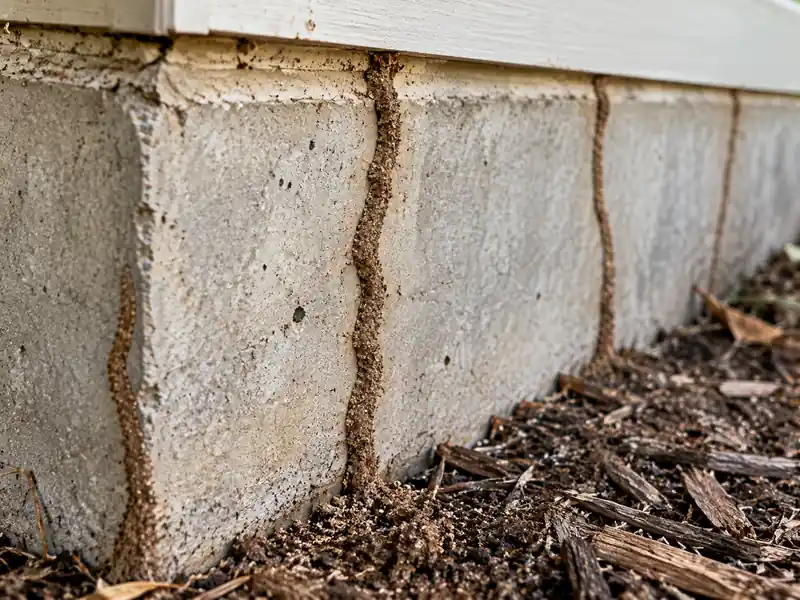
- Look for mud tubes. Check the slab edge, the garage walls and any crawl space for pencil-width mud tunnels.
- Schedule an inspection. For termites, get a professional inspection rather than store-bought treatment, which cannot reach the colony in the soil.
- Find your paperwork. If your builder pre-treated the slab or a company treated the home before, have the records ready.
If they turn out to be ants, see the ant exterminator page. Carpenter ants in particular can mean damp, damaged wood that needs attention.
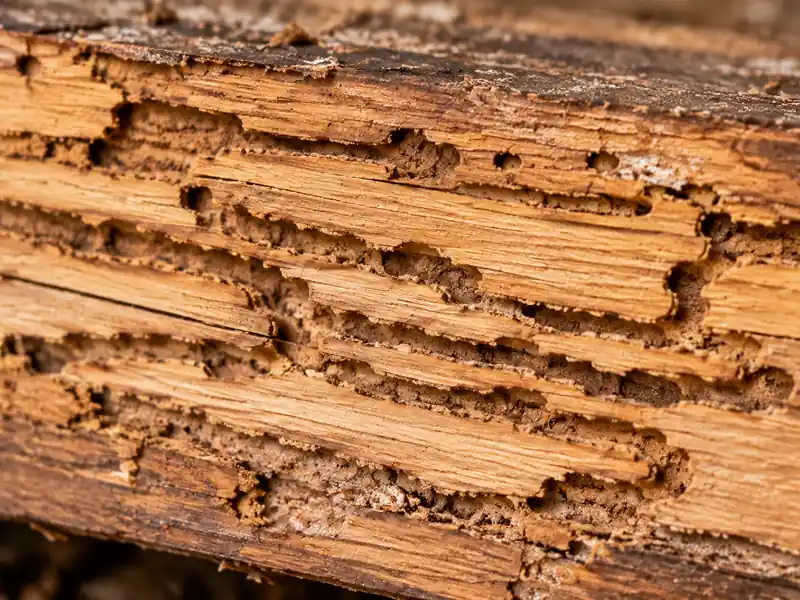
The first hour after a swarm
A swarm indoors is unnerving, but nothing about it needs a panicked response. The insects you see are not chewing anything; they are trying to leave. What you do in the next hour mostly decides how useful the inspection will be.
- Do not spray. Swarmers die within hours anyway, and insecticide on the floor makes the specimens harder to identify.
- Collect a few. Press clear tape over two or three insects, or drop them in a zip-top bag, and keep any shed wings you find on windowsills.
- Take photos of where they came from: a bathroom near the slab, a door frame, a crack in the garage floor or a window track. The exit point matters more than the number of insects.
- Vacuum up the rest once you have your samples.
- Walk the outside of the slab and the garage walls with a flashlight, looking for pencil-width mud tubes running up from the soil.
Then book an inspection while the evidence is fresh. A technician who can see the exact spot the swarm came from, plus the insects themselves, can usually tell you within minutes whether you are dealing with ants or a termite colony that has been feeding under the house for years.
Swarm season questions
Do swarmers mean my house is infested?
Swarmers outside are a sign of a nearby colony, which is common. Swarmers or shed wings inside the house strongly suggest an active colony in or under the structure, and an inspection is the next step.
Do flying ants damage homes?
Most flying ants are harmless. Carpenter ants are the exception; they hollow out damp or damaged wood. If you see large black winged ants indoors, look for soft wood and sawdust-like debris nearby.
Do termites swarm at night?
Native subterranean termites usually swarm in daylight. Formosan termites swarm at dusk and after dark and gather around lights.
Will the swarm go away on its own?
The swarm itself ends within a day or so. The colony that produced it does not. That is why a swarm is a signal, not the problem.
Keep reading
- Termite inspection in Georgetown: what the Texas WDI report covers
- Fire ants vs. tawny crazy ants
- Back to the Georgetown exterminator homepage
Sources: Texas Standard, are those swarmers ants or termites? · AgriLife Today, Texans need to keep an eye out for termites