
Fire Ants vs. Tawny Crazy Ants in Georgetown: How to Tell and What Works
Key takeaways
- Crazy ants in Texas, the tawny crazy ant, have been confirmed in Williamson County.
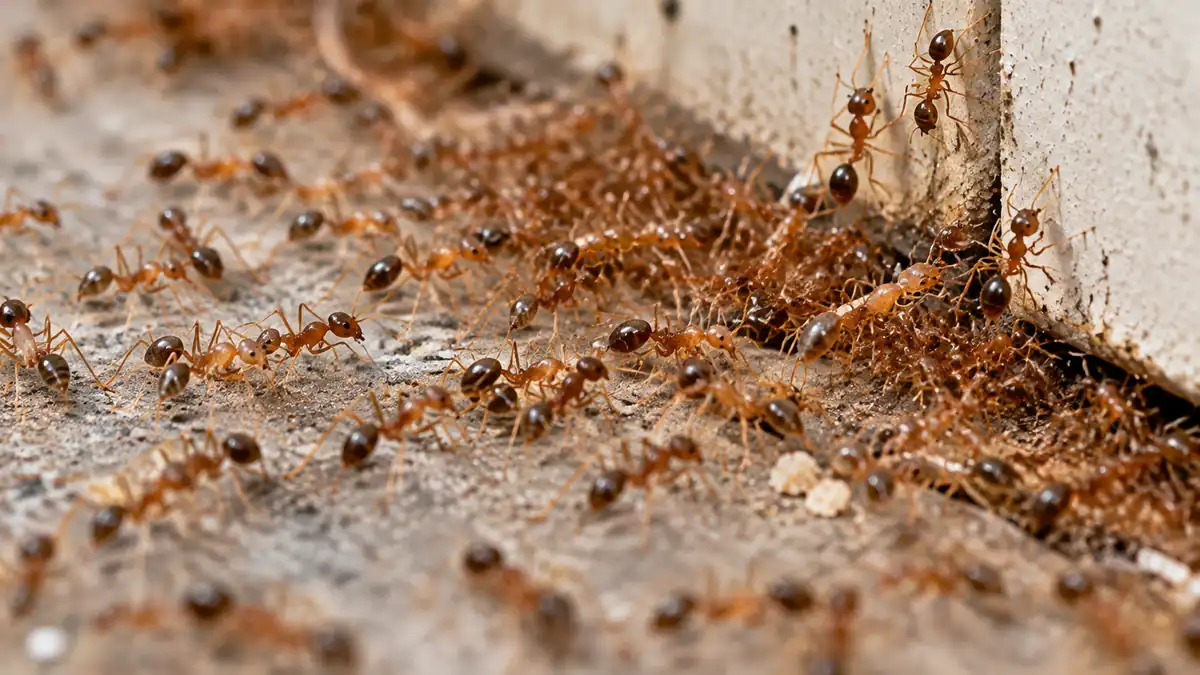
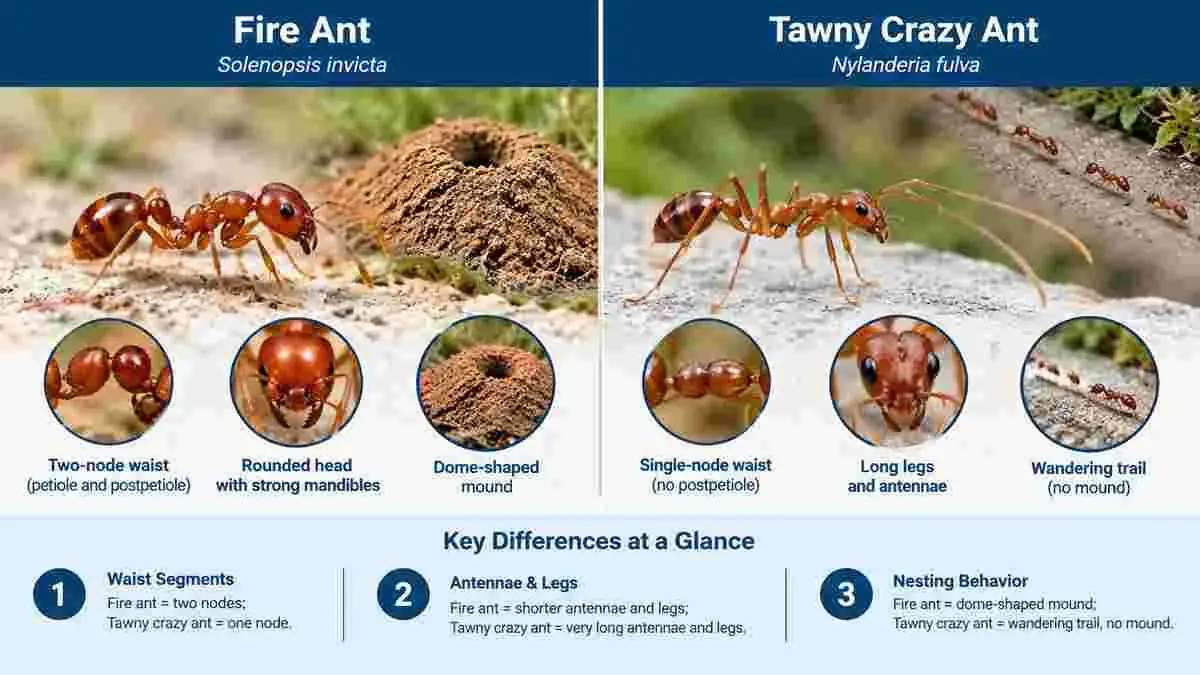
- Fire ants build domed mounds and sting. Crazy ants build no mound, move erratically and appear in huge numbers.
- Fire ants respond to a two-step bait approach. Crazy ants usually need habitat removal and targeted treatment, repeated through summer.
For decades, Georgetown homeowners had one ant to worry about outdoors: the red imported fire ant. Now the question is fire ants vs crazy ants, because a second species behaves so differently that the usual products barely touch it. The tawny crazy ant, Nylanderia fulva, is recorded in Williamson County by the Texas Invasive Species Institute. Knowing which one you have saves a lot of wasted bait and frustration.
Fire ants vs crazy ants (and carpenter ants) compared
| Fire ant | Tawny crazy ant | Carpenter ant | |
|---|---|---|---|
| Size and color | Small to medium, reddish-brown, mixed sizes | Small, reddish-brown, uniform size | Large, black or red-and-black |
| Movement | Orderly trails | Fast, jerky, random | Steady trails, often at night |
| Nest | Domed mounds of loose soil, no central opening | No mound; under debris, mulch, rocks, in walls | Inside damp or damaged wood |
| Numbers | Thousands per mound | Can reach millions across a yard | Hundreds to a few thousand |
| Stinging | Painful sting, white pustules | Bites, no sting | Can bite, no sting |
| Electrical problems | Sometimes, in AC units | Frequent, packing into boxes and units | Rare |
Five ways to tell fire ants from crazy ants at a glance
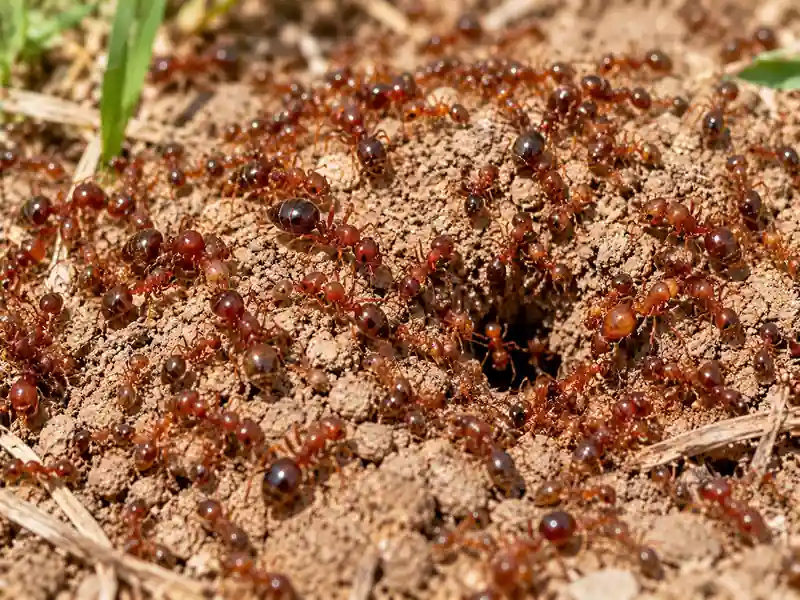
- Look for a mound. A fluffy soil mound in the lawn is fire ants. Crazy ants leave no mound.
- Watch them move. Fire ants march; crazy ants zigzag like they cannot decide where to go.
- Count them. A few hundred on a patio is normal for fire ants. A carpet of ants pouring over the patio, wall and siding is a crazy ant sign.
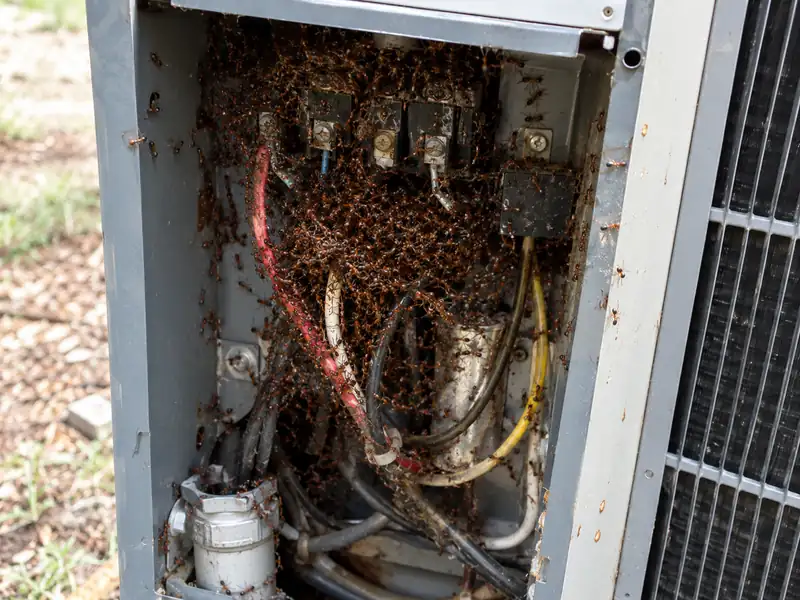
- Check the electrical boxes. Crazy ants pack into AC disconnects, outlets and pool equipment by the thousands.
- Notice the sting. If you got stung and a white pustule formed a day later, that was a fire ant.
Why fire ant mounds appear after rain
Fire ant colonies live mostly below ground. When soil floods after a heavy rain, the colony moves the queen, brood and workers upward and builds a fresh mound within a day or two. Georgetown’s wettest months are May and October, which is why yards look worst then. It is also why a dry summer yard can look clean while colonies are still deep in the soil.
What works on fire ants
Texas A&M AgriLife’s fire ant program recommends a two-step approach (fireant.tamu.edu):
- Broadcast a bait across the whole yard when ants are foraging, typically when the ground is dry and temperatures are moderate. Workers carry it back and share it with the colony.
- Treat individual mounds that are near play areas, doors or walkways, a few days later.
Treating only the mounds you can see tends to make colonies relocate a few feet away, which is the “they keep moving” problem many homeowners describe.
Why crazy ants ignore bait
Tawny crazy ants are a different problem:
- They do not care much for the protein and oil baits made for fire ants
- They nest in many small, scattered spots rather than one mound, so there is no single target
- Huge numbers mean that killing a few thousand barely changes what you see
- Colonies merge and move freely, so neighbors’ yards can resupply yours
What helps is removing the places they nest, such as boards, rocks, landscape timbers, leaf litter, piles of mulch and stored items on the ground, then targeted perimeter treatments with products labeled for crazy ants, repeated through the warm months.
The electrical damage risk
Crazy ants are drawn into electrical equipment. When enough of them pile into a switch or contact, their bodies can short it, and the alarm chemicals released by dying ants attract even more. AC units, pool pumps, well equipment, outdoor outlets and breaker boxes are common targets. If your AC suddenly stops in summer and you see ants around the unit, have the unit checked by an HVAC technician and the ants treated by an exterminator.
When to call
Call an independent local exterminator when ants are getting into electrical equipment, when bait has not reduced activity after a few weeks, when you see crazy ant swarms, or when fire ant mounds cluster around play areas and the slab. Carpenter ants in the house are also worth a professional look, since they point to damp wood.
Ant questions from Georgetown residents
Do crazy ants sting?
No. Tawny crazy ants bite, but they do not sting like fire ants. Their main problems are huge numbers and damage to electrical equipment.
Why are there ants in my AC unit?
Both fire ants and crazy ants are drawn to the warmth and electrical fields inside AC units. Their bodies can bridge contacts and cause failures. Have the unit checked and the area around it treated.
Do fire ants come back after treatment?
New colonies move in from neighboring yards and open land, and surviving colonies can rebuild. Most Georgetown yards need a broadcast bait in spring and again in early fall.
Will crazy ants push out fire ants?
Where crazy ants take over, they often do outcompete fire ants. That is not good news; the crazy ant problem is usually harder to live with.
Keep reading
- Flying ants or termites? How to tell during swarm season
- New home, new pests: a first-year plan
- Back to the Georgetown exterminator homepage
Sources: Texas Invasive Species Institute, tawny crazy ant · Texas A&M AgriLife, fire ant research and management