
Kissing Bugs in Georgetown, TX: What They Look Like and What to Do
Key takeaways
- The kissing bug in Texas is a cone-nosed insect that feeds on blood; Central Texas has the widest variety of species in the state, according to Texas DSHS.
- Several harmless bugs look similar. Check the head shape and the striped edge of the body.
- Do not crush one with bare hands. Save it in a sealed container; Texas A&M can test bugs for the Chagas parasite.
A kissing bug on the porch or the bedroom floor tends to send people straight to a search engine, usually with the word “Chagas” attached. The worry is understandable, but the facts are calmer than most of what turns up. This post covers what kissing bugs look like, how to tell them from common look-alikes, what Texas health officials say about Chagas disease, and what to do with a bug you find.
What a kissing bug looks like
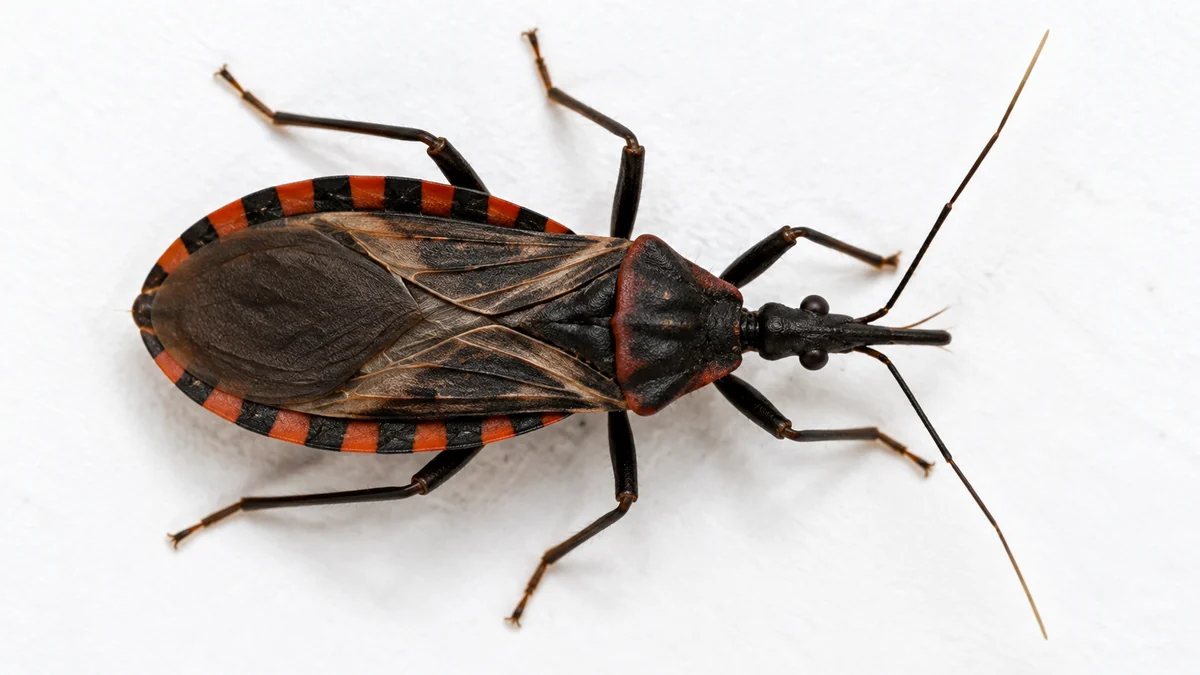
Kissing bugs, also called conenose bugs or triatomines, belong to the assassin bug family. Texas Department of State Health Services materials describe them like this (DSHS kissing bug post):
- About ½ to 1 inch long, depending on species
- A narrow, cone-shaped head with thin antennae and a straight, slender beak tucked under the head
- A dark brown to black body, often with orange, red or yellow stripes around the flat edge of the abdomen
- Six legs and wings folded flat over the back
According to DSHS, Central Texas has the widest variety of kissing bug species in the state, so Georgetown is squarely in their range.
Look-alikes that are not kissing bugs
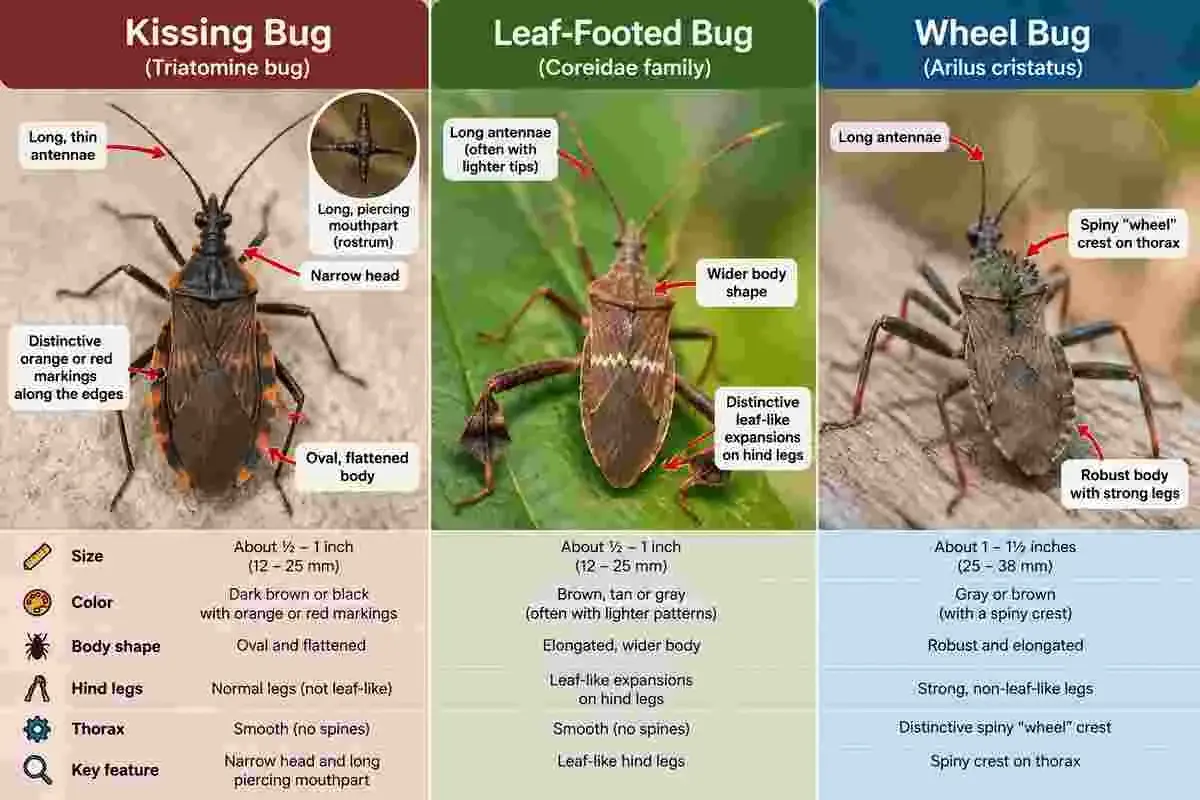
Many insects get mistaken for kissing bugs. The most common in Georgetown yards:
| Insect | How to tell it apart |
|---|---|
| Leaf-footed bug | Flattened, leaf-like expansions on the hind legs; feeds on plants and fruit |
| Wheel bug | Larger, gray, with a spiny half-wheel crest on its back |
| Other assassin bugs | Thicker, curved beak; often more robust heads |
| Western conifer seed bug | Similar shape but feeds on plants; often indoors in fall |
| Squash bugs and stink bugs | Broader, shield-shaped bodies |
Texas A&M AgriLife’s conenose bug fact sheet has photos of the common species. When in doubt, save the bug and have it identified.
Chagas basics from official sources
Kissing bugs can carry Trypanosoma cruzi, the parasite that causes Chagas disease. The parasite is in the bug’s feces, not its bite; infection can happen if feces get into the bite wound, the eyes, the mouth or a break in the skin. Texas health officials note that many kissing bugs tested in Texas carry the parasite, but human cases acquired in Texas are uncommon. Dogs are infected more often than people, especially dogs that spend nights outdoors.
Talk to a doctor if you think you were bitten and have symptoms, or if you found kissing bugs where you sleep. For a dog, talk to your vet. This post is general information, not medical advice.
Where kissing bugs hide
Kissing bugs feed on the blood of animals and usually live close to where those animals sleep:
- Wood rat and other rodent nests, under woodpiles, brush and rock piles
- Dog houses and kennels, and outdoor pet beds
- Chicken coops
- Under porches, decks and crawl spaces where animals den
- Cracks and gaps in homes near any of the above
Homes on Georgetown’s rural edges, with brush, rock piles and wildlife nearby, and homes with dogs that sleep outside, are most likely to see them. Adults fly in warm months and are attracted to lights at night.

How to get one tested through Texas A&M
- Do not touch it with bare hands. Use gloves or a plastic bag.
- Place it in a sealed container or a zip-top bag; freezing it preserves it.
- Clean any surface it touched with a bleach solution.
- Contact Texas A&M’s kissing bug community science program, listed in the DSHS guide, for instructions on submitting the bug for identification and testing.
Five steps to make your home less inviting
- Reduce rodents. Rodent nests around and under the house are a major draw. Since kissing bugs often follow wood rats and other wildlife, keeping rodents out of the house helps too.
- Clear hiding spots. Move woodpiles, brush and rock piles away from the house.
- Seal gaps. Close cracks around doors, windows, vents and utility lines, and repair window screens.
- Bring pets in at night, or keep dog beds and kennels clean and off the ground.
- Change outdoor lights to yellow bulbs or motion lights near doors to attract fewer night fliers.

When to call an exterminator
Call when you find kissing bugs indoors more than once, especially in bedrooms, or when you find them along with signs of rodents in the attic, walls or crawl space. An independent local exterminator can look for the rodent harborage and entry points, treat cracks and voids where bugs hide, and recommend sealing.
Kissing bug questions
Are kissing bugs common in Georgetown?
They are found across Central Texas, which DSHS notes has the widest variety of species in the state. Sightings are most common on properties near brush, woodpiles and wildlife.
Does every kissing bug carry Chagas?
No, but many tested in Texas do. That is why it is worth saving a bug for testing rather than guessing.
What should I do if I was bitten?
Wash the area with soap and water and talk to your doctor, especially if you notice swelling around the eye, fever or other symptoms. Mention where you found the bug.
Can my dog get Chagas?
Yes. Dogs in Texas are infected more often than people. Talk to your vet, keep dogs indoors at night when possible and reduce kissing bug hiding spots around kennels.
Keep reading
Sources: Texas DSHS, kissing bug and Chagas disease post · Texas A&M AgriLife, conenose bugs fact sheet