
Rats in the Attic? Roof Rats and Georgetown’s Oak Trees
Key takeaways
- Rats in the attic in Georgetown are usually roof rats, climbers that travel along oak and pecan limbs.
- They get in through gaps at soffits, vents, roof edges and utility lines, often in homes 20 years or older.
- Trimming limbs and sealing entry points ends the problem; trapping alone usually does not.
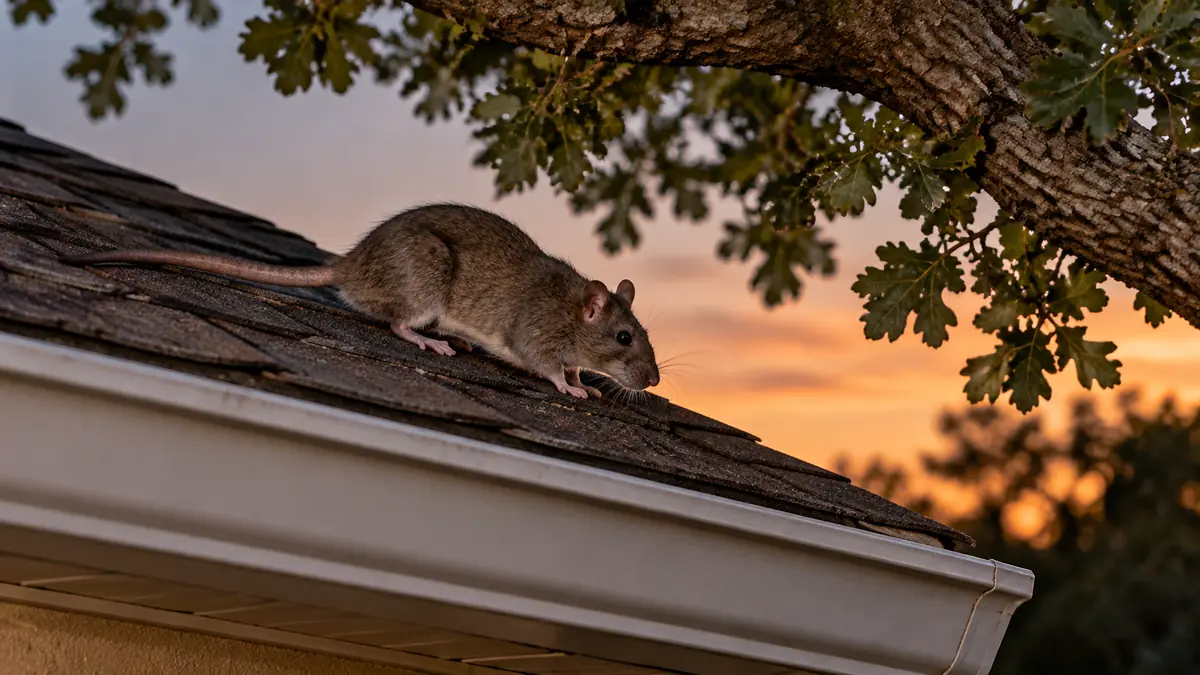
If you hear something running across the ceiling after midnight, there is a good chance it walked in from a tree. Georgetown’s older neighborhoods, from Old Town to Berry Creek, are shaded by big live oaks and pecans, and those limbs are a highway for the roof rat. This post covers how to tell what you have, how it got in and what actually stops it.
Roof rats or mice?
| Roof rat | House mouse | |
|---|---|---|
| Size | Body 6–8 in., tail longer than body | Body 3–4 in. |
| Sound | Heavier thumps and running, often right after dark | Light scratching and scurrying |
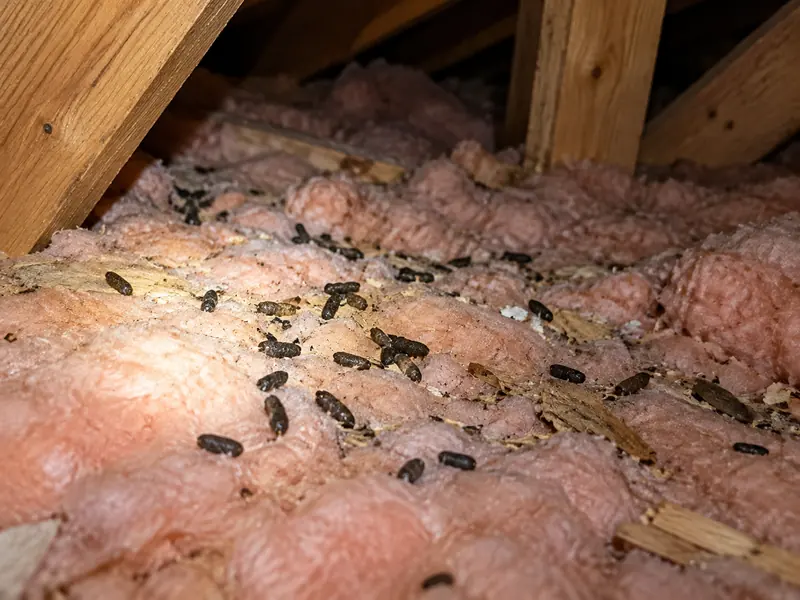
| Droppings | About ½ in., pointed ends | About ¼ in., rice-sized |
| Where | Attic, upper walls, trees | Walls, cabinets, garage, lower floors |
| Typical entry | Tree limbs to roof, soffits, roof vents | Garage door seals, gaps at ground level |
Roof rats are slender, dark, agile climbers with big ears and a tail longer than their body. They prefer to live high, which is why they end up in attics rather than crawl spaces.
Signs of rats in a Georgetown attic
- Running, thumping or gnawing in the ceiling from dusk into the night
- Droppings along attic insulation, rafters and the top of walls
- Trails or tunnels through blown-in insulation
- Greasy rub marks on beams, pipes and the edges of openings
- Chewed wiring, ductwork, vent screens or stored boxes
- Fruit, pecans or pet food stashed in corners
- A rat seen running along a fence top, utility line or tree limb at dusk
How they get in: branches, vents and soffits
Roof rats can squeeze through a gap about the size of a quarter. On a typical Georgetown home, these are the seven places to check:
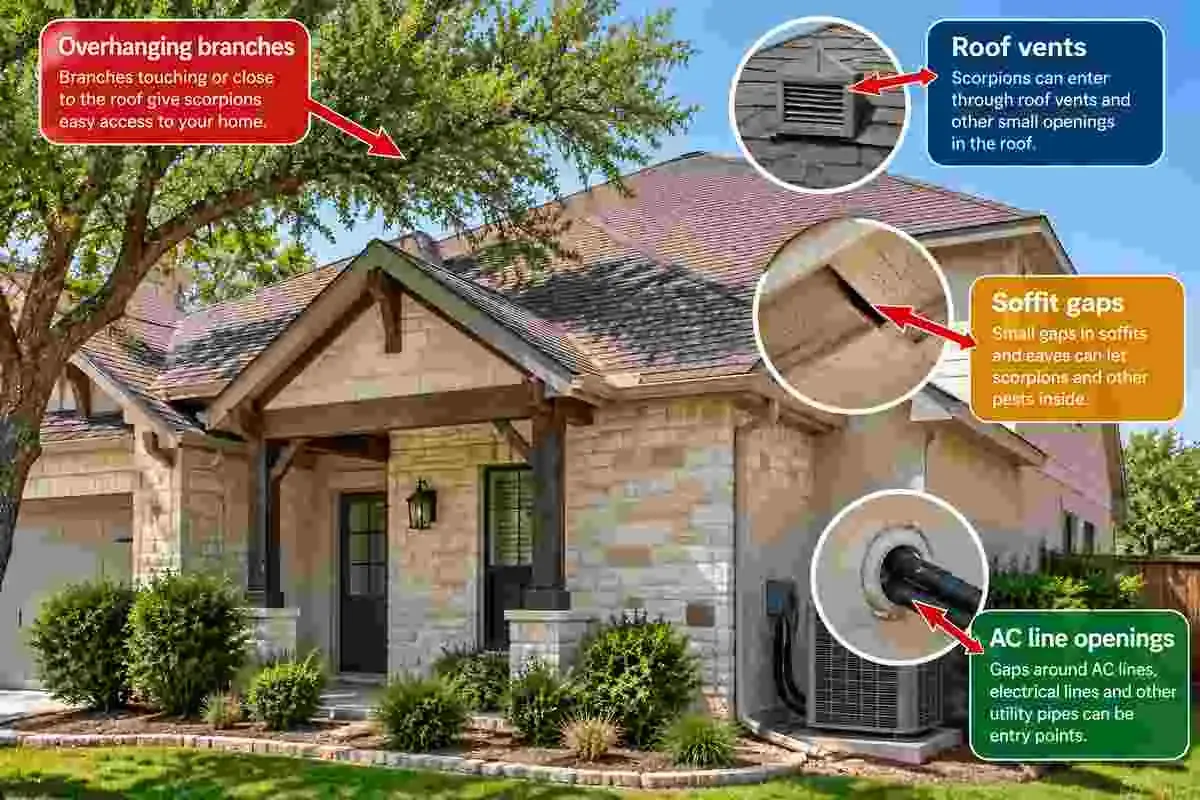
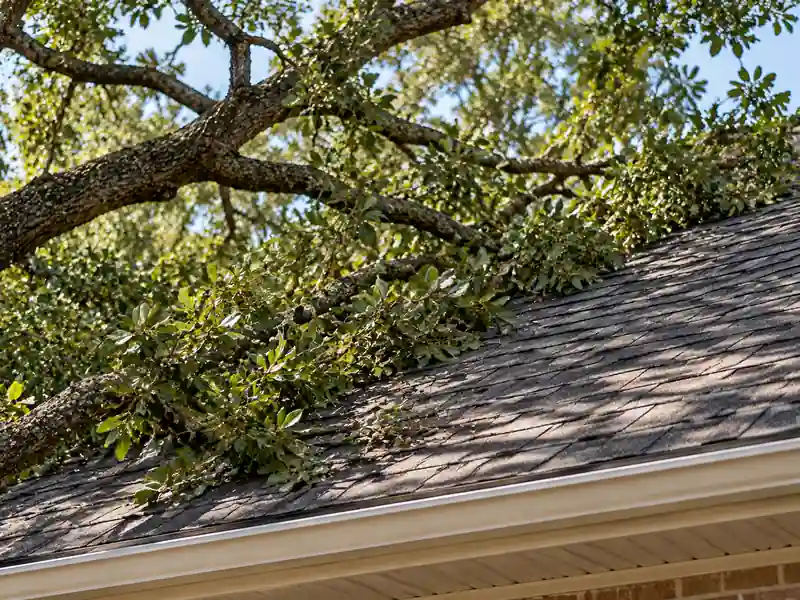
- Overhanging branches. Any limb touching or hanging over the roof gives a rat a bridge.
- Soffit gaps. Where soffit panels meet the fascia or a wall, especially at corners and roofline changes.
- Roof and ridge vents. Damaged or poorly fitted vents, and turbine vents with gaps.
- Gable vents. Louvered vents with torn or missing screens.
- Roof-to-wall junctions. Where a lower roof meets a second-story wall or a chimney.
- Utility lines. AC refrigerant lines, cable and electrical service entries.
- Garage door corners. Rats and mice both use the gap at the side of the garage door.
Why Georgetown’s oaks matter
Mature live oaks spread wide and low, and pecans drop food every fall. San Gabriel Park’s oaks are estimated at around 200 years old, and streets around downtown and in older neighborhoods have trees that tower over the roofs beneath them. Roof rats nest in dense tree canopy, ivy and palms as well as attics, and move between them at night.
Fall is when this matters most. As nights cool in October, rats that spent the summer in trees and shrubs look for warmer shelter, and the attic is right there.
Why traps alone fail
Traps catch rats. They do not stop more rats from walking the same branch to the same gap next week. Common reasons a trapping-only approach drags on:
- New rats keep arriving through open entry points
- Traps are placed where rats do not travel; roof rats avoid the floor of the attic and use beams and edges
- Rats are cautious of new objects and avoid traps for days
- Poison baits in the attic can leave rats dying inside walls, causing odors for weeks
Setting traps where roof rats actually travel
Roof rats are cautious around anything new, and they move along edges rather than across open floor. In an attic that means the tops of walls, along rafters, beside ductwork and on pipes. Put snap traps right on those paths, with the trigger end facing the run, and fasten them to the framing so a caught rat cannot drag one into the insulation. Leave the traps baited but unset for two or three nights so the rats get used to them, then set them all at once and check them every day.
Roof rats like fruit and nuts more than cheese, which makes sense given how many pecan and fig trees grow in older Georgetown yards. A dab of peanut butter pressed into the trigger, or a piece of dried fruit tied on with thread, works better than a loose chunk they can lift off. Use more traps than seems reasonable, since a single trap on a single path catches one rat at best. If kids or pets can reach the attic hatch or garage rafters, put the traps inside tamper-resistant boxes.
Trimming limbs and sealing entry points
The lasting fix is exclusion. In order:
- Trim branches so they are at least 6 to 8 feet from the roof
- Remove dense vines and ivy from walls
- Screen gable and foundation vents with ¼-inch hardware cloth
- Seal soffit gaps and roof-to-wall junctions with metal flashing or hardware cloth
- Seal around AC lines and utility entries with metal mesh and sealant
- Fix the garage door’s side and bottom seals
- Trap the rats already inside, then confirm activity has stopped
- Clean up droppings and damaged insulation with gloves and a damp method
Sealing a house while rats are still inside can trap them, so a professional usually seals all but one or two main openings, traps, then closes those last.
Cleaning the attic once they are gone
Droppings, urine and nesting material left behind keep smelling like a highway to the next rat, and they are not something to stir up with a broom or a shop vac. The CDC’s rodent cleanup steps are the safe baseline: air the space out, wear gloves, spray droppings and nests with a bleach solution or disinfectant until soaked, wait about five minutes, then wipe up with paper towels and bag everything.
In many Georgetown attics the insulation is the bigger issue. Blown-in insulation that is matted with droppings or tunneled through loses much of its value and can hold odor for years, so heavily soiled sections are usually removed and replaced after the entry points are sealed. Doing it in that order matters; new insulation in an attic that still has an open soffit gap is just new nesting material.
Roof rat, squirrel or raccoon?
Plenty of Georgetown homeowners set rat traps for weeks before realizing the noise was never a rat. The hours give it away. Roof rats are busiest in the middle of the night and move with a light, rapid patter. Squirrels go quiet after dark and get loud right around sunrise. Raccoons sound like a person crawling across the ceiling, often with chattering young in spring.
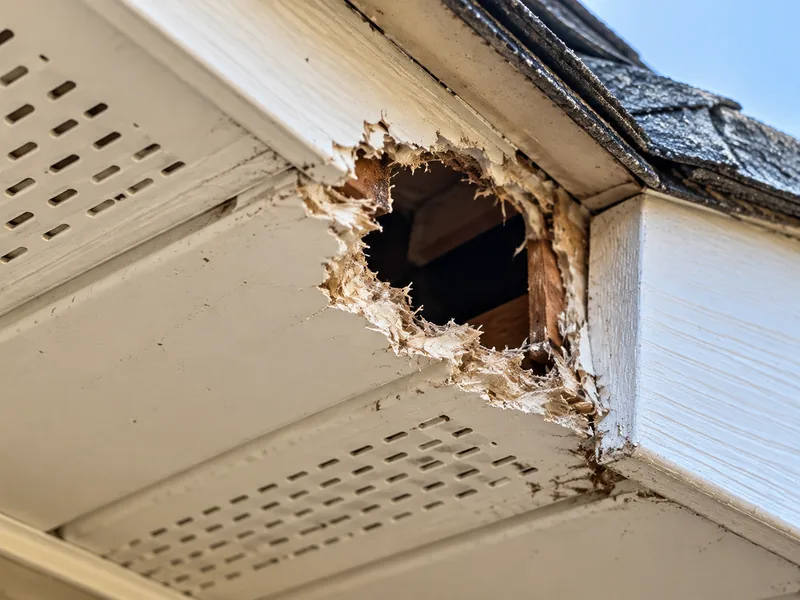
The holes differ too. A roof rat needs a gap about the width of a quarter and leaves smooth, greasy rub marks around it. A squirrel chews a rounder hole the size of a tennis ball, usually at a soffit corner. A raccoon simply rips a vent cover or fascia board loose. If what you are finding points to one of the bigger animals, the wildlife removal page covers one-way doors, Texas relocation rules and timing around babies.
When to call
Call an independent local exterminator when you hear activity more than a night or two, find droppings in the attic, see chewed wiring or smell something dead. Roof rats breed quickly, and contaminated insulation becomes a bigger job the longer it waits.
Roof rat questions
Why do I hear noises only at night?
Roof rats are nocturnal and leave the nest around dusk to feed. Most activity happens in the first few hours after dark and again before dawn.
Are roof rats dangerous?
They can carry diseases, contaminate insulation and food with droppings and urine, and chew wiring, which is a fire risk. Clean up with gloves and avoid stirring up dust.
Do rats leave on their own?
Rarely. An attic with shelter, warmth and nearby food is a good home. Rats stay and breed unless entry points are sealed and the animals removed.
Can rats get into the house from the attic?
Yes. They travel down wall cavities and plumbing chases into kitchens and cabinets, especially in search of food and water.
Keep reading
- Kissing bugs in Georgetown: why rodent nests and kissing bugs often go together
- Pests in Berry Creek: mature oaks and older rooflines
- Pests in Historic Downtown
Sources: Texas A&M AgriLife Extension · Visit Georgetown, San Gabriel Park