
New Home, New Pests: A First-Year Plan for New Construction in Georgetown

Key takeaways
- Pests in new construction homes are normal in Georgetown, because the land around them was just cleared.
- The usual first-year visitors are scorpions, fire ants, mice and spiders, plus wasps under new eaves.
- A few sealing jobs in the first month, your builder’s termite paperwork and a seasonal plan prevent most problems.
Georgetown has been one of the fastest-growing cities in the country, and hundreds of new homes are for sale at any given time, much of it on what was ranch land, brush or pasture a few years ago. If you just moved into one and you are already finding bugs, you are in good company: new construction home pests are one of the most common problems in town. Here is why it happens and what to do about it in your first year.
Why new construction home pests are so common
A new house is clean, sealed and treated, so why the scorpion in the shower? Three reasons:
- The land was their home first. Grading a section removes rock piles, brush and burrows that held scorpions, mice, fire ants and spiders. They move to the closest shelter, which is your home and garage.
- New homes have small gaps. Doors and garage seals have not been adjusted, weep holes are open, and penetrations for AC lines and cables are not always sealed well.
- Construction continues nearby. In large communities like Wolf Ranch, new phases keep disturbing land for years, so the push continues.
Most homeowners find that pest pressure eases in the second and third years as lawns fill in, gaps get sealed and nearby construction moves on.
The first-year pest calendar
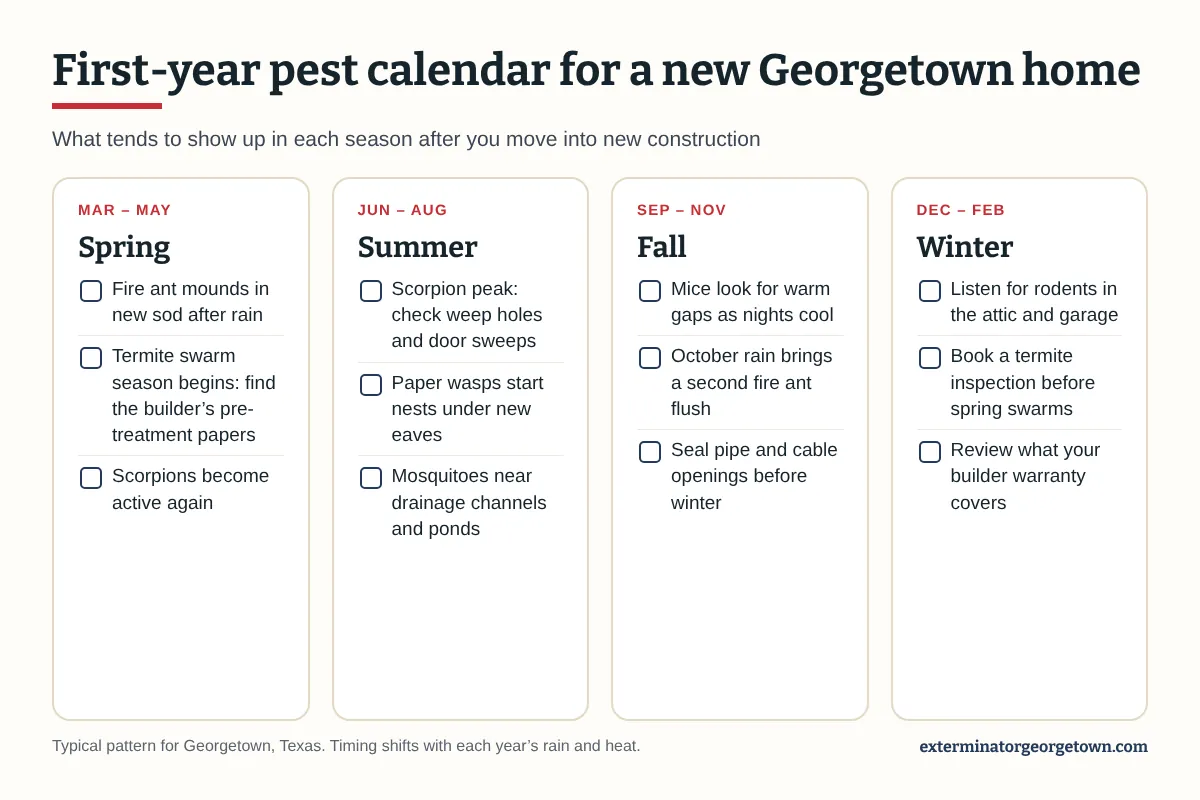
| Season | What to expect | What to do |
|---|---|---|
| Spring (Mar–May) | Fire ant mounds in new sod; termite swarm season; scorpions active again | Bait the lawn for fire ants; find your termite pre-treatment papers |
| Summer (Jun–Aug) | Scorpion peak; paper wasps under new eaves; mosquitoes near drainage | Weep-hole covers, door sweeps, blacklight check; knock down starter nests |
| Fall (Sep–Nov) | Mice in garages as nights cool; second fire ant flush after October rain | Seal garage door and utility gaps; bait the lawn again |
| Winter (Dec–Feb) | Rodents in attics and garages; quiet outdoors | Schedule a termite inspection before spring; review your warranty |
Scorpions, fire ants and mice in new builds
Scorpions
West-side lots on limestone, rock landscaping and stone veneer make Georgetown new builds prime territory for the striped bark scorpion. Fit breathable weep-hole covers, replace or adjust door sweeps and check attic vents. When sightings keep coming after the first summer, a scorpion inspection is the next step.
Fire ants
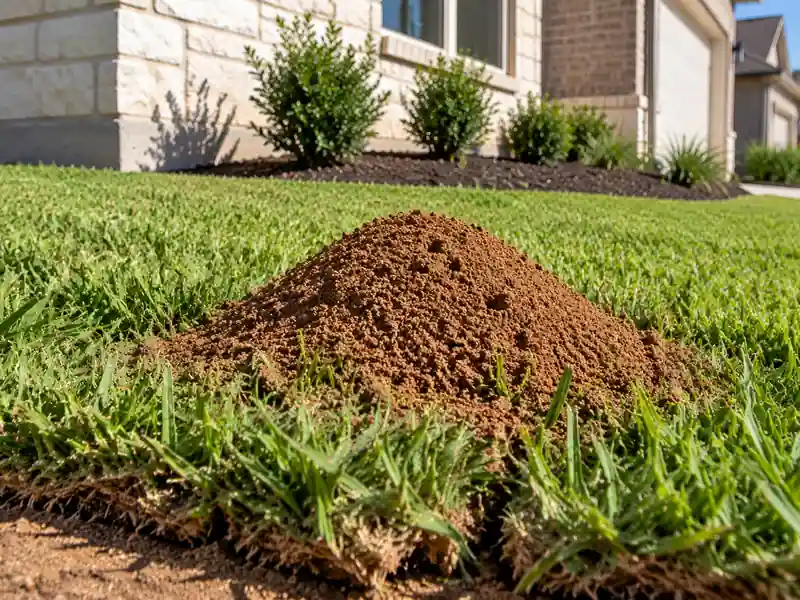
New sod often arrives with fire ants or attracts them quickly. A broadcast bait across the lawn in spring and early fall, followed by treatment of problem mounds, keeps them in check. For mounds that keep returning, compare the options under fire ant treatment.
Mice
The garage is the main entry. A door seal that does not meet the slab evenly, a gap at the side jamb or an unsealed utility opening is all a mouse needs. Moving boxes stacked against the garage wall give them instant cover. Mice that are already inside call for exclusion and trapping, not just bait.
Builder warranties versus pest protection
Builder warranties vary, so read yours. In general:
- Many Texas builders pre-treat the soil for termites before the slab is poured, and some install bait systems. Ask for the treatment records: product, date and area treated.
- Some warranties cover termite damage for a limited period. Few cover scorpions, ants, rodents or other pests.
- Your warranty walkthroughs are a good time to report gaps under doors, missing vent screens and unsealed penetrations.
Keep the termite paperwork with your closing documents. Before that pre-treatment is expected to expire, schedule a termite inspection.
Questions to ask the builder before closing
The final walk-through is the cheapest moment to fix pest entry points, because the builder still owns the punch list. Bring a flashlight and ask about these specifically:
- Was a pre-construction termite treatment applied, and by whom? Ask for the treatment record or the soil treatment certificate and keep it with your closing papers. It tells a future inspector what was done and when the protection is likely to fade.
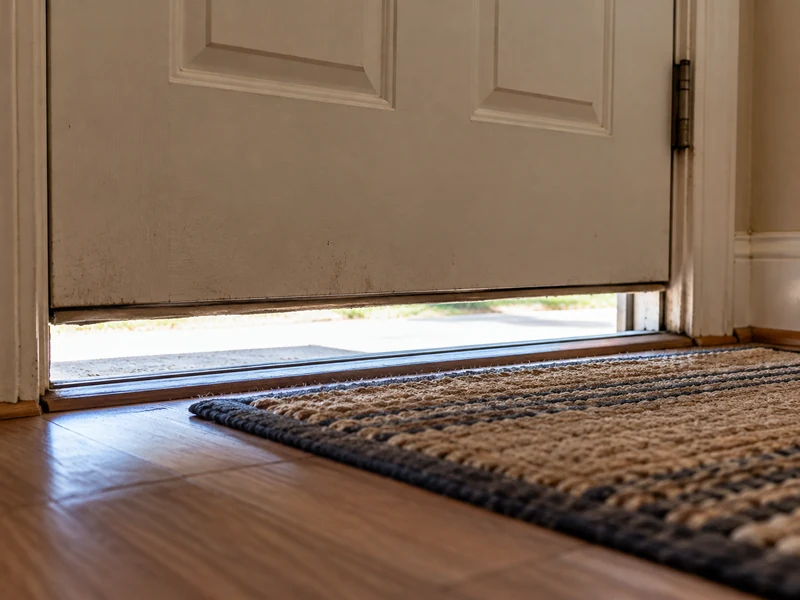
- Are the garage door seal and the exterior door sweeps adjusted? New doors often leave a sliver of daylight at the corners, which is all a striped bark scorpion needs.
- Are the weep holes in the brick or stone screened? Most are left open. Inexpensive mesh weep vents keep scorpions and mice out without trapping moisture.
- Are the AC line set, hose bibs and cable entries sealed where they pass through the wall? These penetrations are often caulked loosely or not at all.
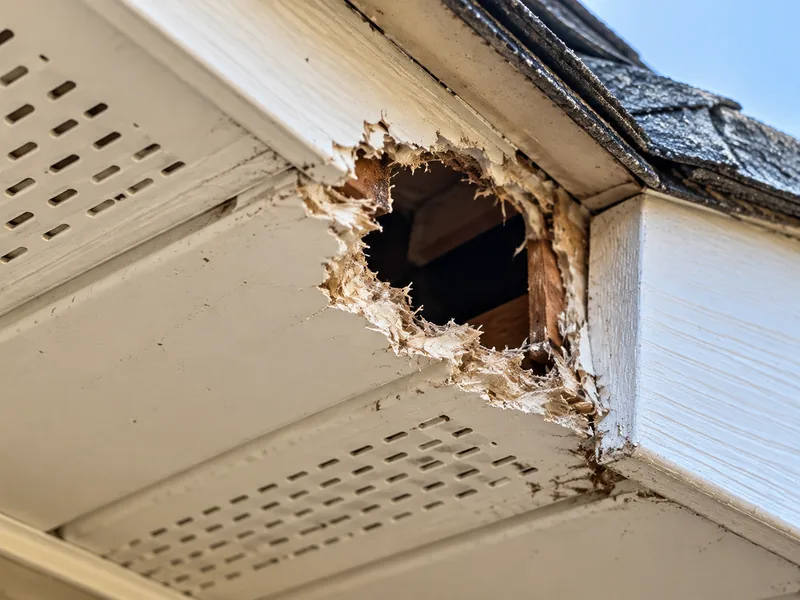
- Is the soffit and ridge venting screened and intact? Look for gaps where soffit panels meet the fascia, especially on the second story.
Landscaping choices that invite pests
Many Georgetown buyers put in their own landscaping during the first year, and a few common choices make pest problems worse. Rock borders and decorative limestone piled against the foundation give scorpions a cool, protected place to hide right next to the weep holes. Thick mulch beds that touch the slab hold moisture and hide termite mud tubes from view. Irrigation heads that spray the wall every evening keep the soil at the slab edge damp, which is exactly what subterranean termites and fire ants look for.
A simple rule helps: keep an 18-inch strip next to the foundation that is dry, visible and free of rock piles, with mulch pulled back a few inches from the slab and sprinklers aimed away from the house. Plant new trees far enough out that their mature limbs will stay well clear of the roof, since today’s six-foot live oak becomes tomorrow’s roof rat bridge.
It also pays to look past your own lot. In a subdivision that is still being built, the empty lots and construction staging areas next door are where displaced scorpions, fire ants and field mice end up first. Expect more activity along the side of the house that faces open ground, and check that side more often during the first summer. Once the neighboring homes are finished and their yards are established, most owners find new construction home pests ease off in the second or third year, which is another reason not to sign a long, expensive contract in the first month based on a handful of sightings in a new home that is still settling into its surroundings.
Simple first-month steps
- Install weep-hole covers and check every exterior door for daylight underneath
- Adjust or replace the garage door bottom seal and side weatherstripping
- Seal gaps around AC lines, hose bibs and cable entries
- Get moving boxes off the garage floor and into sealed bins
- Keep mulch and soil below the top of the slab
- Bait the new lawn for fire ants at the right season
- Find and file your builder’s termite pre-treatment records
- Walk the house one summer night with a blacklight to check for scorpions
When to call an exterminator for the first time
Many new homeowners set up a first visit soon after moving in, especially on the west side. Reasons to call: repeated scorpions indoors, mice in the garage or attic, fire ants around the slab and AC pad, or wasp nests on second-story eaves. Our blog post on how to choose an exterminator lists the questions to ask before signing up for any plan.
New home pest questions
Why are there scorpions in my brand-new house?
Because the land around it was scorpion habitat until it was cleared, and new homes have small gaps that have not been sealed. Weep holes, door gaps and attic vents are the usual entries.
Does a new slab stop termites?
Not by itself. Termites can get through hairline cracks and gaps around plumbing. Pre-construction soil treatment is what protects a new home, and it does not last forever.
When should a new homeowner first call an exterminator?
When you see a pattern rather than a one-off: scorpions more than once or twice a month, mice signs, or ants that keep coming back. Many west-side homeowners schedule a first exterior treatment in spring.
Do bugs in a new house mean it was built badly?
No. Pests in new construction are about the surrounding land and normal small gaps, not build quality. Sealing those gaps fixes most of it.
Keep reading
Sources: Redfin, Georgetown new construction listings · U.S. Census Bureau, fastest-growing cities · Texas A&M AgriLife, fire ant management