
Scorpions in Georgetown, TX: Why They Get Inside and How to Keep Them Out
Key takeaways
- Scorpions in Georgetown TX homes are almost always striped bark scorpions, the most common scorpion in Texas.
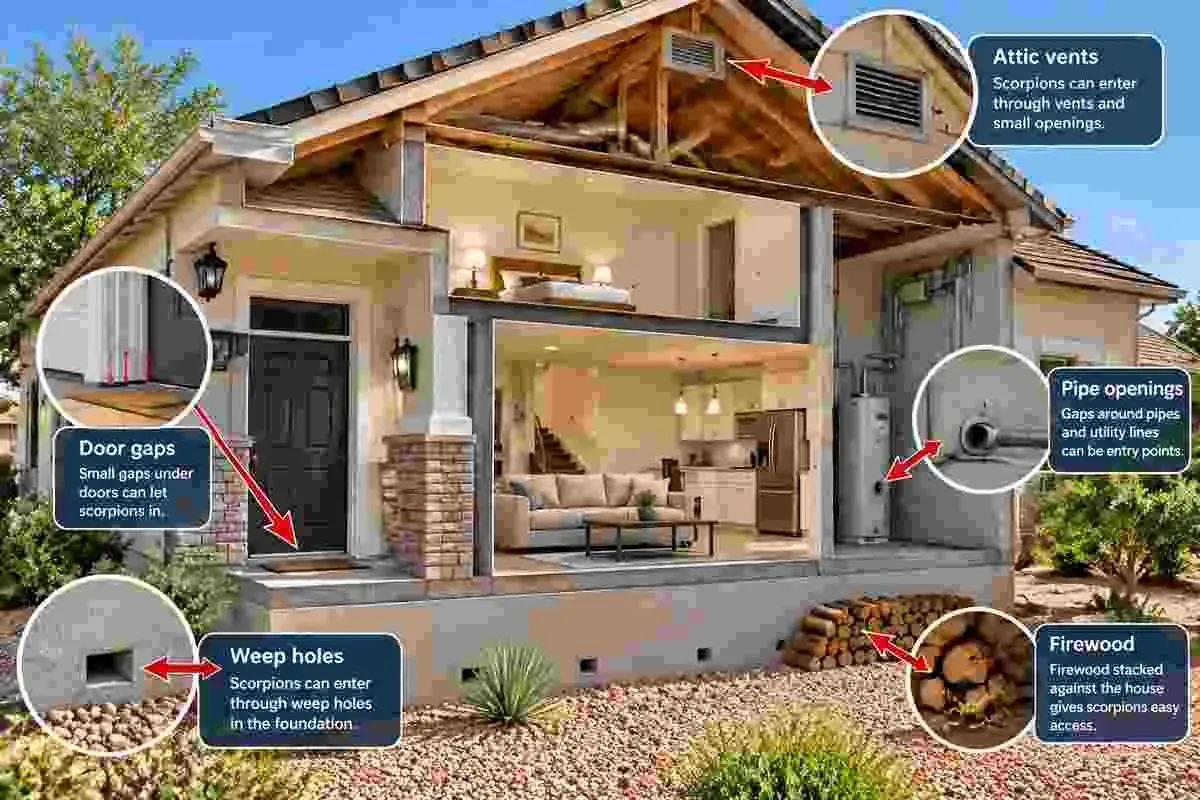
- They come in for shelter and moisture, mostly through weep holes, door gaps, attic vents and plumbing openings.
- Sealing those gaps does more than any spray. Treatment works far better on top of sealing, not instead of it.
Most Georgetown residents remember their first one. It is in the bathtub, or on the wall above the bed, or it drops out of a folded towel. The striped bark scorpion is so common here that many longtime residents stop being surprised, but there is a pattern to where and when they show up, and that pattern is what lets you keep them outside.
Which scorpion lives in Georgetown
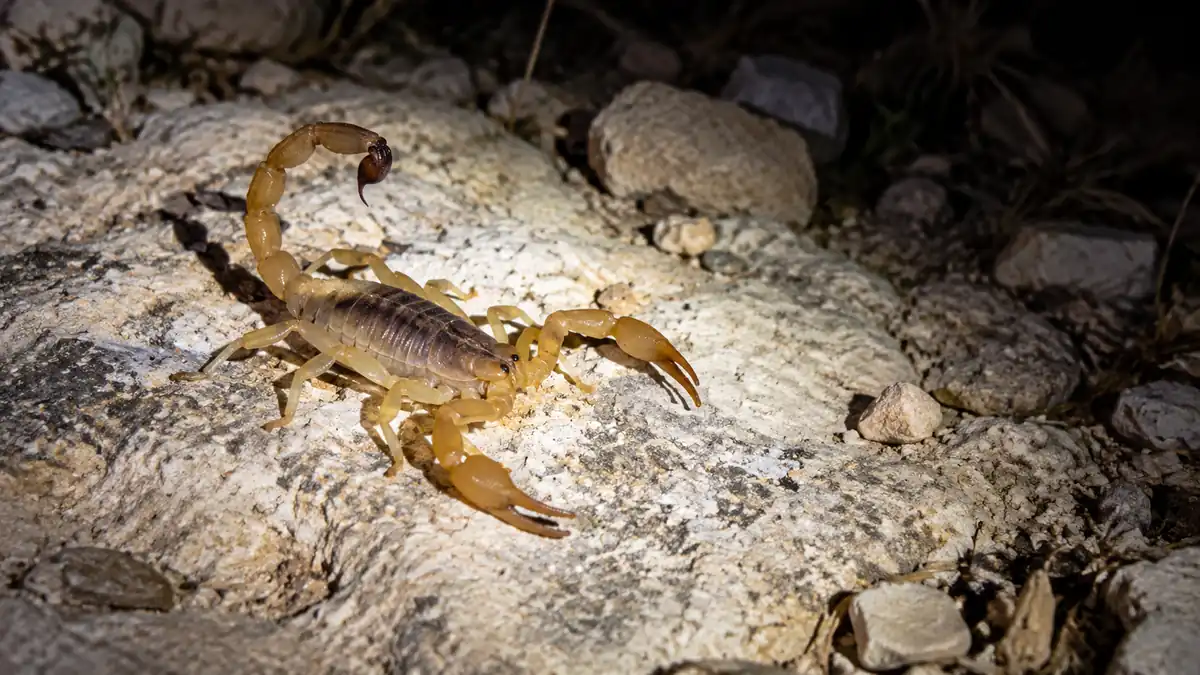
The scorpion you are finding is almost certainly Centruroides vittatus, the striped bark scorpion. It is the most widely distributed scorpion in Texas, according to the Texas A&M field post. Adults run about two to two and a half inches, pale yellowish-tan with two dark stripes along the back, slender pincers and a thin tail.
Two habits explain most indoor encounters. Bark scorpions climb well, so they reach ceilings, attics and second floors. And they cannot climb smooth surfaces like porcelain or glass, which is why so many end up stuck in tubs and sinks.
Why scorpions in Georgetown, TX come inside
Scorpions are not drawn to food on your counter. They want three things the house provides: shelter from heat, moisture and insects to eat.
- Heat. When Georgetown’s summer highs climb into the mid-90s in July and August, scorpions move into attics at night, wall voids and cool bathrooms. Texas A&M AgriLife has noted that hot, dry summers push scorpions indoors across the state (AgriLife Today).
- Rain. Heavy rain floods the cracks and rock piles they hide in, and they move up and in.
- Disturbance. When a field is cleared for a new phase of homes, the scorpions living in it scatter to the nearest cover. That is why so many new homes on the west side see them in the first year.
- Food. Crickets, roaches and spiders around porch lights and in garages are a buffet.
Where they hide in Georgetown homes
Georgetown’s ground matters here. West of I-35, homes sit on fractured limestone, and many have stone veneer, rock beds and boulders in the landscaping. All of that is daytime cover a step or two from the house. Inside, scorpions favor:
- Attics, especially near the hatch, lights and the edges of insulation
- Bathrooms and laundry rooms, where pipes run through walls
- Closets and the floor of rarely used rooms
- Garages, behind stored boxes and along the door seal
- Shoes, gloves, towels and clothes left on the floor
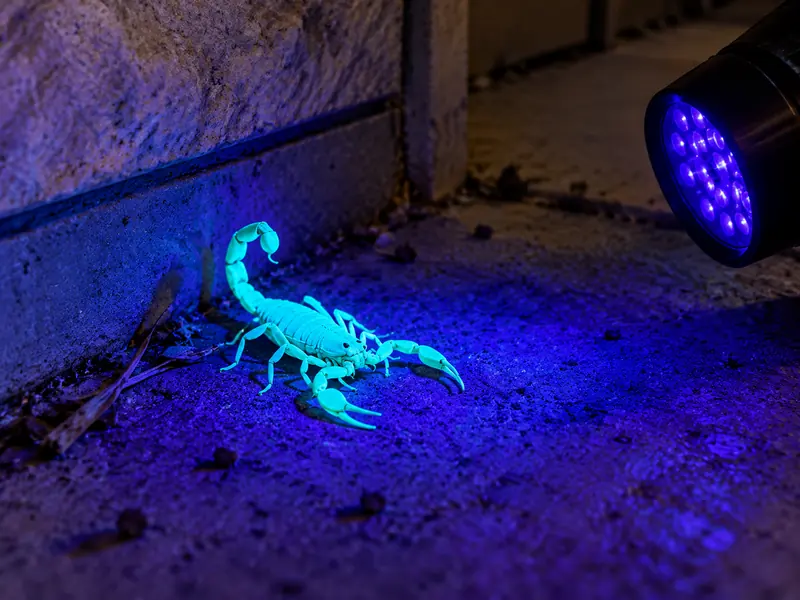
One trick worth the few dollars: scorpions glow blue-green under ultraviolet light. Walk the outside of the house with a UV flashlight an hour after dark in early summer. Count what you see on the brick, the fence and the rock beds. That number tells you more than any guess, and it shows whether your sealing and treatment are working.
What a sting is like and when to get medical help
A striped bark scorpion sting typically causes sharp, burning pain at the site, along with swelling, tingling or numbness that can last hours. For most healthy adults it is painful but not dangerous.
Get medical care right away for:
- Young children and older adults who are stung
- Trouble breathing or swallowing, slurred speech, unusual eye movements or muscle twitching
- Signs of an allergic reaction, such as hives spreading over the body or swelling of the face and throat
For anything in between, call your doctor or Poison Control for advice. A cold pack and keeping the area still help with pain in the meantime.
Sealing checklist: weep holes, door sweeps, pipe gaps and firewood
This is the part that makes the biggest difference. Scorpions can flatten themselves to squeeze through a gap about the thickness of a credit card, so the goal is to close the gaps you can see and screen the ones that must stay open.
Outside the house
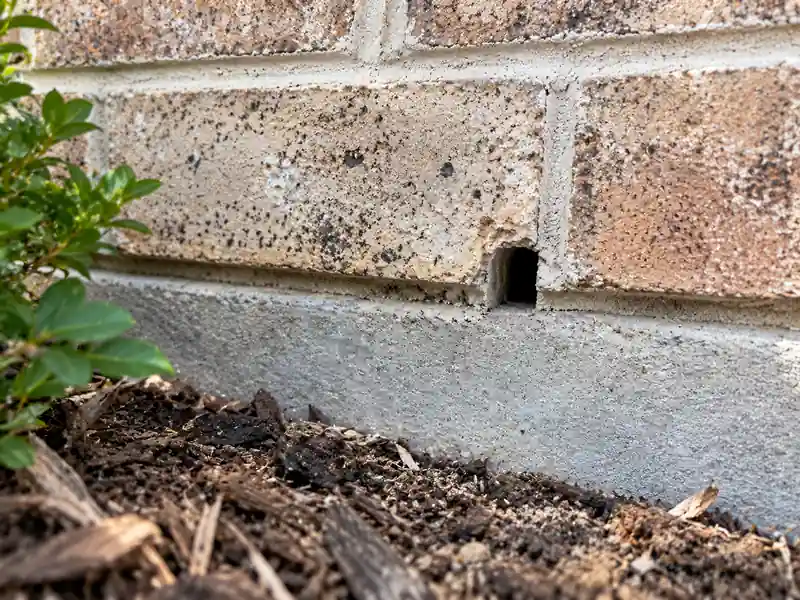
- Fit breathable weep-hole covers along the bottom row of brick or stone. Do not caulk weep holes shut; the wall needs to drain.
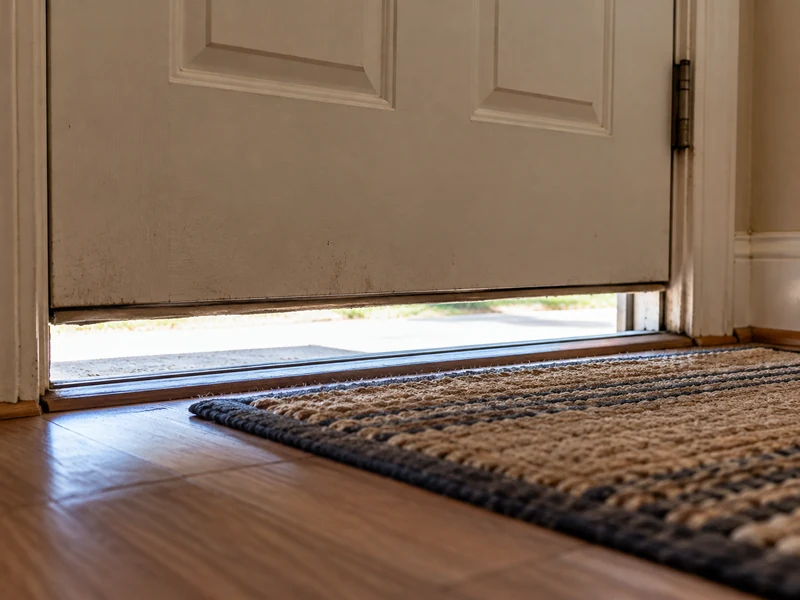
- Replace worn door sweeps. If you can see daylight under a door at night, a scorpion can get through.
- Replace the bottom seal on the garage door and check the side weatherstripping.
- Seal gaps around AC lines, hose bibs, cable and gas entries with sealant or copper mesh.
- Screen attic, soffit and gable vents with fine mesh.
- Pull rock borders, boulders, landscape timbers and firewood a couple of feet away from the foundation.
- Keep mulch thin and trim shrubs and limbs so nothing touches the walls.
- Switch porch lights to yellow bulbs to attract fewer insects.
Inside the house
- Seal gaps around plumbing under sinks and behind toilets.
- Caulk gaps along baseboards and where the wall meets window frames.
- Keep beds a few inches from walls and bedding off the floor.
- Store shoes off the floor or on a rack, and shake them out in summer.
- Replace cardboard boxes in the garage with sealed plastic bins.
A blacklight check tells you how big the problem is
Scorpion exoskeletons glow blue-green under ultraviolet light, which makes a cheap UV flashlight one of the most useful tools a Georgetown homeowner can own. Wait until about an hour after full dark on a warm night, when striped bark scorpions are out hunting, and walk the outside of the house slowly.
- Start at the foundation and the first row of brick or stone, paying attention to weep holes and the gap where siding meets the slab.
- Sweep the light across rock borders, landscape timbers, stacked pavers and the base of fences.
- Check the lower trunks of oaks and cedar elms; these scorpions climb well and often travel from trees to the roofline.
- Finish inside the garage, along the door seal and behind stored boxes.
Keep a rough count. One or two scorpions over a few nights is common in west Georgetown and usually points to a sealing job. Ten or more in a single walk, or regular sightings inside living areas, suggests an established population in the walls or attic, and that is when an inspection is worth it. Wear closed shoes and use long tongs or a jar rather than your hands. Note where each one turned up; that map is exactly what an exterminator will want to see.
When to call an exterminator
Sealing alone is enough for some homes. It is time to bring in an independent local exterminator when you see scorpions indoors more than once or twice a month, find them on ceilings or upper floors, find small pale juveniles, or count many on a blacklight walk. Those signs point to scorpions living in the attic or walls, not just wandering in.
A good exterminator will inspect the slab line, weep holes, garage and attic, treat harborage areas such as rock beds and eaves, dust voids where needed, and point out the entry points to seal. Most west-side homes with steady pressure need repeat treatments through the warm season. See how to prepare for an exterminator before the visit.
Scorpion questions from Georgetown residents
Are Georgetown scorpions dangerous?
For most healthy adults, a bark scorpion sting is painful but not dangerous. Children, older adults and anyone with breathing trouble or widespread symptoms after a sting should get medical care right away.
Why do I see more scorpions after rain or in heat waves?
Rain floods their hiding spots and extreme heat dries them out. Either way, your house, with its steady temperature and moisture around plumbing, becomes the most comfortable place nearby.
Do scorpions glow under a blacklight?
Yes. Their outer layer fluoresces blue-green under ultraviolet light, which makes a UV flashlight the easiest way to spot them at night.
Does a clean house keep scorpions away?
Clutter gives them more places to hide, but scorpions come for shelter and moisture, not crumbs. Sealing entry points matters far more than housekeeping.
Keep reading
- New home, new pests: a first-year plan for new construction
- Spider exterminator in Georgetown: the other pest that shares scorpions’ hiding spots
- Back to the Georgetown exterminator homepage
Sources: Texas A&M Field Guide to Common Texas Insects, striped bark scorpion · AgriLife Today, hot dry summer has scorpions heading indoors · Texas A&M AgriLife urban IPM, striped bark scorpions